
GreenFiber Attic Insulation in Aliso Viejo: A Homeowner’s Guide
GreenFiber cellulose attic insulation in Aliso Viejo typically costs $1.20 – $1.80 per square foot installed, and when installed at the correct density with proper air sealing, it delivers better air resistance than fiberglass batts. But here’s the catch: cellulose only performs as rated when it’s installed thick enough to account for settling, and only when the attic deck is air-sealed first. Skip either step and you’ll be back in the same hot attic wondering where the money went. If you’d rather skip the research and just get an honest assessment, call (877) 352-4780 for a free estimate.
Why GreenFiber Cellulose Beats Fiberglass in a Vented Aliso Viejo Attic
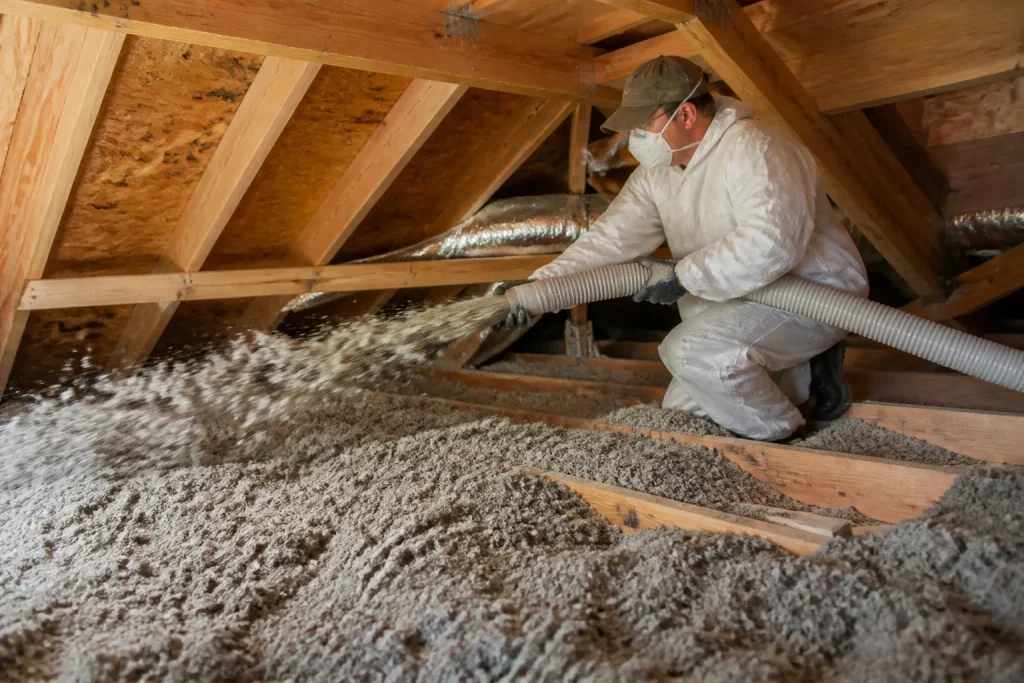
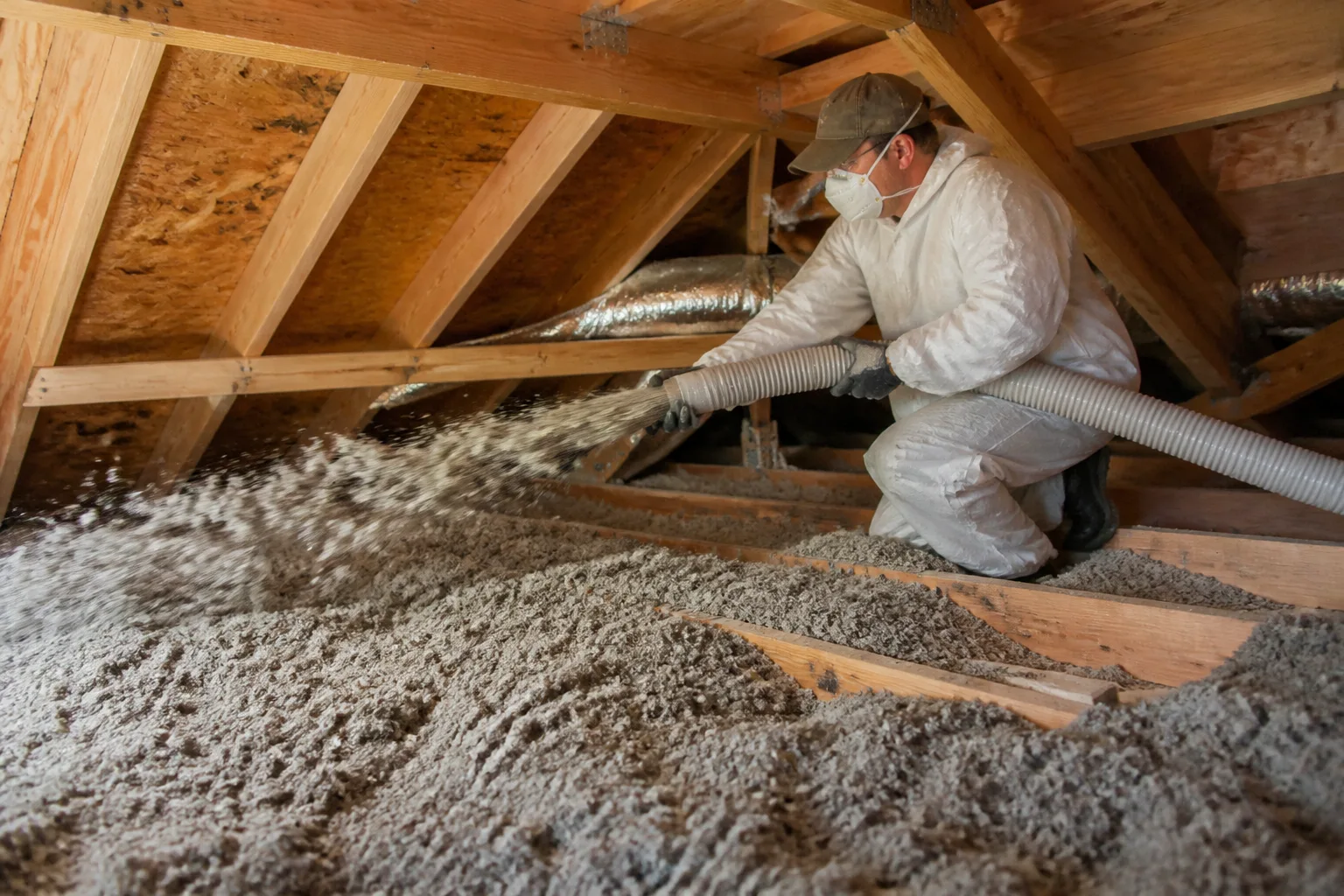
Most Aliso Viejo homes built before 1990 have vented attics with fiberglass batts sitting between the joists. We replace a lot of those. And the difference between what fiberglass does in a vented attic and what GreenFiber cellulose does is measurable. Cellulose – specifically GreenFiber’s recycled newsprint treated with borate – is roughly three times denser than loose-fill fiberglass. That density matters because in a vented attic, air moves through the insulation layer itself. Fiberglass batts leave small gaps at joist edges, around wires, and at the top plate. Air finds those gaps like water finds a crack. Cellulose, blown at 3.0 to 3.5 pounds per cubic foot, doesn’t leave those gaps. It fills around framing, pipes, and recessed light housings. It blocks what the building science folks call convective air loops – little air currents inside the insulation that rob it of R-value. We’ve measured a 20% performance drop in fiberglass batts installed in vented attics compared to their rated value, simply because of air movement. In our experience, that’s the single biggest reason Aliso Viejo attics underperform. The insulation isn’t “bad” – it’s air-permeable, and nobody addressed the air movement.
This is where our material-agnostic approach matters. We install fiberglass batts, spray foam, and blown-in cellulose because not every home needs the same answer. Some Aliso Viejo attics should get open-cell spray foam. Some should get GreenFiber. The difference comes down to ventilation, roof condition, and whether the attic is a candidate for air sealing. If you want a deeper look at what’s right for your specific attic, our Attic Insulation in Aliso Viejo page breaks down the options in detail.
The Settling Problem: Why Installed R-Value Isn’t the R-Value You Keep
Here’s a fact most GreenFiber estimates conveniently skip: blown cellulose settles. Not a little. In the first year, cellulose compacts 15 to 20%. Every manufacturer’s coverage chart accounts for this, which is why the bag label says “installed R-value” and “settled R-value.” But contractors who want to underbid the job will blow the material at the settled depth and call it done. You think you’re getting R-38. A year later, you’ve got R-30. Nobody notices because nobody goes back up in the attic to look.
For Aliso Viejo attics, R-38 settled cellulose requires an installed depth of about 10.5 to 11 inches. To actually end up at R-38 after settling, the installer needs to blow it to roughly 12.5 to 13 inches. That extra inch and a half is the difference between an honest job and a cheap one. We use depth markers stapled to the trusses so you can see the target height before we start. When the job is done, you can walk your attic and see exactly what we see: consistent depth, no bare spots, no short fills around the eaves.
Depth markers are not optional in a quality GreenFiber installation. If your installer doesn’t put them up, you have no way to verify what was actually installed. Same goes for density. Loose-blown cellulose at 1.5 pounds per cubic foot doesn’t perform the same as dense-packed at 3.5 pounds. In an open attic, we blow it loose but even. In a wall cavity or a cathedral ceiling, we dense-pack it under pressure. The method has to match the space.
Borate Treatment: Fire Resistance and Pest Control Built Into the Material
GreenFiber cellulose is treated with borates – a mineral salt that does two things most homeowners never think about until it’s too late. First, it gives the insulation a Class 1 fire rating. Cellulose doesn’t burn your house down; it chars on the surface and refuses to support combustion. In a wildfire-risk region like southern Orange County, that’s not a small detail. Aliso Viejo sits close enough to the wildland-urban interface that fire-hardening your home should be part of every material decision.
Second, borates are a natural pest repellent. Not a pesticide in the traditional sense, but enough to keep rodents and insects from nesting in your insulation. In Aliso Viejo, where roof rats are a year-round reality in neighborhoods near the canyon edges, that matters. We’ve pulled rodent-soiled fiberglass out of an attic over in Glenwood where the rats had been living in the batts for months before the homeowner noticed. Cellulose doesn’t make your attic rodent-proof nobody can claim that without addressing the entry points but it does make the insulation itself inhospitable. Rats would rather nest in warm fiberglass than chemically treated cellulose.
The borate treatment lasts the life of the product. It doesn’t off-gas, it doesn’t break down, and it doesn’t lose effectiveness over time. Some homeowners ask about it because they have kids or pets. It’s safe. It’s the same chemistry used in laundry detergents and eye drops. If you’re comparing GreenFiber against Rockwool or CertainTeed fiberglass, the borate treatment is the differentiator that doesn’t show up on a price quote.
What GreenFiber Doesn’t Do Well: Moisture and Ventilation Reality in Aliso Viejo
Aliso Viejo sits in a marine influence zone. Morning fog, cool nights, warm days. That combination means attic condensation is a real thing here, even in newer homes. And here’s the honest part: cellulose absorbs moisture faster than any other mainstream insulation. If your attic has a ventilation problem, a leak, or a bathroom fan that exhausts into the soffit instead of through the roof, blown cellulose will soak it up. Wet cellulose loses R-value, settles prematurely, and can harbor mold against the drywall below.
This is why we don’t sell GreenFiber to every Aliso Viejo homeowner who calls. Before we recommend cellulose, we look at the attic ventilation ratio. A properly vented attic in this climate needs roughly one square foot of free vent area for every 150 square feet of attic floor space, or every 300 square feet if the ventilation is split between high and low. If the attic can’t meet that, cellulose is the wrong answer. Full stop. We’d recommend blowing in fiberglass, or in some cases installing spray foam at the roofline to create an unvented attic.
That’s the difference between a contractor who carries one product and a contractor who carries eight. We don’t have to sell you GreenFiber because that’s what’s on the truck. If your attic can’t handle cellulose, we’ll tell you. And we’ll show you why. If your attic can handle it, it’s one of the best-performing, most eco-conscious options on the market. The material is only as good as the diagnosis that precedes it.
What a Quality GreenFiber Installation Looks Like From Inside the Attic
When we finish a GreenFiber job in Aliso Viejo, you should be able to open the attic hatch and immediately see whether it was done right. Here’s what a correct installation looks like:
- Depth markers – stapled to the trusses or rafters at the target height, showing the required installed depth before settling. If they’re not there, you can’t verify the job.
- Even coverage – no visible bare spots around the eaves, no piles in the center, no thin areas around the attic access. The material should look like a smooth blanket, not a mountain range.
- No bypass points – bathroom fans, recessed lights, plumbing vents, and chimney chases should all be sealed or dammed before blowing. Light fixtures need covers to keep the cellulose from contacting hot housings.
- Air sealing first – the top plates, wiring penetrations, and gaps around pipes should be foamed or caulked before any cellulose goes down. Blowing insulation over unsealed penetrations is like putting a wool coat over a screen door.
- Attic baffles intact – at every soffit vent, a baffle or chute should be in place to keep the cellulose from blocking airflow. Blocked soffits are the number one cause of moisture problems in cellulose-insulated attics.
If you’re looking at a quote from another contractor and they don’t mention air sealing or depth markers, ask them why. Those are the two things that determine whether your GreenFiber investment actually delivers. We pull air sealing and depth verification into every attic job, whether it’s Blown In Insulation in Aliso Viejo or a full air-seal-and-insulate package.
GreenFiber vs. Spray Foam: When Each One Wins in Aliso Viejo
This is the question every research-minded homeowner eventually asks: should I go with recycled cellulose or spray foam? The answer depends on what you’re trying to solve. GreenFiber is a thermal insulator installed on the attic floor. It slows heat transfer and resists air movement through the insulation layer, but it doesn’t air-seal the attic. The air still moves through the ceiling plane around penetrations.
Spray foam, particularly closed-cell like Demilec or Icynene’s closed-cell line, is an air barrier and a thermal barrier in one. When you spray the roofline, you’re moving the thermal boundary from the attic floor to the roof deck. That’s a fundamentally different building science approach. For Aliso Viejo homes with ducts in the attic, it can reduce HVAC energy loss substantially because the ducts are now inside the conditioned envelope.
For most vented attics with good ventilation and a clean ceiling plane, GreenFiber is the cost-effective workhorse. For attics that are poorly vented, or have complicated rooflines, or have the HVAC system up there, spray foam often wins despite the higher price. We carry both. We install both. And we’ll tell you which one your specific attic actually needs. If you want to compare the numbers, our Spray Foam Insulation in Aliso Viejo page covers the cost and performance tradeoffs in this climate.
One more thing worth knowing: GreenFiber is made from 85% post-consumer recycled paper. For homeowners in Aliso Viejo who want to reduce the environmental impact of their home improvement, it’s the single most sustainable insulation option we carry. The embodied energy is tiny compared to fiberglass or foam. If that’s part of your decision criteria, cellulose belongs on your short list. Rockwool offers its own sustainability story with mineral wool’s fire performance, but in terms of recycled content, nothing touches GreenFiber.
When to Call a Pro
If your attic has a moisture problem, a rodent problem, or you’re not sure whether the existing insulation should come out or just be topped off, this isn’t a weekend project. Pulling out old fiberglass, air sealing a vented attic, and blowing cellulose to the right density requires a blower machine, respirators, and building science knowledge. You can buy an extra bag of loose-fill at the home store and dump it in the attic, but unless you know what you’re covering up you might be sealing moisture in, not keeping heat out. Related services in Aliso Viejo: Aliso Viejo Insulation Co home has a full overview of what we do, or call us at (877) 352-4780 to schedule a look.
The Bottom Line
GreenFiber cellulose is one of the best-performing attic insulation materials for Aliso Viejo’s climate, but only when it’s installed at the right density, over a properly air-sealed deck, and in an attic with adequate ventilation. Skip any one of those three and the material won’t perform the way the bag says it will. The borate treatment gives you fire resistance and pest resistance that fiberglass can’t match, and the recycled content gives you a sustainability story that spray foam can’t match. But the honest recommendation depends on your attic. If your ventilation is good and your ceiling plane is sealable, GreenFiber is a smart choice. If your ventilation is weak or your ducts are in the attic, you need a different conversation.
If you’re in Aliso Viejo and you want a straight answer about whether GreenFiber is right for your attic, Aliso Viejo Insulation Co offers free estimates. We’ll look at your attic, measure the ventilation, check the air sealing, and tell you what we’d install in our own house. Call (877) 352-4780.
Frequently Asked Questions
GreenFiber cellulose attic insulation in Aliso Viejo typically runs $1.20 to $1.80 per square foot installed, depending on the target R-value, attic accessibility, and whether air sealing is included. For a typical 1,500-square-foot attic blown to R-38, that’s roughly $1,800 to $2,700. Air sealing, if needed, adds to the total. Call (877) 352-4780 for an exact quote – estimates are free.
GreenFiber cellulose settles about 15 to 20% in the first year, which is why installers overshoot the installed depth. A target settled R-38 requires blowing roughly 2 extra inches of material. After the first year, settling is minimal. If your installer didn’t account for settling, you’ll lose R-value and can’t get it back without topping off.
In a properly vented attic, GreenFiber outperforms fiberglass on air resistance because its higher density blocks convective air loops. It also offers borate fire resistance and pest resistance. However, fiberglass is more forgiving of moisture, so the right answer depends on your attic’s ventilation. If ventilation is inadequate, neither loose-fill product is ideal without addressing airflow first.
Yes, in many cases GreenFiber can be blown over existing fiberglass batts or loose-fill. The critical step is verifying the existing material is dry, mold-free, and not rodent-soiled. Blowing over wet or contaminated insulation traps the problem under a layer of fresh material. A quick attic inspection answers whether topping off is safe or whether removal is required first.
In Aliso Viejo’s climate, vapor barriers are generally not required for cellulose in a ventilated attic. The more important detail is air sealing. Vapor drive in this region is modest, but air movement through the ceiling plane carries moisture into the attic. Sealing penetrations is what prevents condensation, not adding a vapor barrier that can trap moisture in the wrong direction.
Written by the team at Aliso Viejo Insulation Co, serving Aliso Viejo since 2014.
Need Insulation Help?
Call Aliso Viejo Insulation Co — licensed & insured, here with fast after-hours help in Aliso Viejo.
(877) 352-4780