
Insulation Company in Desert Hot Springs, CA
Blown in insulation is the most common service call we handle in Desert Hot Springs, and it’s usually not because homeowners want more insulation. It’s because the insulation they have has failed. Summer attic temperatures here routinely exceed 160°F, and the wind that funnels off the San Gorgonio Pass pushes dust into every gap. That combination bakes and clogs older batts until they lose most of their rated R-value. We solve that with blown-in cellulose and fiberglass that gets into the cavities batts leave bare. If you’re dealing with hot rooms and climbing cooling bills, call (877) 352-4780 and we’ll diagnose the real issue.
Why Desert Hot Springs Homes Are Different
In Desert Hot Springs, insulation is a cooling-load problem, not a heating one. Summer highs regularly top 105 to 110°F with intense UV and very low humidity, so the priority is overwhelmingly heat gain through the roof and attic, not winter heat loss. The 92240 and 92241 housing stock is dominated by mid-century and 1980s to 2000s single-family homes, plus a large share of manufactured and mobile homes and low-slung stucco ranch houses. Many still have original builder-grade R-11 batts, unsealed ducts, and attics that were never upgraded for modern cooling loads. After a summer of 110°F days, attic fiberglass in these stucco homes often sags and pulls away from the ceiling line. A technician inspecting a 92240 attic will commonly find compressed, dust-clogged batts that have lost most of their rated R-value. The local benchmark is a sealed, well-vented attic with R-value tuned for extreme dry heat rather than the fiberglass-first approach common in coastal Southern California. Homes here need a different answer, and we treat each one that way.
Our Main Desert Hot Springs Services
Most Desert Hot Springs homeowners reach out to us about two services: attic insulation and spray foam. Both address the relentless attic heat that defines cooling season here, but they go about it differently. Here’s what each involves in this climate.
Attic Insulation in Desert Hot Springs
Attic insulation work in Desert Hot Springs usually starts with removing what’s already up there. In older 92240 ranch houses, that often means pulling out decades of dust-clogged fiberglass that’s sagged away from the ceiling line. We then air-seal, address ventilation, and install fresh insulation matched to this climate zone’s cooling demands. The goal is an attic that actually slows heat transfer instead of just holding a layer of spent material. Details on the full process are on our Attic Insulation in Desert Hot Springs page.
Spray Foam Insulation in Desert Hot Springs
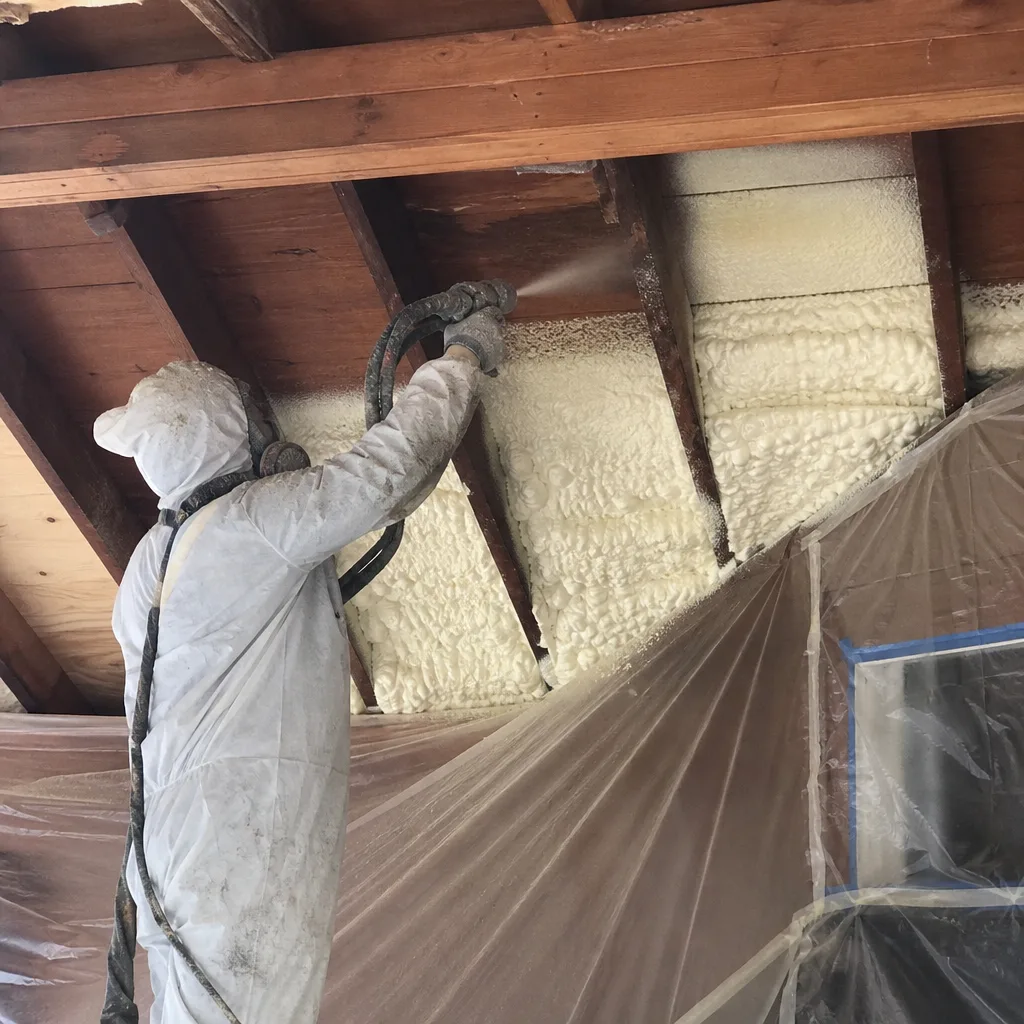
Spray foam solves a different problem in Desert Hot Springs: air leaks that let hot, dusty wind from the pass push straight into living space. With Icynene and Demilec systems, we can apply open-cell or closed-cell foam depending on whether the priority is air sealing, moisture control, or maximum R-value per inch. In manufactured homes and older stucco houses, spray foam often makes sense where batt insulation simply can’t conform to unusual framing. See our Spray Foam Insulation in Desert Hot Springs page for specifics.
What happens when you call
- 1
A real person answersNo phone trees — you reach a local pro.
- 2
You get an upfront price rangeHonest numbers before anyone is dispatched.
- 3
A background-checked tech heads outLicensed & insured, dispatched right away.
- 4
You approve before work beginsNothing starts until you say go.
Blown In Insulation in Desert Hot Springs
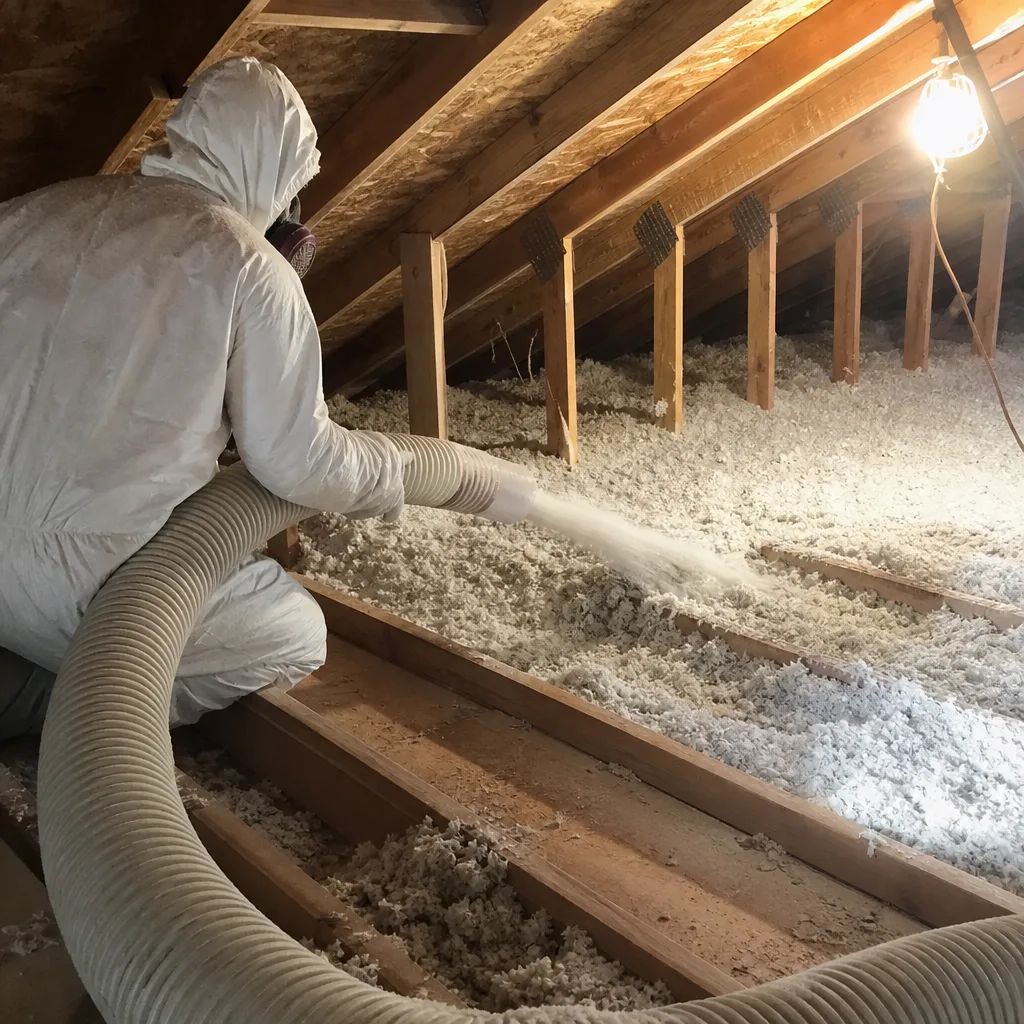
Blown in insulation is the workhorse solution for Desert Hot Springs attics, and for good reason. It fills irregular cavities, covers ceiling joists, and gets into the corners batt insulation always misses. In this climate, where 160°F attic temperatures are a summer norm and pass winds drive fine grit through every gap, loose-fill insulation creates a continuous thermal blanket that severely cuts heat gain. We install both GreenFiber cellulose and fiberglass loose-fill, and the material choice depends on your attic’s existing conditions, venting, and whether you want a more fire-resistant or recycled-content option. For a full overview of the method, visit our Blown In Insulation page.
Cellulose Insulation
Signs you need it
Your attic batts are compressed, dusty, or sagging away from the ceiling, and rooms directly under the attic feel noticeably hotter than the rest of the house.
What it costs in Desert Hot Springs
Cellulose insulation in Desert Hot Springs typically runs $200 to $650 depending on square footage and existing material removal.
How we do it
We remove any failed material, air-seal penetrations, and blow GreenFiber cellulose to a consistent depth that meets the R-value target for this climate zone.
Blown In Attic Insulation
Signs you need it
Your cooling bills climb every summer while the air conditioner runs constantly, and the attic floor shows thin or uneven coverage over the joists.
What it costs in Desert Hot Springs
Blown in attic insulation in Desert Hot Springs generally falls between $200 and $650 for a standard single-family home attic.
How we do it
We confirm the target R-value for your attic, prep the space, and blow loose-fill material to full depth so ceiling joists are completely covered.
Loose Fill Insulation
Signs you need it
You’re adding insulation over an existing layer that’s thin but intact, or you have an attic with tight corners and low clearance where batts won’t fit well.
What it costs in Desert Hot Springs
Loose fill insulation in Desert Hot Springs typically costs $200 to $650, depending on depth needed and whether old material must be removed first.
How we do it
We determine the R-value shortfall, then blow loose-fill material evenly across the attic floor, going deeper where heat gain is worst near the roofline.
What Blown In Insulation Costs in Desert Hot Springs
| Item | Typical range in Desert Hot Springs |
|---|---|
| Cellulose insulation | $200 – $650 |
| Blown in attic insulation | $200 – $650 |
| Loose fill insulation | $200 – $650 |
Does blown in insulation help with the heat in Desert Hot Springs?
Yes. Blown in insulation creates a continuous layer that blocks attic heat from radiating into living space, which directly reduces how hard your air conditioner has to work during 110°F afternoons. Call (877) 352-4780 for an attic-specific assessment.
How long does blown in insulation last in Desert Hot Springs?
Cellulose and fiberglass loose-fill both hold up well for 20 to 30 years in this climate, but only if the attic stays dry and vents properly. Dust intrusion from pass winds shortens batts’ life far faster than it does loose-fill. We’ll inspect before recommending any replacement.
Brands We Service in Desert Hot Springs
We install products from Owens Corning, Johns Manville, Knauf, and GreenFiber in Desert Hot Springs, which means we’re never stuck recommending what’s on the truck. Parts and materials for these systems are stocked locally for quick turnaround. Learn more on our brands page.
Pricing for Insulation Company in Desert Hot Springs, CA
| Service | Typical range in Desert Hot Springs |
|---|---|
| Attic insulation | $200 – $650 |
| Spray foam insulation | $300 – $1,200 |
| Blown in insulation | $200 – $650 |
| Cellulose insulation | $200 – $650 |
| Blown in attic insulation | $200 – $650 |
| Blown in cellulose insulation | $200 – $650 |
| Blown in fiberglass insulation | $200 – $650 |
| Loose fill insulation | $200 – $650 |
Prices in Desert Hot Springs move up when old material has to be removed first, when attics are unusually tight, or when air sealing reveals gaps that need attention before insulation goes in. You’ll get an upfront price before we start, so there’s no surprise at the end.
Neighborhoods We Serve in Desert Hot Springs
We work across both 92240 and 92241, covering the full spread of housing types that make this area distinct. Our technicians are in Desert Hot Springs regularly, and same-week scheduling is usually available for most standard jobs.
- Mission Lakes
- Desert Hot Springs Highlands
- Foxdale Estates
- Skyborne
- Wardman Heights
Service Area – Cities Near Desert Hot Springs
We regularly run jobs in the communities surrounding Desert Hot Springs, including Desert Edge, CA, Sky Valley, CA, Garnet, CA, and Thousand Palms, CA. If you’re in one of these spots and noticing the same dusty, heat-soaked attic problems, the fix is usually the same.
Serving Desert Hot Springs, CA — Our Local Coverage Area
We’re based in the Desert Hot Springs area and know this community well. Use the map below to see our service coverage — if you’re nearby, we can almost certainly help.
FAQs About Insulation Company in Desert Hot Springs
We have crews in Desert Hot Springs every week, so most inspections can be scheduled within a few days. Emergency calls for exposed or failing insulation in extreme heat get priority. Call (877) 352-4780 and we’ll tell you what’s open this week.
Most insulation upgrades don’t require a permit in Desert Hot Springs, especially when we’re adding loose-fill over existing material. If a job involves major structural access or new ventilation work, we’ll flag it before we start so you’re never surprised.
Yes. A large share of Desert Hot Springs housing is manufactured or mobile, and those structures need different insulation approaches than standard stick-built homes. We’ve worked in enough of them to know what works and what doesn’t.
What happens when you call
- 1A real person answersNo phone trees — talk to a local insulation pro.
- 2You get an upfront price rangeHonest numbers before anyone is dispatched. No surprises.
- 3A background-checked tech heads outLicensed & insured, typically within 1-hour.
- 4You approve before work beginsNothing starts until you say go.
What Desert Hot Springs Customers Say
"Told me the crawlspace didn't need doing and only the attic did. Half the job, half the money."
— Marcy Anderson"Found and sealed a gap around the chimney chase that was basically an open chimney to the attic."
— Sanjay Patel"Installed baffles at the soffits so the new insulation didn't block the ventilation, which the previous contractor apparently never considered."
— Luis Salazar