
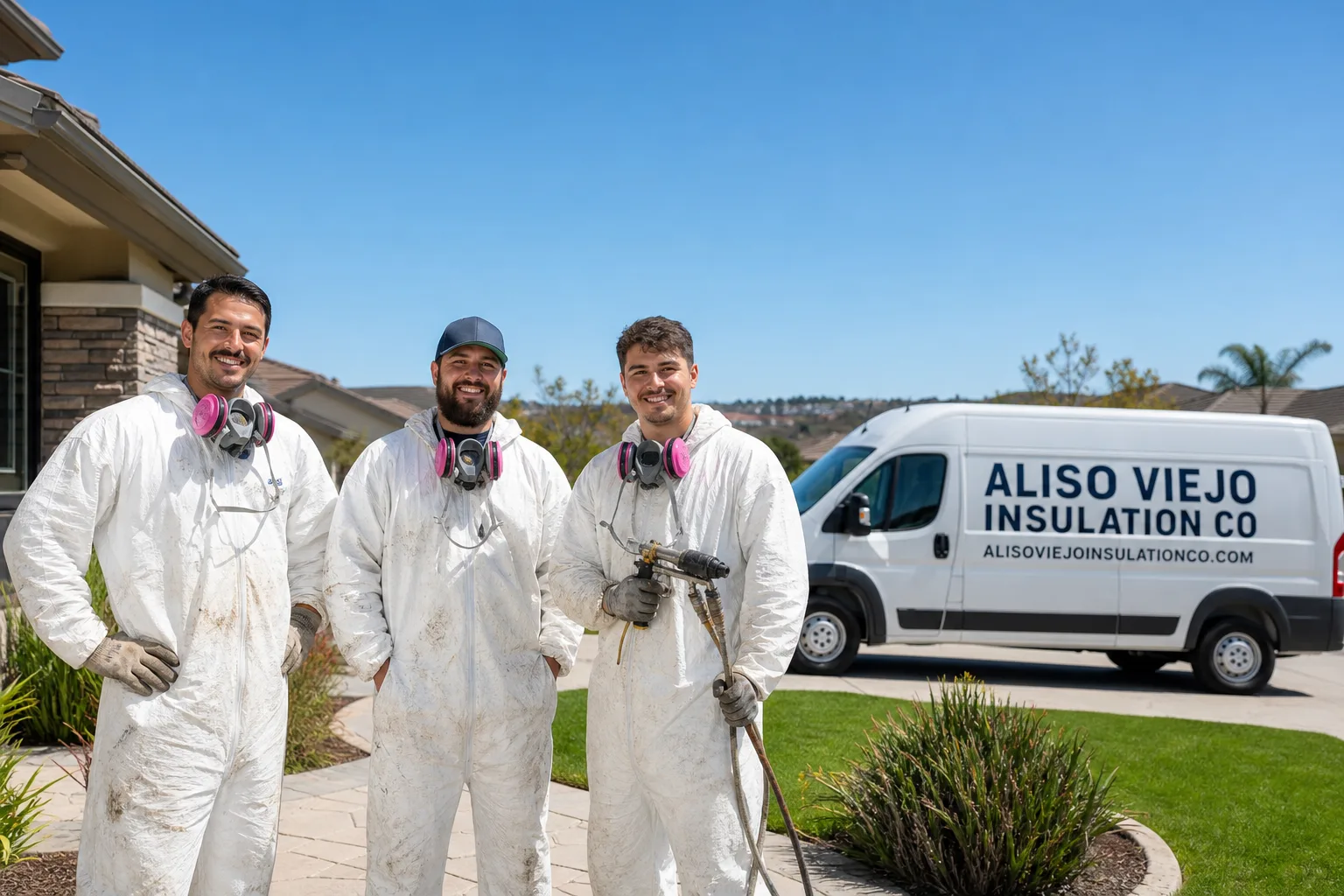
Fast, Reliable Attic Insulation Across Pasadena
Attic insulation in Pasadena runs $1,100 – $4,400 depending on method, square footage, and whether your home is a 2020s tract house or a 1915 Craftsman with lath-and-plaster walls. Most jobs in Pasadena take one day, not three, because our crews arrive with every material loaded and a plan already mapped from the curb. We know Bungalow Heaven, the East Washington Village, the streets off Arroyo and Orange Grove, and we know what those attics look like inside. If you’re tired of upstairs bedrooms running 15 degrees hotter than downstairs by July, call (877) 352-4780 and we’ll diagnose it honestly.
Why Aliso Viejo Insulation Co Is Pasadena’s Preferred Attic Insulation Company
Pasadena homeowners call us because we don’t walk in married to one product. Most insulation contractors install what they stock. Our Attic Insulation team pulls from eight manufacturers so the recommendation matches the house, not the inventory sheet. That matters more in Pasadena than almost anywhere else: a 1921 Spanish Colonial Revival in the Arroyo needs a completely different approach than a 1962 stucco ranch east of Hill. One’s got skip-sheathing and original wood lath. The other has modern truss framing and an accessible attic floor. Same city, opposite job.
Nate Calloway built this company around that reality. Eight brand lines – Owens Corning, Johns Manville, Knauf, Rockwool, CertainTeed, Icynene, Demilec, GreenFiber – give us the freedom to recommend what the building actually needs. No quotas, no brand bonuses. Just building science applied to Pasadena’s specific housing stock.
Response time to Pasadena is typically 24 – 48 hours for estimates, and we keep our schedule padded for same-week installs when the job is straightforward. You won’t wait three weeks to get a crew out.
Insulation Contractors in Pasadena
Insulation contractors in Pasadena face a challenge you won’t find in Irvine or newer parts of the Valley: roughly half the single-family homes predate 1940, and their attics were never designed to hold insulation. We’re talking true 2×4 rafters, open knee-wall cavities, and sometimes no attic floor at all. Retrofitting these spaces takes a different skill set than rolling batts over a modern attic. Here’s what that looks like in practice:
Plaster-Safe Blown-In
Blowing cellulose or fiberglass into an old Pasadena attic sidewall means snaking a flexible tube through kneewalls that haven’t been opened since the Coolidge administration. One wrong move with a rigid hose and you crack the lath-and-plaster below. Our crews have done this enough in Bungalow Heaven and the streets off Orange Grove that they know exactly how much pressure the old plaster will tolerate. Typical cost for a full attic top-up in a Pasadena Craftsman runs $1,600 – $2,900.
Historical-District Compliance
If you’re in a landmark district – and Pasadena has more than a dozen of them – any exterior alteration triggers design review. Attic work stays interior, but the access points, venting changes, and any drilling have to respect the original structure. We’ve worked with Pasadena homeowners navigating those rules and we know where the line is. Most attic insulation jobs stay entirely within the envelope and don’t require review, but we’ll flag it early if yours might.
Attic Ventilation in Pasadena
Attic ventilation in Pasadena is not an add-on. It’s the difference between insulation that works in August and insulation that just gets buried under 140-degree air. Our hot-summer Mediterranean climate means attics here routinely hit 20 – 30°F above outdoor temperature, and standard venting alone doesn’t solve it. The right setup pairs insulation with radiant-heat control, and that’s where the method matters. Here are the two most common scenarios we see:
Baffle Installation in Older Framing
Many Pasadena attics from the 1900s – 1930s have no soffit vents at all, and adding them means working around skip-sheathing and original framing we don’t want to disturb. We install baffles to keep airflow channels open before blowing insulation, which protects the plaster and keeps moisture from building up in winter. For a typical one-story Craftsman, baffle prep plus ventilation correction runs $400 – $1,100 depending on the number of bays.
Radiant-Heat Mitigation
On a recent 1912 Craftsman in Bungalow Heaven, our crew found the attic running 32 degrees hotter than the outside air by mid-afternoon. The fix wasn’t more insulation – it was pairing air-sealed top plates with a QuietCool ventilation fan and a radiant barrier. That combination cut the attic temperature by 22 degrees and made the existing R-19 actually perform. If your second floor never cools down no matter what the thermostat says, this is usually the missing piece.
Trusted Brands We Service in Pasadena
We’re authorized installers for Owens Corning fiberglass, Johns Manville batts, Knauf blown-in, and Rockwool mineral wool, among others. For Pasadena customers that means we stock local inventory for fast turnaround – no waiting on a warehouse shipment from Nevada when you’re trying to beat a July heat wave. If you want mineral wool for enhanced fire resistance on an older wood-framed attic, we have it. If you need GreenFiber recycled cellulose because you’d rather not pack petrochemicals into a 1920 home, we have that too. The brand follows the job, not the other way around.
Common Attic Insulation Problems We See in Pasadena Homes
- Knob-and-tube wiring buried under old insulation. A huge share of pre-1935 Pasadena homes still have active knob-and-tube in the attic, and blowing cellulose over it is a fire hazard and a code violation. We inspect before we insulate, every time. If wiring needs to be addressed first, we’ll tell you and pause the job until it’s done.
- Blown insulation that cracked the plaster below. We see this constantly – a previous contractor used a rigid blow tube in a lath-and-plaster wall and the homeowner hears a crack from downstairs. At that point you’re fixing plaster, not insulating. Our flexible tube method exists specifically to avoid this.
- Radiant heat overwhelming the R-value. Pasadena summers push attic temperatures in older homes to 130 – 140°F, and code-minimum insulation can’t compensate for that alone. Ventilation and radiant barriers have to work together with the insulation or the material is wasted.
- Zero air sealing around top plates and can lights. Even a well-insulated Pasadena attic leaks conditioned air through gaps around framing and recessed fixtures. We air-seal every top plate and box we can access using Icynene or Demilec foam before adding insulation, which is the step most contractors skip.
Pricing for Attic Insulation in Pasadena, CA
Here’s what Pasadena homeowners can expect to pay. A blown-in attic top-up on a 900 – 1,200 square foot home runs $1,500 – $2,500. Full attic insulation replacement with air sealing runs $2,200 – $4,400 depending on attic depth, access difficulty, and whether we’re dense-packing side cavities. Batt insulation for a standard attic floor runs $1,200 – $2,100. Ventilation correction – baffles, fan, radiant barrier – typically adds $400 – $1,100. These are real numbers for Pasadena’s market, and we’ll give you a fixed quote before any work begins. Estimates are free, and a quick call to (877) 352-4780 gets you a same-week appointment.
We Also Serve Cities Near Pasadena
While this page focuses on Attic Insulation in Pasadena, we run crews throughout the San Gabriel Valley. South Pasadena and San Marino have the same pre-war housing stock and the same historic-preservation constraints. Altadena and East Pasadena add post-war ranch homes and stucco tract builds to the mix. If you’re in any of those communities and your attic is underperforming, call the same number: (877) 352-4780.
Serving Pasadena, CA — Our Local Coverage Area
We’re based in the Pasadena area and know this community well. Use the map below to see our service coverage — if you’re nearby, we can almost certainly help.
FAQs About Attic Insulation in Pasadena
Yes. We use flexible blow tubes snaked through kneewalls and side-attic cavities rather than rigid hoses that press against lath-and-plaster from inside the wall cavity. This is the single biggest difference between an insulation crew that works old Pasadena homes and one that only does modern track houses. On a 1912 Bungalow Heaven job, we dense-packed the side attics with GreenFiber, air-sealed the top plates with Icynene foam, and installed attic ventilation without touching the historic plaster anywhere. Call (877) 352-4780 if you want a plaster-safe assessment.
For Spanish Colonial Revival homes with tile roofs and original framing, blown cellulose or blown fiberglass typically performs best because it fills irregular cavities without disturbing the roof structure. These homes often have shallow rafter bays and curved forms that batts can’t conform to. If fire resistance matters – and with older wood framing and a tile roof, it should – Rockwool mineral wool is worth the step up. We’ll match the material to the specific house, not the other way around.
Pasadena’s hot-summer climate can push attic temperatures to 20 – 30°F above outside air, which means a 100-degree afternoon becomes a 130-degree attic. That radiant heat loads the insulation from above and radiates down into the living space through the ceiling. The fix is not just more R-value – it’s pairing insulation with proper ventilation, air sealing, and often a radiant barrier. Homes that skip the ventilation side of the equation still bake upstairs no matter how much insulation gets blown in.
Yes, but with a critical sequence: we inspect the attic before any insulation goes in. If active knob-and-tube wiring is present, insulation cannot be blown over it – that’s a fire hazard and won’t pass inspection. We’ll flag it, pause the job, and coordinate with an electrician to address the wiring first. Once it’s clear, we proceed. If you know your home has original wiring, tell us when you call and we’ll do the wiring inspection on the same visit as the estimate.
For Pasadena’s climate zone, R-38 to R-49 is the right range for attic floors, per DOE guidance. That’s roughly 12 – 16 inches of blown cellulose or fiberglass. Many pre-war Pasadena homes have R-0 to R-11 in the attic, if anything at all, which explains those sweltering second-floor bedrooms. Going from nothing to R-38 is the single highest-ROI energy upgrade most Pasadena homeowners can make. Call (877) 352-4780 for a free attic inspection and an exact quote.
Written by Nate Calloway, Owner at Aliso Viejo Insulation Co, serving Pasadena and the San Gabriel Valley.