
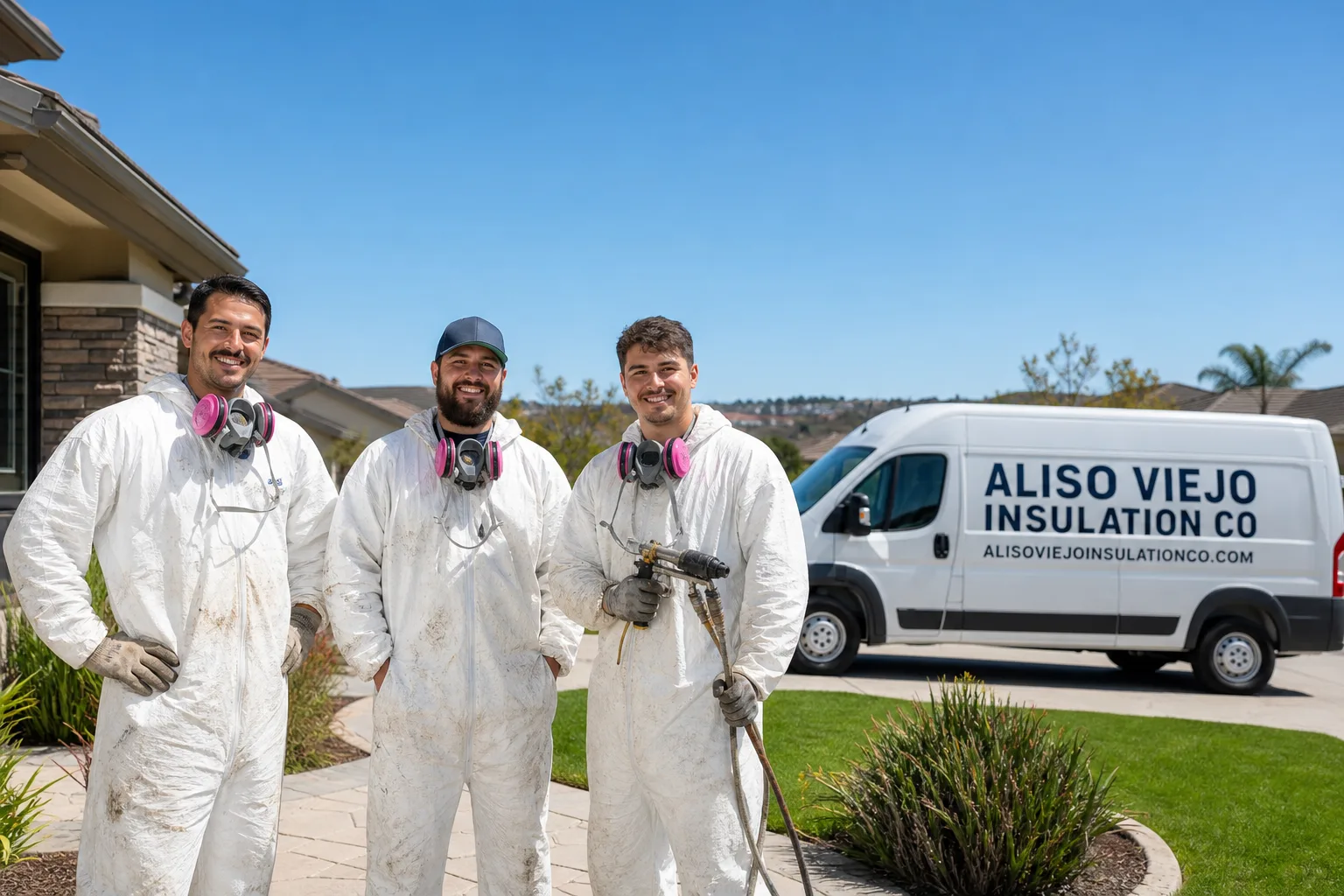
Fast, Reliable Spray Foam Insulation Across Calimesa
Spray foam insulation in Calimesa typically runs $2.25 – $4.10 per board foot installed, with most whole-attic or belly-board jobs in the 92320 zip code landing between $2,800 and $7,500 depending on square footage and foam type. The bigger variable here isn’t labor cost, it’s the San Gorgonio Pass. Homes on the east side of Calimesa get hammered by wind-driven dust that standard fiberglass can’t stop, and the summer heat radiating into attics is relentless. Our Spray Foam Insulation team works in Calimesa weekly and knows exactly which foam chemistry holds up to those conditions. Same-week scheduling is usually available. Call (877) 352-4780 and we’ll give you an honest read on what your home actually needs.
Key Takeaways:
- Calimesa’s wind and heat demand closed-cell or dense open-cell foam, not coastal-grade assumptions
- Manufactured and mobile homes on the east side need belly and skirting foam that most contractors never touch
- We install both Icynene and Demilec spray foam systems under one roof
- Free estimates, same-week response to all of 92320
Why Aliso Viejo Insulation Co Is Calimesa’s Preferred Spray Foam Insulation Company
Most insulation outfits in the Inland Empire work one brand. We don’t. Aliso Viejo Insulation Co is authorized to install products from eight manufacturers, Owens Corning, Johns Manville, Knauf, Rockwool, CertainTeed, Icynene, Demilec, and GreenFiber, so when we recommend open-cell foam for a Calimesa manufactured home belly or closed-cell for a ranch-style attic with wind-blown dust problems, it’s because that’s what the building science says, not because it’s what’s on the truck. Our crews know the difference between a Calimesa Boulevard manufactured home and a Singleton Heights tract house, because we’ve crawled under and over both. Nate Calloway built the company on that material-agnostic approach: diagnose first, then match the product to the problem.
Response time to Calimesa from our Aliso Viejo base is typically same-week. We carry dedicated stock for the recurring Calimesa failure modes we see, ridge vents that let dust blow into attics, settled fiberglass that never should have been the answer, and manufactured home bellies that need spray foam plus skirting. Reviews from Calimesa customers consistently mention the same things: we showed up when we said we would, we didn’t try to sell them something their home didn’t need, and the temperature difference was obvious the first afternoon. That’s the standard.
Open Cell Spray Foam in Calimesa
Open Cell Spray Foam in Calimesa is our most common recommendation for manufactured home bellies, interior walls, and garage ceilings where air sealing matters more than maximum R-value per inch. Open-cell expands roughly 100 times its liquid volume, fills irregular cavities, and does something particularly valuable on Calimesa’s east side: it chokes off the wind-driven dust paths that come through rim joists and belly-board seams. A typical manufactured home belly job in Calimesa runs $1,800 – $3,400, and a standard two-car garage ceiling runs $2,200 – $4,000. Open-cell is the right tool when you need infiltration control and thermal performance without the premium price of closed-cell.
Belly Board and Skirting Replacement
We recently sprayed open-cell foam in the belly and skirting of a manufactured home off Calimesa Boulevard, where years of wind-driven dust had shredded the original belly board and left the floor joists exposed. Using Icynene, we sealed the underside and re-skirted the home, stopping the dust intrusion and stabilizing indoor temperatures through a 105°F afternoon. That’s the kind of job that never shows up in coastal training manuals.
Garage and Workshop Ceilings
Acreage properties west of town and along Sandalwood Drive often have detached workshops with unconditioned spaces above them. Open-cell foam on the underside of the roof deck knocks down radiant heat transfer and stops dust from sifting through gaps between deck boards. It’s quieter, too.
Spray Foam Insulation Contractors in Calimesa
Spray Foam Insulation Contractors in Calimesa aren’t all the same, and the difference shows up fast on a windy afternoon. What separates a contractor who gets it from one who doesn’t is whether they’ve seen what the San Gorgonio Pass does to a poorly sealed attic. Closed-cell foam in Calimesa runs $3.10 – $4.75 per board foot installed, and for roof decks, rim joists, and any surface exposed to wind-driven moisture or dust, it’s the better call. We carry both Demilec and Icynene closed-cell systems, so we can match the product to the specific substrate and moisture exposure.
Rim Joist Sealing on Acreage Homes
Older ranch homes on larger lots in Calimesa have rim joists that leak air relentlessly. Closed-cell foam at the rim joist costs $1,100 – $2,800 for a typical single-story home and pays back fastest on the hottest afternoons.
Attic Roof Deck Applications
For attics that bake in July, spraying closed-cell directly to the roof deck turns the attic into conditioned space. It stops the dust intrusion at the ridge vents and gable ends too. Figure $4,200 – $7,500 for a 1,600-square-foot attic in Calimesa.
Trusted Brands We Service in Calimesa
We’re not a one-foam shop. Our spray foam work in Calimesa uses Icynene and Demilec, two of the most proven open-cell and closed-cell systems on the market, and our insulation lineup includes Johns Manville, Knauf, and Rockwool for homes where foam isn’t the right answer. The point is choice. A 2003 tract home near Calimesa Elementary might need Rockwool in the interior walls for sound control and Demilec closed-cell at the rim joist for air sealing. We stock these materials for Calimesa jobs specifically, which means faster turnaround when we quote your project. No waiting on a distributor run from Riverside.
Common Spray Foam Insulation Problems We See in Calimesa Homes
- Wind-driven dust through ridge vents and gable ends. The San Gorgonio Pass pushes dust horizontally into attic spaces, where it settles into fiberglass and degrades its performance. Spray foam at the roofline or sealed ventilation gaps stops it at the source.
- Manufactured home belly boards and skirting degradation. UV and constant wind tear through the woven plastic belly board within years. Exposed floor joists lose insulation contact, and dust and moisture get into the floor cavity. Spray foam plus new skirting is the lasting fix.
- Oversized doors and workshops on acreage lots. Large roll-up doors and barn-style openings leak air even when closed. Foam alone can’t seal the gap, it needs proper backing and heavy-duty weatherstripping to work with the foam as a system.
- Settled or absent attic insulation in older ranch homes. Many pre-1990 Calimesa homes have R-19 fiberglass that has compressed to R-11 or less. In a climate with 100°F-plus summer days, that’s a measurable comfort and energy penalty.
Pricing for Spray Foam Insulation in Calimesa, CA
Here’s what Calimesa homeowners should expect to budget. Open-cell foam runs $2.25 – $3.25 per board foot installed. Closed-cell runs $3.10 – $4.75 per board foot. A manufactured home belly and skirting job lands at $1,800 – $3,400. A standard attic roof deck in a 1,600-square-foot home runs $4,200 – $7,500. Rim joist sealing runs $1,100 – $2,800. What moves the number: access height, how much old insulation needs removal first, and whether the structure is a manufactured home with tight crawlspaces. We give written, line-item quotes before any work starts. Estimates are free, and we’d rather walk away from a job than sell you foam your house doesn’t need. Call (877) 352-4780 for an exact number.
We Also Serve Cities Near Calimesa
Our crews work throughout the San Gorgonio Pass and the eastern Inland Empire. That includes Yucaipa, Mentone, Redlands, and Banning, and everything in between along the I-10 corridor. If you’re in one of those communities, the same Calimesa level of local knowledge applies. We know the wind patterns, the housing stock, and the right foam for each microclimate.
Serving Calimesa, CA — Our Local Coverage Area
We’re based in the Calimesa area and know this community well. Use the map below to see our service coverage — if you’re nearby, we can almost certainly help.
FAQs About Spray Foam Insulation in Calimesa
The wind works against insulation in two ways: it forces dust horizontally into ridge vents and gable ends where it settles into porous insulation and reduces its R-value, and it creates negative pressure inside the house that pulls conditioned air out through every gap in the envelope. Closed-cell spray foam at the roofline and rim joists seals those paths, which is why we recommend it over fiberglass for wind-exposed homes. Call (877) 352-4780 and we’ll inspect your attic for wind-driven dust migration.
Yes, and it’s one of the most effective upgrades we do on Calimesa’s east side. Open-cell foam sprayed against the floor deck of a manufactured home seals the belly cavity, stops dust and pests from entering through torn belly board, and holds the floor warmer in winter when Calimesa nights drop into the 30s. Pair it with new skirting and the difference is immediate. Estimates are free.
For most Calimesa attics and roof decks, closed-cell foam is the stronger choice because it delivers roughly R-6.5 per inch and acts as a vapor barrier, which matters in a climate where the temperature swings 40 degrees between afternoon and night. For manufactured home bellies and interior walls where moisture isn’t a concern, open-cell at R-3.6 per inch is more cost-effective. We’ll tell you which one your specific structure needs.
Spray foam expands into the exact gaps where dust enters: rim joists, plumbing penetrations, electrical chases, and where walls meet the roof. Standard batt insulation doesn’t seal these paths, dust simply flows around it. Foam creates an air barrier, and in a wind corridor like the San Gorgonio Pass, that air barrier is doing more work than the R-value itself.
It depends on what’s already there and where the house loses energy. A 1970s ranch with an attic full of settled fiberglass often does better with air sealing plus either blown-in cellulose or spray foam at the roofline. A home with an unfinished, vented attic and no moisture problems might not need foam at all, GreenFiber cellulose might be the smarter, more budget-friendly call. That’s the material-agnostic answer, and it’s the only kind we give.
Written by Nate Calloway, Owner at Aliso Viejo Insulation Co, serving Calimesa and the surrounding Inland Empire.