
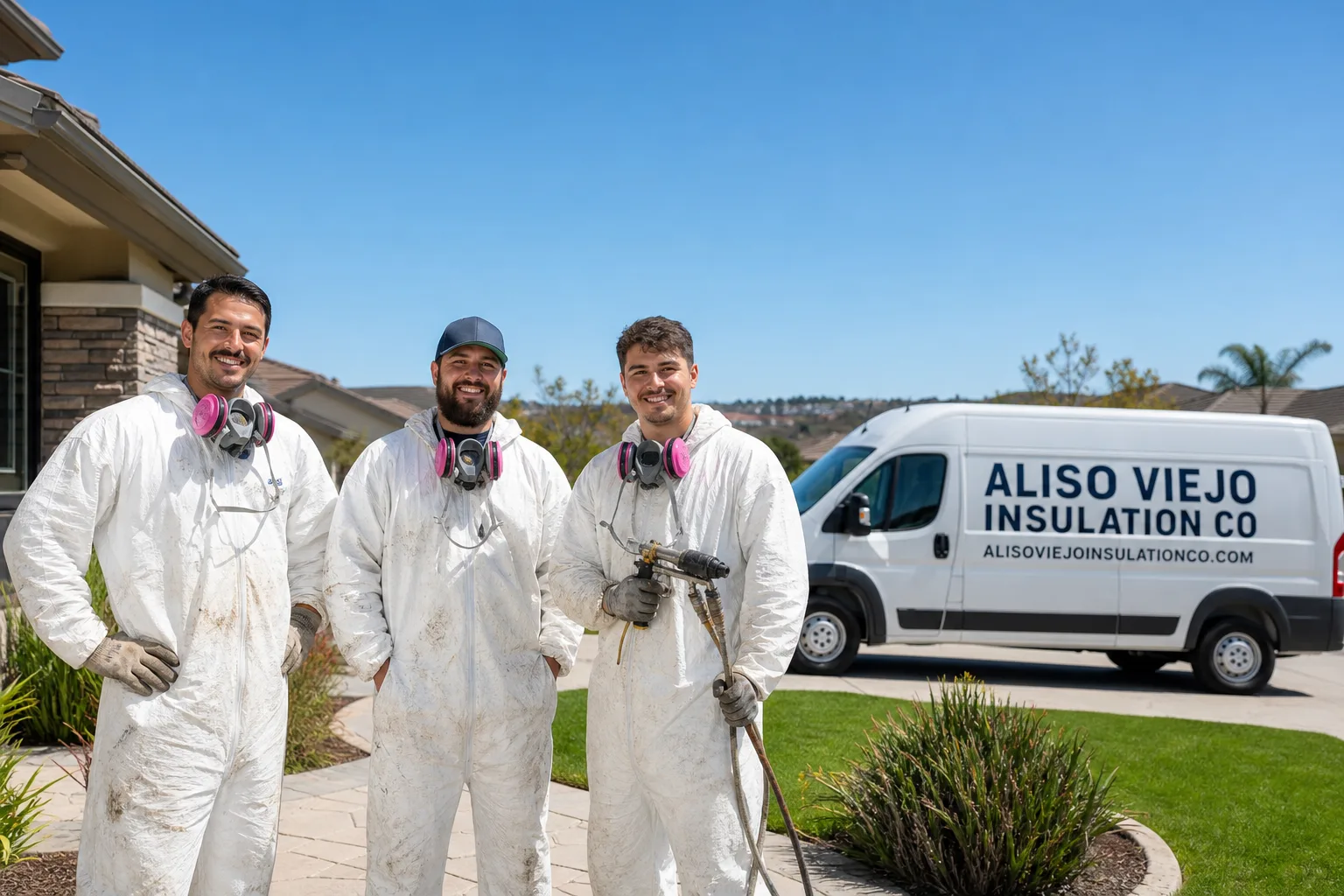
Spray Foam Insulation in Riverside, CA: What It Costs and Why It Fails in Older Homes
Spray foam insulation in Riverside typically costs $2.50 – $6.50 per square foot installed, depending on whether you need open-cell or closed-cell chemistry and whether the job is an attic, garage ceiling, or rim joist application. Most Riverside homes we work on fall into two camps: postwar tract houses in 92503 – 92506 with thin attic insulation, or citrus-era bungalows near downtown where 160°F attic heat and legacy wiring make spray foam jobs genuinely tricky. We’re Spray Foam Insulation in Riverside specialists, and we schedule around the heat, coordinate with electricians when old wiring is involved, and match each job to the right foam system from Icynene or Demilec. Call (877) 352-4780 for a free on-site estimate.
Fast, Reliable Spray Foam Insulation Across Riverside
If you live in Riverside, you already know the summer drill: the AC runs constantly, the upstairs never cools down, and the garage feels like a kiln by noon. Most of the time, the problem isn’t your HVAC system. It’s your thermal envelope. Riverside’s hot-summer Mediterranean climate means your attic is absorbing 95 – 105°F solar load every day from June through September, and that heat pushes down into your living space. Spray foam is the most effective way to seal that heat out, but only if it’s applied correctly. We install both open-cell and closed-cell foam, and we’ve worked in enough Riverside attics to know that timing the application and preparing the substrate matters as much as the product itself. From the Wood Streets to Canyon Crest, our crews know these houses. Call (877) 352-4780 and we’ll get to your Riverside home quickly, usually within 48 hours for an estimate.
Key Takeaways:
- Riverside attic temperatures hit 150 – 160°F in summer, which changes when and how spray foam should be applied.
- Older downtown bungalows often have knob-and-tube wiring that must be addressed before foam goes in.
- Closed-cell foam priced at $3.50 – $6.50 per square foot solves both air sealing and structural rigidity.
- Garage ceiling spray foam in Riverside should be paired with a thermal barrier to prevent premature degradation.
Why Aliso Viejo Insulation Co Is Riverside’s Preferred Spray Foam Insulation Company
We’re not a one-brand contractor locked into whatever’s on the truck. Our Spray Foam Insulation team installs from eight manufacturers, including Owens Corning, Johns Manville, Knauf, Rockwool, CertainTeed, GreenFiber, and the two spray foam systems we lean on most for Riverside work: Icynene and Demilec. That breadth means when we tell a Riverside homeowner they need closed-cell foam rather than blown-in fiberglass, it’s because the building science says so, not because we only sell one thing. Nate Calloway built this company around material-agnostic advising, and it shows in the jobs we take. The 1920s bungalow with no vapor barrier gets a different recommendation than the 1970s tract house with a vented attic. Riverside homeowners call us because they suspect their insulation was never right in the first place, and they’re usually correct.
We’ve worked throughout 92501, 92503, 92504, 92505, and 92506 long enough to recognize the patterns. Older homes near downtown and the Eastside have attic spaces that were never designed for modern insulation. Postwar tract homes in neighborhoods like La Sierra and Arlanza often had R-19 blown fiberglass installed decades ago that’s now compressed, dust-covered, and doing almost nothing. When you call, we’ll be straight with you about what you have and what it’ll take to fix it. Free estimates, no obligation, and a real recommendation based on your house, not our inventory.
Garage Spray Foam Insulation in Riverside
Garage Spray Foam Insulation in Riverside is one of the most requested jobs we do, because attached garages here turn into ovens that bake the rooms above them. A typical garage ceiling and shared wall job in Riverside runs $3,800 – $7,200 depending on square footage and whether we’re using open-cell or closed-cell foam. Riverside’s inland heat on west-facing garage walls can degrade exposed foam prematurely, so we always recommend a thermal barrier or UV-resistant coating on any surface that sees direct sun. This isn’t a coastal job where you can get away with uncoated foam; the UV intensity here is relentless from May through October.
When Your Attached Garage Is Cooking the Bedroom Above It
Riverside’s postwar tract homes often have a bedroom or bonus room directly over the garage. The garage ceiling in those houses was typically insulated with R-13 fiberglass batts that were installed in the 1970s and have since slumped, separated from the drywall, and stopped doing their job. Spray foaming the garage ceiling seals the air barrier and cuts the heat transfer dramatically. In one Eastside bungalow off Magnolia Avenue, we measured a 15°F drop in the garage after applying closed-cell Icynene to the ceiling and rim joists.
If your garage is unfinished, open-cell foam on the underside of the roof deck is usually the right call because it’s cheaper per square foot and handles the heat load well when applied correctly. If the garage is finished and you’re losing conditioned air, closed-cell on the shared wall and ceiling performs better. We’ll tell you which one applies after looking at the space.
Scheduling Around the Heat
Here’s what most Riverside homeowners don’t know: spray foam should only be applied when the substrate is below 120°F. In a Riverside attic that’s sat in the summer sun, the underside of the roof deck can be 160°F by 10 a.m. Foam sprayed onto an overheated surface off-gasses, cures poorly, and fails to adhere, which means removal and reapplication. We schedule Riverside attic work for early morning starts, or we’ll cool the space down first. It costs a little more in scheduling coordination, but it’s the difference between a foam job that lasts 20 years and one that peels off in two.
Closed Cell Spray Foam Insulation in Riverside
Closed Cell Spray Foam Insulation in Riverside is the higher-performance option, and for a specific set of Riverside homes it’s the only correct answer. Closed-cell foam in Riverside runs $3.50 – $6.50 per square foot installed, and it gives you about R-6.5 per inch plus a vapor barrier in the same application. That vapor barrier matters in older Riverside homes where there’s no modern moisture control and where interior humidity from washing machines, showers, and even citrus processing-era crawlspaces can migrate into wall cavities. We use Icynene and Demilec closed-cell systems because they’re two of the most reliable chemistries on the market for hot-climate applications.
When Closed-Cell Beats Open-Cell
Closed-cell foam earns its cost premium in three Riverside situations: rim joists in homes with crawlspaces, garage ceilings where moisture control matters, and any surface where you need structural rigidity along with insulation. If your Riverside home has a raised foundation, open-cell foam on rim joists will absorb moisture from the crawlspace. Closed-cell won’t. If you have a 1920s bungalow near downtown with no vapor barrier and you’re insulating the attic floor, closed-cell gives you the moisture protection that the original builders never installed.
For most Riverside attics, open-cell is adequate and more economical. But if you’re sealing a garage that floods with humidity or a rim joist assembly exposed to ground moisture, closed-cell is worth the extra $1.50 – $2.00 per square foot. The wrong chemistry in the wrong place fails fast here, and we’ve seen enough failed applications to be blunt about it.
The 160°F Attic Problem
In Riverside’s older downtown bungalows, the attic can hit 160°F on a July afternoon. Closed-cell foam handles that heat load better than any other insulation product on the market, which is why we recommend it for the worst attics rather than trying to make open-cell work in a space where it’ll be stressed every single day of summer. The installation still has to happen when the substrate is cooler, but once cured, closed-cell foam doesn’t care how hot the attic gets. It’s the best product for the worst Riverside attics.
Trusted Brands We Service in Riverside
We service and install spray foam systems from Icynene and Demilec, which gives us real flexibility in matching chemistry to the job. For Riverside homeowners who want alternatives to spray foam, we also stock Johns Manville fiberglass, Rockwool mineral wool, and CertainTeed products, plus Reflectix service in Riverside for radiant barrier applications. That matters when a Riverside homeowner comes in asking for spray foam and the right answer turns out to be something else. We’re not going to sell you closed-cell foam for a garage you’re only using for storage when a Rockwool batt job will do the job for half the price. For Riverside’s hot, dry climate, the material match is everything, and we have access to the full spectrum of options. Parts and product lead times for Riverside jobs are typically 3 – 5 business days when something needs to be ordered.
Common Spray Foam Insulation Problems We See in Riverside Homes
- Foam applied to overheated attic substrates. In Riverside’s 150°F+ summer attics, foam sprayed onto hot roof decking off-gasses and fails to adhere. This is the most common failure we see from contractors who don’t schedule around the heat, and it requires full removal and reapplication.
- Foam sprayed over knob-and-tube wiring. Older downtown and Eastside Riverside homes still have original knob-and-tube wiring buried under old cellulose. Foam over that wiring is a fire hazard and a code violation, and it always costs more to fix after the fact than to coordinate with an electrician beforehand.
- Garage spray foam degrading without a thermal barrier. Riverside’s intense UV on west-facing garage walls breaks down exposed foam within a few years. An uncoated spray foam garage job in Riverside will look cracked and chalky in three summers, which is why we always include the barrier or coating.
- Compressed fiberglass being topped with foam. Some contractors will spray foam directly over old, compressed fiberglass batts that have slumped and stopped insulating. The foam fills the air gaps, but the fiberglass underneath remains compacted and useless. We remove the old material first, which is what the job actually requires.
Pricing for Spray Foam Insulation in Riverside, CA
What you’ll pay for spray foam in Riverside depends on three things: the type of foam, the square footage, and whether your home requires any prep work like wiring re-routing or old insulation removal. As a baseline, open-cell spray foam in Riverside runs $2.50 – $4.00 per square foot, and closed-cell runs $3.50 – $6.50 per square foot. A typical garage ceiling job lands between $3,800 and $7,200. A full attic in a postwar tract home in 92503 usually runs $8,000 – $14,000 for closed-cell. If your home needs electrical coordination or has old cellulose that needs pulling out first, that adds cost. We don’t pad those numbers. We’ll give you a line-item quote and explain exactly what each part costs. Call (877) 352-4780 for a free estimate, and we’ll walk your house with you before we quote anything.
We Also Serve Cities Near Riverside
Our crews work throughout the Inland Empire. Beyond Riverside proper, we regularly install spray foam in Rubidoux, Glen Avon, Pedley, and Sunnyslope. If you’re in one of those areas and dealing with the same hot-attic problems, the same scheduling logic applies. We’ll come out, assess your home, and give you an honest recommendation on foam type and timing. Riverside is our base for this region, and we know these neighborhoods and their housing stock well.
Serving Riverside, CA — Our Local Coverage Area
We’re based in the Riverside area and know this community well. Use the map below to see our service coverage — if you’re nearby, we can almost certainly help.
FAQs About Spray Foam Insulation in Riverside
No, and we won’t. Foam sprayed directly over knob-and-tube wiring traps heat around the conductors and creates a fire hazard. The right sequence is to have a licensed electrician re-route or decommission the wiring first, then we apply the foam. We coordinate that with whichever electrician you choose, and we’ve done this enough in Riverside’s older bungalow neighborhoods that the process runs smoothly. Call (877) 352-4780 and we’ll explain what your specific house needs.
Spray foam applied to a substrate hotter than 120°F cures too quickly, off-gases, and fails to adhere properly. In Riverside, attics can hit 160°F by mid-morning in July and August, which means we have to schedule the work for early morning or cool the attic before spraying. It’s the single biggest reason spray foam jobs in Riverside fail, and it’s solved by scheduling, not by using a different product. We plan every Riverside summer job around this.
It depends on what you’re insulating. For most attics in postwar tract homes in 92503, open-cell foam is sufficient and more cost-effective. But for rim joists, garage ceilings with moisture concerns, or walls where you want a vapor barrier, closed-cell is the right call. A tract home in 92503 with a vented attic and no unusual moisture problems doesn’t need closed-cell foam everywhere. We’ll tell you where each type makes sense rather than selling you the pricier option by default. Call (877) 352-4780 and we’ll walk it with you.
Properly installed spray foam with a thermal barrier or UV coating will last 20 – 30 years in Riverside’s climate. The key is the coating and the installation conditions. Exposed foam on a west-facing garage wall in Riverside will degrade in 3 – 5 years because the UV exposure breaks down the foam’s surface. Covered or coated foam, installed when the substrate was below 120°F, holds up for decades. We warranty our Riverside installations and we’ll document the conditions under which the foam was applied.
Closed-cell foam is the best choice for a 1920s Riverside bungalow with no vapor barrier, because it acts as its own moisture barrier at about 1.5 inches of thickness. Open-cell foam will absorb humidity from crawlspaces and wall cavities in those older homes, which leads to musty smells and reduced performance. The closed-cell option costs more per square foot, but it solves two problems at once in a house that was never designed for modern moisture control. For an exact recommendation on your specific bungalow, call (877) 352-4780.
If you’re in Riverside and you’re tired of fighting a hot house every summer, we’ll give you a straight answer about what’s wrong and what it’ll cost to fix. Free estimates, honest material recommendations, and a crew that knows Riverside’s housing stock from the citrus-era bungalows to the La Sierra tract homes. Call (877) 352-4780 today and we’ll schedule your walkthrough.
Written by Nate Calloway, Owner at Aliso Viejo Insulation Co, serving Riverside and the Inland Empire with material-agnostic insulation expertise.