
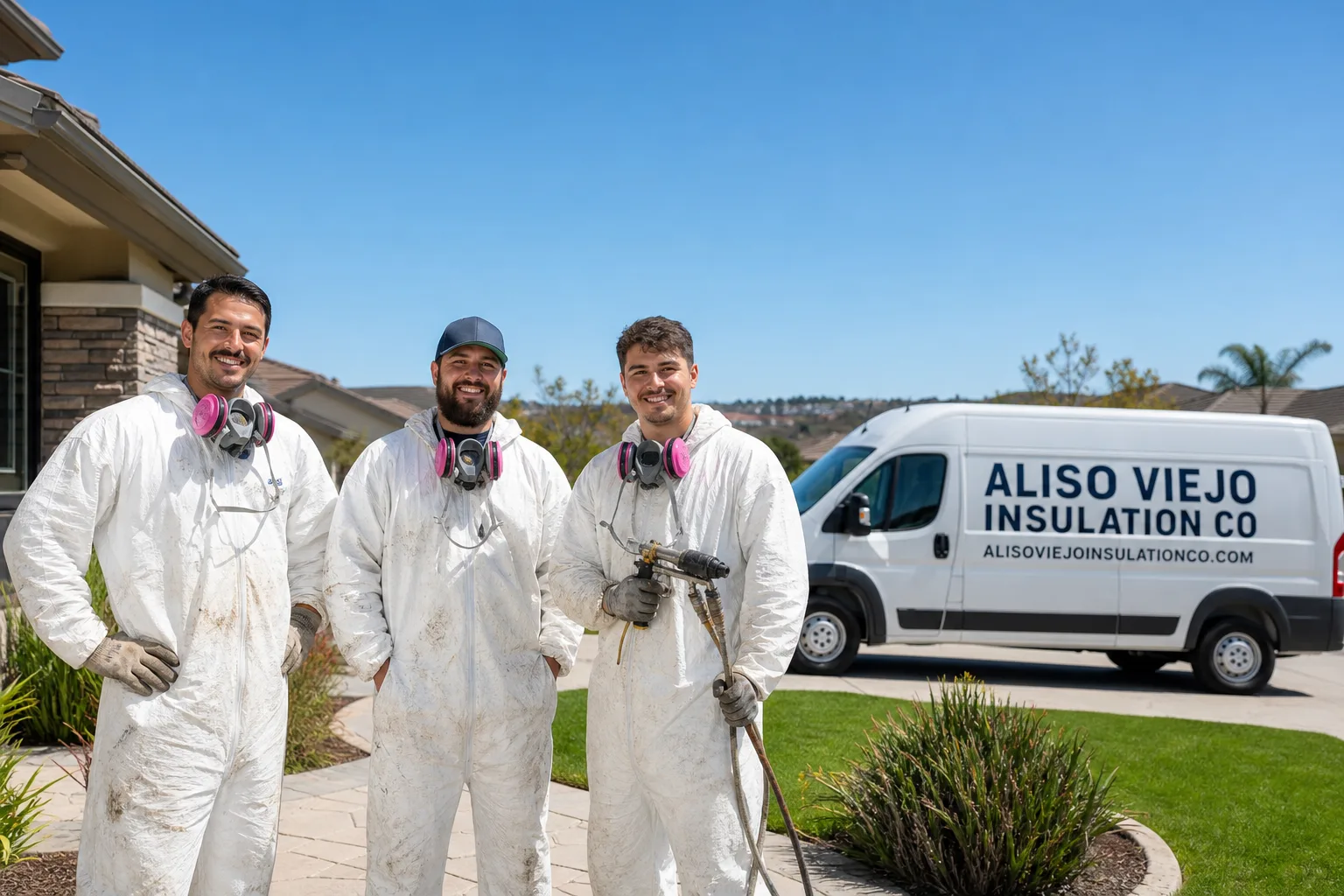
Fast, Reliable Attic Insulation Across Artesia
Attic insulation in Artesia usually costs between $1,800 and $4,200 for a standard retrofit, with smaller top-up jobs starting around $900. Most homes we work on in the 90701 and 90702 zip codes are 1950s-to-1970s construction, which means we’re almost always retrofitting rather than insulating new framing. The marine layer that rolls through Artesia keeps evenings cool but also delivers salt air and persistent humidity, and that combination drives a problem we’ll get into below: garage-door hardware corrosion that quietly undermines attic insulation performance. If your energy bills climb every summer and the upstairs never quite cools off, give us a call at (877) 352-4780. We’ll diagnose the actual cause, not just sell you batts.
Why Aliso Viejo Insulation Co Is Artesia’s Preferred Attic Insulation Company
We work in Artesia regularly, and we know this housing stock. Tight lots along Pioneer Boulevard and the residential blocks off South Street mean attics here are often shallow, awkward, and crisscrossed with older wiring and converted-garage framing. Nate Calloway built our approach around that reality: we diagnose the entire thermal envelope before recommending material, and we’re not married to any single manufacturer. That means a 1960s ranch near Artesia Park gets a different recommendation than a duplex on a shared lot near the light rail station. Our crews know the difference because they’ve crawled both.
We also understand that Artesia homeowners don’t want a three-week project. Our typical Artesia attic insulation job is completed in one day, occasionally two for larger homes with multiple additions. We schedule specifically for your neighborhood, not a regional route. When you call (877) 352-4780, you’ll talk to someone who knows the difference between a low-slope roof off 183rd Street and a flat deck near Cerritos College. Local knowledge isn’t a sales point for us. It’s just how we work.
Attic Mold Removal in Artesia
Attic mold removal in Artesia is something we handle as a precursor to insulation replacement, and the coastal humidity here makes it more common than homeowners expect. The marine layer pushes moisture into attics through gaps around corroded fasteners, unsealed garage ceilings, and poorly flashed low-slope roofs. Mold takes hold in insulation batts, on sheathing, and around the very hardware that should be holding everything together. Removal in Artesia typically runs $1,200 to $2,800 depending on the square footage and how far the contamination has spread, and we never install new insulation over active mold because that just traps the problem.
How Salt Air Accelerates Attic Mold
Salt air doesn’t directly cause mold, but it corrodes the metal components, fasteners, and flashing that keep moisture out. Once a hinge or track on the garage door starts shedding rust, water finds a path into the garage ceiling and up through the framing. We see this pattern repeatedly in Artesia’s older homes.
What the Removal Process Involves
We remove contaminated insulation, treat the affected framing and sheathing, and identify the moisture source so it doesn’t return. Then we verify the attic is dry before recommending replacement material, which for many Artesia homes ends up being blown-in cellulose from GreenFiber or fiberglass from Owens Corning, depending on the attic geometry and budget.
Attic Insulation Removal in Artesia
Attic insulation removal in Artesia is necessary more often than in inland cities because of what the salt air does to hardware near the attic access, especially attached garages. Rust flakes from corroded springs and opener chains settle into the insulation, and once moisture saturates old batts, R-value drops fast. Removal costs in Artesia generally run $800 to $2,200 for a standard attic, and the job is almost always done the same day as the new install to minimize disruption. Homeowners near Cerritos and La Palma often ask why removal is even needed if we’re blowing in new material on top. The answer: old, contaminated insulation doesn’t just lose performance. It holds moisture against the framing.
When Removal Beats Top-Up
If the existing insulation is wet, moldy, infested, or packed down to a fraction of its original depth, a top-up won’t fix the thermal problem. In Artesia homes where a converted garage has no air barrier and the old fiberglass is rust-stained, removal is the only honest option.
Post-Removal Air-Sealing
After we clear the attic, we air-seal the critical interfaces: the garage ceiling, any party walls in duplexes, and penetrations around electrical and plumbing. Then new insulation goes in against a clean, dry deck. This is where most of the performance gain actually comes from.
Trusted Brands We Service in Artesia
Because we’re not locked into one manufacturer, we can match material to the actual conditions in your attic rather than to whatever’s on the truck. For Artesia’s low-slope and flat-roof homes, we often recommend Owens Corning blown-in fiberglass for its moisture tolerance and even coverage in tight attics. For homeowners who want a denser, fire-resistant option, Rockwool mineral wool works well in party-wall cavities and converted-garage spaces. And for eco-conscious retrofits in older Artesia homes, GreenFiber recycled cellulose delivers strong air-sealing at a mid-range price. The point is that none of these is the “right” answer for every house. You tell us what your attic looks like, and we’ll tell you which material actually fits.
Common Attic Insulation Problems We See in Artesia Homes
- Corroded garage-door hardware contaminating insulation. Salt air from the coast attacks springs, hinges, and opener chains. When those parts rust and shed, the flakes end up in the insulation adjacent to the garage ceiling, and the gaps around them let conditioned air escape. We replace the corroded hardware with galvanized or stainless parts and air-seal before insulating.
- Marine-layer condensation in low-slope attics. Artesia’s mild winters and cool evenings mean attics stay damp for long stretches, especially in homes with flat or low-pitch roofs. Condensation forms on corroded fasteners and drips onto insulation batts, saturating them from above. Ventilation prep and baffle installation are part of the fix.
- Converted garages with unsealed party walls. Many Artesia duplexes and small multi-family buildings have converted garages where the wall between units was never properly air-sealed. Corroded tracks and rollers along that wall allow air exchange that undermines the thermal envelope of both units. We address the hardware and the air barrier together.
- 1950s-70s attics with shallow framing and old wiring. The post-war homes throughout Artesia often have 2×6 ceiling joists that can only hold about R-19 batts, far below today’s R-38 recommendation for this climate zone. Blown-in insulation lets us reach R-38 without tearing out the ceiling, and we work around older wiring with proper clearance.
Pricing for Attic Insulation in Artesia, CA
Attic insulation in Artesia typically runs $1,800 to $4,200 for a full retrofit, depending on square footage, attic accessibility, and whether removal or mold remediation is needed first. Top-up jobs over existing insulation start around $900 for smaller homes. Blown-in fiberglass generally lands on the lower end of the range; Rockwool or spray foam on the higher end. What affects cost most in Artesia specifically is the condition of the existing attic: if we’re removing rust-contaminated insulation, air-sealing a converted garage, or addressing corroded hardware before we insulate, the project scope grows. We’ll give you a line-item estimate before any work starts, and we won’t push a material that doesn’t match your attic. Call (877) 352-4780 for a free estimate. We’ll walk the attic with you if you want to see what we’re seeing.
We Also Serve Cities Near Artesia
Our crews work throughout the southeast Los Angeles County area, including Attic Insulation projects in Cerritos, La Palma, Hawaiian Gardens, and Norwalk. If you’re in one of those cities or anywhere else near Artesia, the same team and the same material-agnostic approach apply. Same-day estimates are available for most of the area, depending on our schedule that week.
Serving Artesia, CA — Our Local Coverage Area
We’re based in the Artesia area and know this community well. Use the map below to see our service coverage — if you’re nearby, we can almost certainly help.
FAQs About Attic Insulation in Artesia
Because Artesia’s salt air corrodes garage-door springs, hinges, rollers, and opener chains years faster than inland, and those corroded parts create gaps and rust contamination that directly degrade attic insulation adjacent to the garage. We inspect the garage-to-attic interface on every retrofit we do in the city. If you’re noticing rust on your garage door and your upstairs stays hot, call (877) 352-4780. We’ll look at both before recommending any insulation.
Every 12 to 18 months is reasonable for Artesia homes, given the salt-air exposure. We find that springs and hinges in this area start showing significant corrosion within three to five years when left unprotected. A quick hardware inspection costs less than replacing saturated insulation later. If you’re planning an attic insulation job, we include that hardware check as part of our assessment.
Yes, directly. Corroded tracks and rollers create gaps where the garage door doesn’t seal tightly, and rusted fasteners in the garage ceiling allow air and moisture to move into the attic above. We were called to a 1950s ranch-style home near the Artesia light rail station where the garage door springs had snapped and the opener chain was seized with rust. While inspecting the attic for a planned blow-in insulation job, we found the converted garage lacked a proper air barrier and the old insulation was contaminated with rust flakes from the door hardware. We replaced the corroded springs with galvanized units, switched to stainless hinges and nylon rollers, air-sealed the garage ceiling, and then installed Owens Corning blown-in insulation to R-38. That’s the sequence that works here.
For Artesia’s many flat-roof and low-slope homes, blown-in fiberglass or cellulose works best because it fills shallow, irregular attic cavities and reaches R-38 without requiring deep framing. For homes where the roof deck itself radiates heat all afternoon, a radiant barrier combined with upgraded attic insulation can deliver the biggest comfort gain. We’ll assess your specific roof geometry and tell you which combination makes sense.
Yes, when it’s needed for air-sealing and insulation performance. In duplexes and small multi-family buildings, we often find corroded tracks and rollers along party walls where air exchange between units is undermining the thermal envelope. We replace the corroded hardware with galvanized or stainless parts, air-seal the shared wall cavity, and then insulate. It adds to the project scope, but skipping it means paying for insulation that can’t do its job.
If you’re ready to get your attic sorted out, call Aliso Viejo Insulation Co at (877) 352-4780. We serve Artesia, Cerritos, La Palma, Hawaiian Gardens, and Norwalk with free estimates and same-day scheduling when available. Ask for Nate and tell him what you’re seeing in your attic. He’ll help you figure out what’s actually going on.
Written by Nate Calloway, Owner at Aliso Viejo Insulation Co, serving Artesia and surrounding communities.