
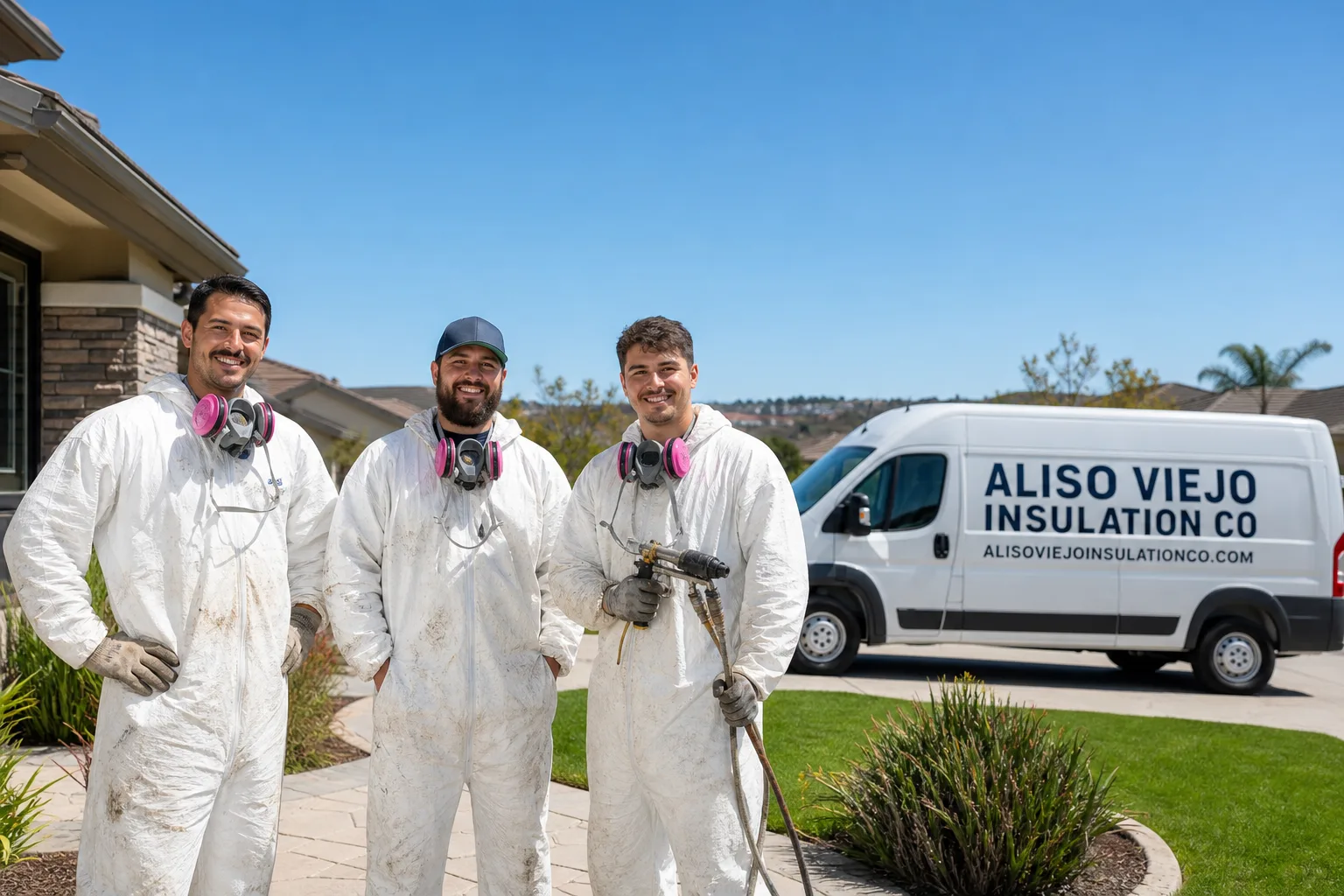
Fast, Reliable Attic Insulation Across Banning
Attic insulation in Banning is a different job than it is 40 miles west. The San Gorgonio Pass doesn’t care how new your roof is. When gusts hit 50 mph, they pressure the attic cavity and turn every gap into a heat leak. We’ve worked enough attics across 92220 to know exactly where those leaks form, and we fix them with materials matched to this specific wind-loaded environment. If your energy bills climb during Santa Ana season or rooms never hold temperature on windy nights, the problem is usually above your ceiling. Call (877) 352-4780 and we’ll walk you through what’s actually happening up there.
Why Aliso Viejo Insulation Co Is Banning’s Preferred Attic Insulation Company
We’re not a Banning franchise with a national script. We’re a Southern California insulation contractor that spends serious time in the Pass, and we’ve learned what works here through hundreds of attic inspections on cinderblock tract homes, Sun Lakes-area manufactured homes, and the stucco subdivisions off Highland Springs and Sunset Avenue. That local repetition matters. An attic on the west side of Banning near the pass behaves differently than one tucked against the hills in the east end, and we plan for that.
Our lead, Nate Calloway, has built the company around matching the right insulation system to the actual building conditions. That means we don’t show up pushing one product and hoping it fits. We show up with access to eight manufacturers and pick what the attic needs. Banning homeowners tell us they appreciate the honesty: when batts are the right call, we say so. When blown-in or spray foam does the job better against wind-driven infiltration, that’s what we recommend. And because our warehouse stocks materials for the Banning area, we can typically be on-site within 48 hours of your call.
Radiant Barrier in Banning
Radiant barrier is one of the most overlooked tools for Banning attics, because this town’s heat problem isn’t just air temperature – it’s solar gain through the roof deck. Banning sits at roughly 2,300 feet with intense daytime sun and fast nighttime cooling, so attic surfaces swing more than 40 degrees between afternoon and pre-dawn. A radiant barrier installed on the underside of the roof rafters reflects radiant heat before it ever reaches your insulation or living space. Combined with a properly wind-secured batt or blown-in layer, it takes a measurable load off your cooling system during those 95-plus degree summer afternoons. Most Banning homes with standard composition shingle roofs see a real difference in upstairs comfort within a day or two of installation.
What The Installation Involves
We staple a reinforced foil laminate to the rafter faces, leaving the required air gap between the foil and the roof deck. The foil’s low-emissivity surface reflects radiant heat rather than absorbing it. In Banning’s dry climate this material performs near the top of its rated range, because humidity doesn’t compromise the air gap the way it can in coastal zones. The job itself is usually done in half a day for a typical 1,200 to 1,800 square foot attic.
Combining Radiant Barrier With Wind Repair
Here’s the Banning-specific part: a radiant barrier does nothing for wind scour. If your batts are already loose and your access panel leaks, adding foil won’t fix the real problem. We sequence the work so that batt re-securing, gap sealing, and panel gasketing happen first, then the radiant barrier goes in as the final layer. That order matters. Foil over a leaking attic is just a shinier heat sieve.
Attic Cleaning Services in Banning
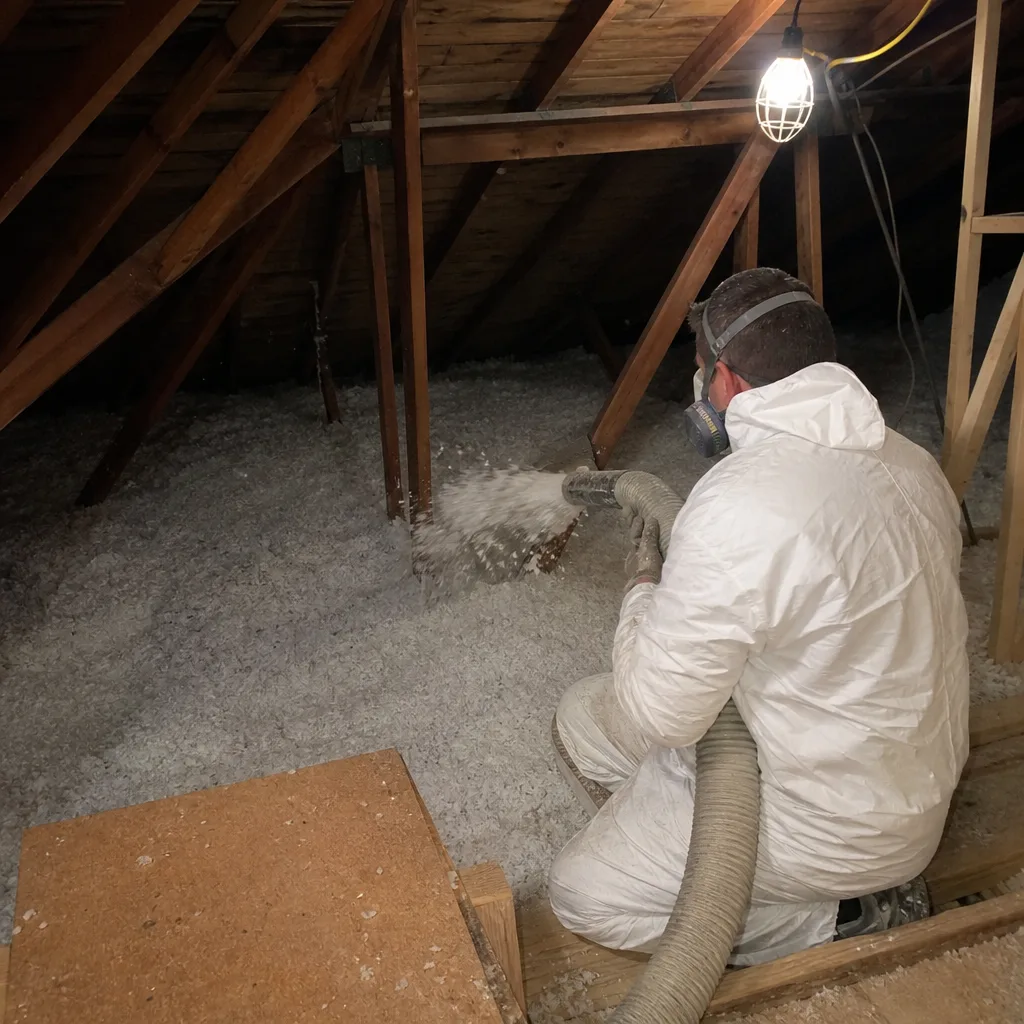
Attic cleaning services in Banning start with the fact that this valley blows dust through every vent and soffit gap during wind season. Fine Pass dust settles into the insulation, reduces its loft, and holds moisture against the attic floor. Older homes in the mid-century tracts near Wilson Street and the I-10 corridor tend to have the worst buildup, especially if the original vents were never baffled properly. We remove the contaminated insulation, vacuum the deck and joist bays, sanitize the surfaces, and then install fresh material. In Banning this is not just a cosmetic service; it directly restores R-value that dust and rodent activity have compromised.
How Attic Cleaning Works In Banning Homes
We bag and haul the old material, then we’ll open up the ridge and soffit vents to check wind baffle condition while the attic is empty. That’s a efficiency most crews miss: you have a clear view of every penetration while the deck is bare, so we inspect the exact spots where Santa Ana winds force dust and pressure into the attic. If baffles are cracked or missing, we’ll flag it before we blow in the new insulation. Otherwise you’ll be cleaning again in two years.
What It Costs
A full attic cleaning and re-insulation for a standard Banning ranch home runs $1.10 to $1.60 per square foot of attic floor, including haul-off and new blown material. If you only need the old material removed and the deck sealed before we return to install, expect $0.70 to $1.00 per square foot. Radiant barrier added on top of a cleaning typically runs $0.95 to $1.45 per square foot of rafter area. These are Banning-market ranges we quote daily, not national averages.
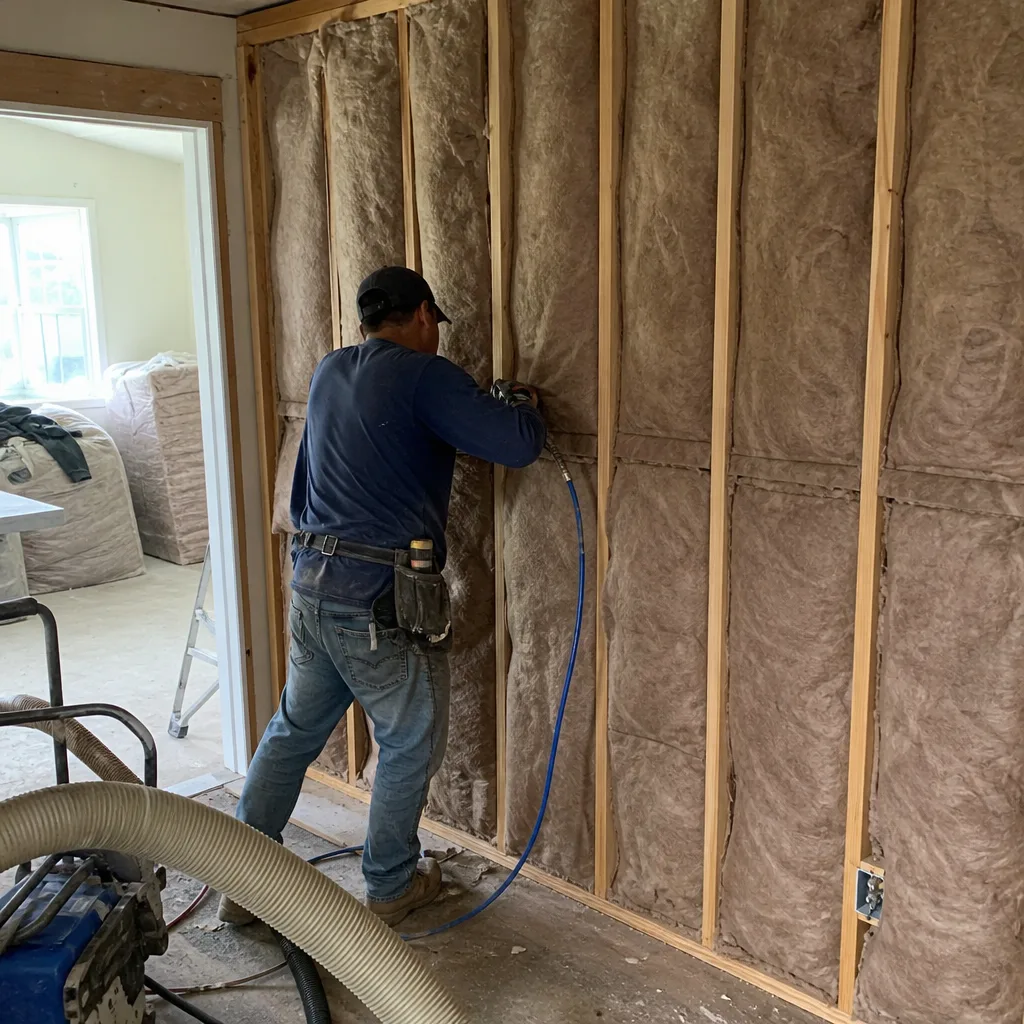
What happens when you call
- 1
A real person answersNo phone trees — you reach a local pro.
- 2
You get an upfront price rangeHonest numbers before anyone is dispatched.
- 3
A background-checked tech heads outLicensed & insured, dispatched right away.
- 4
You approve before work beginsNothing starts until you say go.
Trusted Brands We Service in Banning
We’re authorized to install insulation from eight manufacturers, which means we don’t have to steer a Banning homeowner toward whatever happens to be on the truck. For the wind-loaded attics we see off Highland Springs and Sun Lakes, we often recommend Owens Corning batts with their dense fiberglass structure that resists wind lift better than lower-density alternatives. For blown-in applications we’ll frequently use GreenFiber recycled cellulose, which packs tightly enough to resist infiltration through the gaps that Banning’s pressure differentials create. And for projects that need both thermal and acoustic performance in cathedral ceilings, Johns Manville is a go-to. We stock these brands locally for Banning-area jobs and can usually turn a whole-attic replacement in one day once you approve the scope.
Common Attic Insulation Problems We See in Banning Homes
- Wind-stripped batt fields. San Gorgonio Pass gusts, especially from the west and north, lift fiberglass batts off the attic floor and pile them against the far gable end. That leaves bare ceiling zones directly under the roof deck, and on a windy 50-degree night those zones read as a cold spot in every room below.
- Fluttering attic access panels. The panel in a hallway or closet ceiling gets pressure-loaded during Santa Ana events. The gasket fails, the panel chatters, and the attic effectively becomes a ventilated extension of your living space. Warm air leaves through the attic, dust blows down through the panel gap, and the insulation isn’t the problem: the penetration is.
- Bare block-wall cavities. Mid-century cinderblock homes near Sun Lakes and the older tracts off Wilson Street often have zero insulation in the block cores. That mass heats up all day, radiates into the attic at night, and any attic insulation you add is fighting a thermal reservoir that bypasses it completely. The fix is blow-in or injection into the block cavities, tied to the attic work.
- Dust-laden and rodent-compressed cellulose or fiberglass. Banning’s dry air means fine dust travels. Once it settles into the insulation, it bridges the air pockets that give the material its R-value. We find the worst cases in homes with un-baffled soffit vents, where every wind event injects another coat of Pass dust into the attic.
Pricing for Attic Insulation in Banning, CA
A standard blown-in attic top-up for a 1,200 square foot Banning ranch runs $950 to $1,450, assuming the existing insulation is clean and the batts are still in place. A full removal, air-seal, and re-insulation job on the same size home runs $2,200 to $3,600 depending on access, vent baffle replacement, and the final R-value you want. Batt replacement with wind-rated fasteners runs $1.40 to $2.10 per square foot of attic floor. Block-wall cavity fill on a mid-century cinderblock home adds $3.50 to $5.50 per square foot of wall area. These are the numbers we actually quote in Banning, and we’ll give you a written, line-item estimate before any work starts. Call (877) 352-4780 for a free attic inspection and we’ll measure your exact attic, test the wind exposure on your roof orientation, and hand you a fixed price.
We Also Serve Cities Near Banning
Our crews work across the Pass and into the foothills. We handle Attic Insulation projects in Banning daily and serve Cabazon, Calimesa, Yucaipa, and Valle Vista with the same material-matched approach. If you’re in one of those communities and your attic hasn’t been inspected since the last big Santa Ana, we’re a short drive away.
Serving Banning, CA — Our Local Coverage Area
We’re based in the Banning area and know this community well. Use the map below to see our service coverage — if you’re nearby, we can almost certainly help.
FAQs About Attic Insulation in Banning
Because Banning sits directly in the San Gorgonio Pass wind corridor. Sustained 30-plus mph gusts, gusting higher during Santa Ana events, pressure-load the attic cavity through soffit and gable vents. In a sheltered city like Yucaipa that same batt field stays put. In Banning, the wind lifts the batt edges, breaks the friction hold, and slides them across the floor. The fix is wind-rated batt fasteners plus sealing the vent penetrations that create the pressure differential. Call (877) 352-4780 and we’ll evaluate where your attic is losing the fight.
Push up on the panel from below and listen for any rattle or movement. If it gives at all, the gasket is shot and the panel is acting as a wind scoop during gusts. Even a 1/16-inch gap around a 24×24 panel moves a surprising amount of air when the Pass is blowing. We can re-gasket the frame, add positive latching, and insulate the panel backside so it stops being a thermal hole in your hallway ceiling.
It needs additional work, yes. The block walls themselves are uninsulated thermal mass, and on a windy night they radiate heat outward while the attic insulation sits above doing a job the walls are undoing. So the attic gets wind-secured batts or blow-in, but we also fill the block cores with blown material to stop the bypass path. A stucco-and-frame tract house typically doesn’t need that wall work because the framing cavity has some insulation. Two different diagnoses, two different scopes.
Because insulation slows conducted and convective heat, but it doesn’t reflect radiant heat from a 140-degree roof deck at 3 p.m. in July. The radiant barrier does that job. In Banning’s high-sun, low-humidity climate the foil surface keeps the attic air noticeably cooler, which reduces the delta between attic and living space. That translates to less strain on your AC and better usability of the attic itself if you store anything up there.
Walk the perimeter of your ceiling rooms on a windy night and feel for cold bands near the walls. If you have blown-in insulation, check whether the depth looks uniform or if you see bare spots and mounding against one gable end. If you can hear faint flapping from a vent or the access panel during gusts, the attic cavity is pressurizing. Any of these signs means the wind has already moved your insulation. Call (877) 352-4780 and we’ll inspect it, show you photos from the attic, and quote the reinforcement work.
Written by Nate Calloway, Owner at Aliso Viejo Insulation Co, serving Banning homeowners with wind-matched attic insulation systems.