Fast, Reliable Attic Insulation Across Crestline
Attic insulation in Crestline has to work harder than it does down the hill. Winter nights on the 92325 hillside drop into the 20s, snow loads sit on ridge lines for days, and those shaded cabins and A-frame roof lines trap moisture that never quite dries out. If your heating bills spike every December or you keep finding cold drafts near the knee walls, the fix usually starts overhead. We run crews into Crestline weekly, know the old-growth pine and oak canopy conditions here, and can usually schedule an attic assessment within a few days. Call (877) 352-4780 and we’ll walk you through what your attic actually needs.
Why Aliso Viejo Insulation Co Is Crestline’s Preferred Attic Insulation Company
Mountain work is different from valley work, and Crestline keeps proving that to us. We’ve pulled acorn caches out of batt insulation on lots off Lake Gregory Drive, found unvented attic cavities sweating against 1960s cedar framing near the Twin Peaks side, and rescued knob-and-tube runs that past retrofits buried under loose fill. Homeowners here ask sharper questions because they’ve watched one-size-fits-all contractors underinsulate cabins and leave moisture problems behind. Our answer is material matching: we pull from eight manufacturers, so a fire-rated mineral wool spec for a high-severity-zone home is as routine for us as a recycled cellulose blow-in for a 1920s vacation cabin.
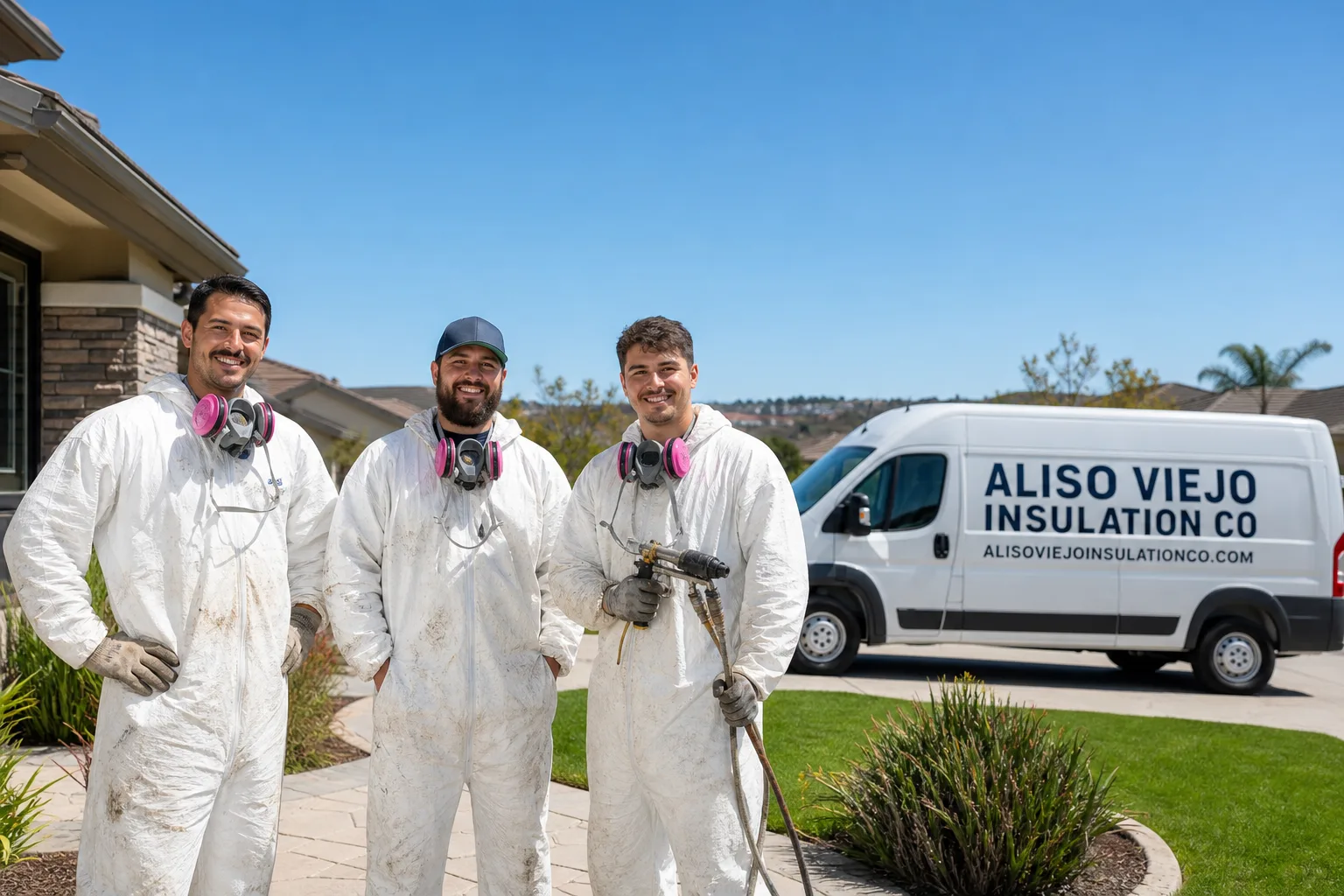
Nate Calloway built our process around diagnosis first. No brand loyalty, no push to spray foam everything. If your roof deck needs air sealing and baffles before new insulation goes in, we’ll tell you before we quote. Crestline customers repeatedly point to that honesty in reviews. We don’t publish a review count we can’t verify, but the consistency of our local callbacks tells the real story. And because we’re Attic Insulation specialists rather than a general contractor, the crew that shows up at your Crestline door has spent their whole week in attics, not splitting time across three trades.
Response time matters up here. A blown-open soffit vent after a February storm lets snow melt drip straight into your insulation, and mold sets in within days. We prioritize Crestline calls during winter storm cycles and fire-season prep windows. If you’re within the 92325 ZIP code, you’re a local run for us, not a special trip.
Attic Mold Removal in Crestline
Attic Mold Removal in Crestline usually starts with a shaded roof deck and an unvented cavity that never gets a chance to dry. The pine and oak canopy that keeps these lots cool in summer also blocks the sun that would otherwise bake moisture out of an attic. When old fiberglass batts sit damp against 1950s plank sheathing for a season or two, mold moves in. In Crestline we see it most often in cabins with inadequate soffit venting and in homes where bathroom fans vent directly into the attic instead of through the roof. A typical mold remediation job combined with insulation removal in Crestline runs $1,800 to $4,200 depending on square footage and how deep the contamination goes.
Where Mountain Mold Hides
The worst pockets are usually along the north-facing roof plane and around recessed light fixtures, where warm interior air meets the cold deck. We also find mold under old batt insulation that’s been flattened by rodents, since compressed fiberglass holds moisture against the framing.
What We Remove and What We Keep
We bag and remove contaminated insulation, treat the affected framing, then air-seal the penetrations that fed the moisture in the first place. If the roof deck itself is soft, we’ll flag it before we re-insulate, because new insulation over rotted sheathing just hides the problem until it falls through.
Attic Insulation Removal in Crestline
Attic Insulation Removal in Crestline is the step most retrofits need before anything new goes in, and mountain cabins from the 1920s through the 1970s are the prime candidates. These homes often carry their original insulation, if they ever had any, plus decades of squirrel nests, acorn caches, pine needles, and dust. You can’t simply blow new cellulose over that. The old layer has to come out so we can see what’s underneath: knob-and-tube wiring, rotted decking, gaps around the top plates. Removal alone for a typical 900 to 1,400 square foot Crestline attic runs $1,200 to $2,800, with haul-away included.
When Removal Becomes the Only Option
Rodent contamination is the trigger we see most in Crestline. Once mice or squirrels tunnel through batts, the insulation loses its loft and its purpose, and the droppings make the space a health issue. We also pull old insulation after roof leaks, fire damage, or any retrofit where the old material sits below the level of the top plates.
What Happens After the Attic Is Empty
We inspect the cavity, map any active wiring, and air-seal the top plates, plumbing penetrations, and chases. That’s the difference between insulation that performs and a fresh layer of material leaking the same heat as the last one. Only after that do we recommend the right replacement, whether blown-in, batt, or spray foam.
Trusted Brands We Service in Crestline
We stock and install GreenFiber cellulose, Owens Corning fiberglass, Johns Manville batts, and Knauf products among our broader eight-brand lineup. For Crestline specifically, we keep fire-rated mineral wool and pest-resistant cellulose on hand because those are the materials these mountain homes actually call for. When your attic needs Rockwool on the knee walls to hit Class A fire-rating, or GreenFiber blown over a de-energized knob-and-tube run, we’re not waiting on a supplier. We carry the full method range too: blown-in, batts, and open- or closed-cell spray foam. That breadth means the recommendation you get is driven by your roof, your climate zone, and your budget, not by what’s left on the truck.
Common Attic Insulation Problems We See in Crestline Homes
- Acorn and pine-needle caches inside batts. Squirrels and mice treat fiberglass like a burrow. We regularly pull batts from Crestline attics where half the R-value is gone because rodents packed the cavities with debris and tunneled through the rest, creating highways to the crawl space below.
- Unvented, shaded attic cavities holding moisture against old framing. A full canopy sounds nice for summer, but it means the roof deck never dries. When soffit vents are blocked or missing on a 1940s cabin, trapped humidity feeds mold on the original board sheathing within two seasons.
- Knob-and-tube wiring buried under loose fill. Past retrofitters often blew insulation right over active knob-and-tube, which the wiring was never designed for. We find this in Crestline’s older cabins constantly, and it has to be addressed before any new insulation touches the space.
- Sloped-lot knee walls with little or no insulation. Homes built down the hillside often have inaccessible knee wall cavities that were simply ignored at construction. Cold radiates through those angled walls into the living space, and no amount of attic floor insulation fixes it. These need Rockwool or closed-cell foam, usually with rodent exclusion first.
Pricing for Attic Insulation in Crestline, CA
Blown-in attic insulation for a standard 1,000 to 1,200 square foot Crestline home typically runs $1,800 to $3,400, depending on existing depth and whether removal comes first. Batt insulation jobs land between $2,200 and $4,000. Spray foam is the premium option at $4,500 to $9,000 for a full attic, and most Crestline homeowners choose closed-cell on the roof deck to handle both R-value and the fire-rated requirement. Attic top-ups, where we add blown-in over clean existing insulation, run $900 to $1,800. Factors that shift the price: access difficulty on sloped lots, knob-and-tube remediation, rodent cleanup, and whether baffles and venting need to be installed. We give free estimates, and the number we quote is the number on the invoice. Call (877) 352-4780 and we’ll walk the space with you.
We Also Serve Cities Near Crestline
Beyond Crestline, our crews cover Lake Arrowhead for larger vacation homes with vaulted ceiling insulation needs, Muscoy for older valley stock, San Bernardino for larger retrofits, and Highland for newer construction top-ups. If you’re on the mountain or just below it, see our Attic Insulation in Crestline page for local details, or call and we’ll confirm your address right away.
Serving Crestline, CA — Our Local Coverage Area
We’re based in the Crestline area and know this community well. Use the map below to see our service coverage — if you’re nearby, we can almost certainly help.
FAQs About Attic Insulation in Crestline
Crestline sits inside a designated high fire severity zone, which means any insulation retrofit here is held to Class A fire-resistance standards that inland-valley homes one ridge over aren’t required to meet. Most of Crestline’s 1920s – 1970s cabins were built before these codes existed, so their original insulation, if any, wouldn’t pass today. Using Rockwool mineral wool or properly rated closed-cell foam is not an upsell here; it’s the only spec that keeps your home compliant and defensible during fire season. Call (877) 352-4780 for an assessment against current Crestline requirements.
We run crews into the 92325 ZIP code every week, and during winter storm cycles or fire-season prep we prioritize Crestline calls. Most homeowners get an initial attic assessment within three to five business days, and emergency removal after a roof leak or storm damage is often available same-week. Call us at (877) 352-4780 and we’ll give you a straight answer on scheduling.
We cover the full 92325 area, including the steeper sloped lots around Lake Gregory, the shaded cabin clusters near the Twin Peaks side, and the older builds along the main ridge roads. Hillside access and tight attic hatches are part of why mountain work requires a specialty crew, and we’re set up for it.
Slightly, and for honest reasons: mountain access, debris haul-out, fire-rated material requirements, and rodent cleanup all add labor that a flat valley attic doesn’t have. A typical Crestline job might run 10 to 20 percent above a comparable San Bernardino attic. The free estimate accounts for those specifics up front, and the quote doesn’t change at the end. Call (877) 352-4780 for a number before you decide.
We stand behind the installation with workmanship coverage, and the materials we install carry manufacturer warranties that apply to Crestline’s heating-dominated, fire-zone conditions. That’s one reason we use Rockwool, GreenFiber, Owens Corning, and Johns Manville products: their warranties are backed by decades of field testing in mountain climates, not repackaged generic specs. Call (877) 352-4780 and we’ll walk through what coverage applies to your specific job.
If your Crestline attic is underinsulated, rodent-damaged, or holding moisture against old framing, the next step is an honest look at it. We’ll tell you what’s there, what it’s doing, and what the right fix costs. Call Aliso Viejo Insulation Co at (877) 352-4780 for a free estimate.
Written by Nate Calloway, Owner at Aliso Viejo Insulation Co, serving Crestline and the San Bernardino Mountains since the company’s founding.