
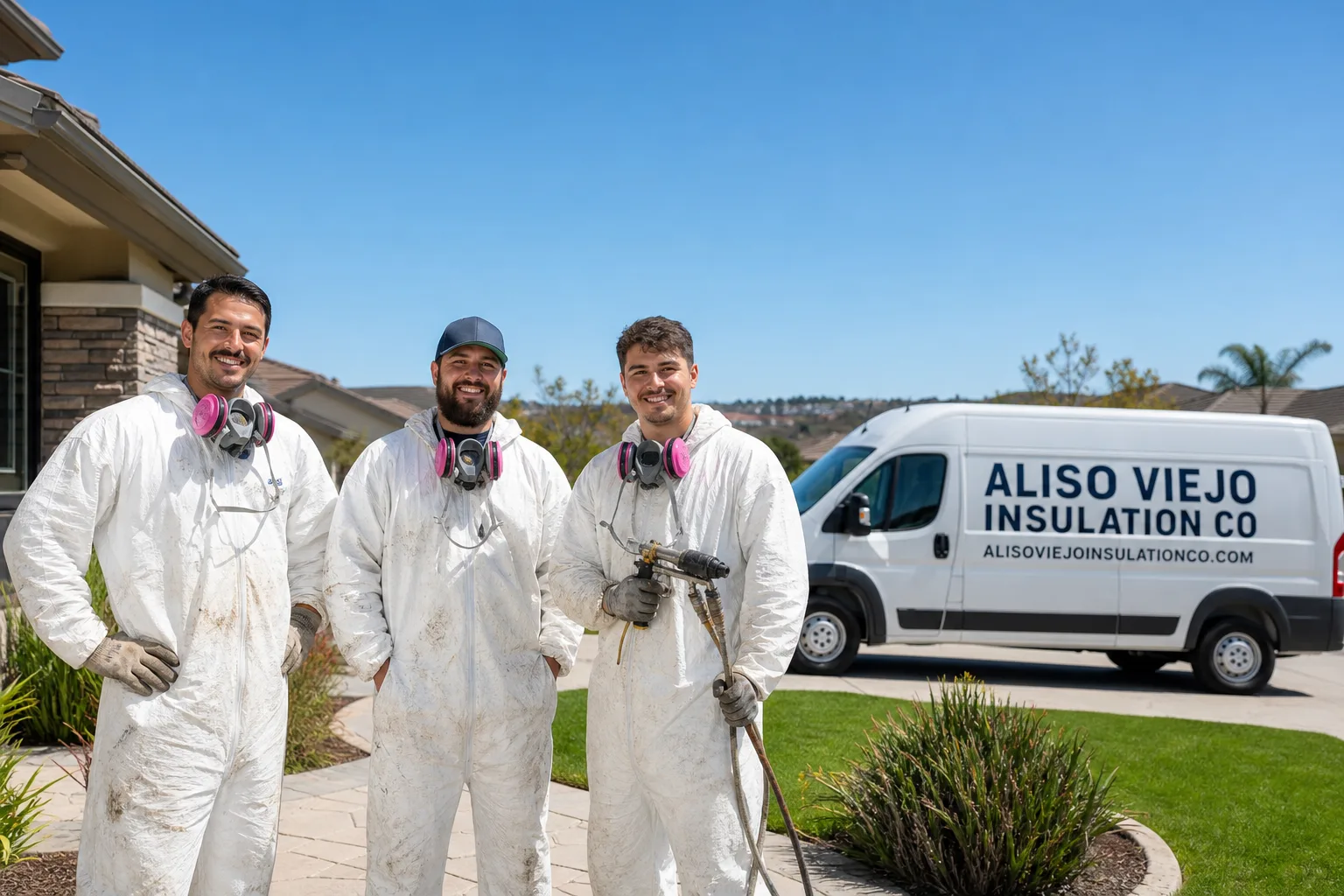
Fast, Reliable Attic Insulation Across La Habra
Attic insulation in La Habra usually costs between $1,450 and $3,200 for a typical single-family home, depending on the method you choose and the condition of what’s already up there. Most jobs take one day once the attic is prepped. We work throughout La Habra’s 90631, 90632, and 90633 zip codes, and because we know this housing stock well, we can usually spot the real problem within the first 15 minutes of looking.
If your energy bills spike every August and your upstairs rooms never quite cool down, the attic is the first place we look. Call Nate Calloway’s team at (877) 352-4780 for a free estimate. We’ll tell you what’s actually going on up there, whether it’s crushed batts, missing air-sealing, or ductwork that belongs outside instead of inside.
Why Aliso Viejo Insulation Co Is La Habra’s Preferred Attic Insulation Company
La Habra homeowners call us because we diagnose before we recommend. Most of the homes here were built between 1955 and 1975, and the attics tell a very specific story: original fiberglass batts that have settled to half their rated R-value, bath fans dumping humid air directly onto plywood sheathing, and furnace platforms that crushed insulation flat. We see it in the ranches near La Habra High, in the two-stories along Idaho Street, and in the hillside tracts climbing toward La Habra Heights.
Our crews work on Attic Insulation specifically. That’s all we do. No roofing, no HVAC replacement, no general contracting. Nate Calloway built the company around a single trade so the technician in your attic actually understands thermal bypasses, vapor drive, and venting dynamics, not just how to run a blower hose.
We respond to La Habra calls within one business day, and most estimates happen the same week. We carry materials from eight manufacturers, which matters because the right fix for a 1962 ranch off Whittier Boulevard is usually different from the right fix for a 1978 two-story near Westridge. You get a recommendation based on your attic, not on what’s loaded in our truck.
Insulation Contractors in La Habra
Insulation contractors in La Habra who know this housing stock understand that the job is rarely just “add more insulation.” In the postwar tracts here, the attic is a system: the insulation, the roof sheathing, the bath fans, the can lights, the wiring bypasses, and the furnace platform all interact. Skip air-sealing and you’ll push conditioned air into a 140-degree attic all summer. Ignore a bath fan that vents into the attic and you’ll trap moisture under whatever new insulation you add.
Our Attic Insulation in La Habra work always starts with an attic inspection. We look at what’s there, what’s been disturbed, where the air is leaking, and where the moisture is traveling. Then we recommend material, method, and R-value.
Attic Assessment and Venting
Before we add material, we check every penetration: top plates, plumbing stacks, wiring chases, recessed lights. In La Habra homes from the 1960s, these are almost never sealed. We also verify that every bath fan and dryer vent actually terminates outside, not into the attic cavity.
Material-Matched Application
We install fiberglass batts, blown cellulose, mineral wool, and spray foam. The right choice depends on your roof pitch, existing insulation condition, and venting configuration. A low-slope roof with restricted access often calls for closed-cell spray foam; a standard gable roof on a ranch home might do fine with blown cellulose over air-sealed top plates.
Attic Ventilation in La Habra
Attic ventilation in La Habra’s older homes is frequently inadequate or incorrectly modified. The original builders relied on gable vents and small eave openings that don’t move enough air for the inland foothills summer heat. When you add deeper insulation over a poorly vented attic, you can make things worse: heat gets trapped, moisture condenses on the underside of the sheathing, and the plywood starts to stain.
We check soffit vents for blockage, verify that ridge or gable venting still functions, and make sure bath fans and dryers discharge outside. This matters as much as the insulation itself.
Soffit and Ridge Airflow
Many La Habra attics have soffit vents that were painted over or blocked by roofers. Without intake air at the eaves, ridge and gable vents can’t pull heat out effectively. We clear and rebuild the airflow path before adding insulation.
Bath Fan and Dryer Termination
This is the problem we fix most often in La Habra. A bath fan or dryer that terminates in the attic is dumping warm, humid air directly under the roof deck. In winter, that moisture condenses on the cold plywood. In summer, it re-evaporates but leaves mineral streaks and rust stains. We reroute these to roof jacks or wall caps every week in this city.
Trusted Brands We Service in La Habra
We install insulation from Johns Manville, Knauf, Rockwool, and CertainTeed, plus spray foam systems from Icynene and Demilec, and we also handle Reflectix repair in La Habra. That material depth means we can match the product to the application: Rockwool for fire-resistant attic separations on attached homes, GreenFiber cellulose for eco-conscious blown-in work, CertainTeed batts for straightforward batt replacement jobs. Most La Habra customers don’t know which brand they need, and they shouldn’t have to. That’s our job. The answer comes from the attic conditions, not from a preferred vendor agreement.
Common Attic Insulation Problems We See in La Habra Homes
- Dark stains on plywood sheathing. Almost always bath fans or dryer vents discharging into the attic. The stains appear at the roof deck near the fan location, and they worsen when more insulation is added on top, trapping moisture against the wood. Fix the venting first, then insulate.
- Crushed or displaced fiberglass batts under HVAC platforms. Builders and furnace installers set platforms on top of batts, compressing them to near-zero R-value and leaving bare hot spots over rooms. We remove and replace what was damaged, then re-insulate properly around the equipment.
- Missing air-sealing at top plates and can lights. Recessed lights from the 1960s and 70s are rarely rated for insulation contact, and the gaps around them pull conditioned air into the attic constantly. We air-seal before we blow anything in.
- Uneven blown-in coverage from previous quick-fix jobs. Hand-blown cellulose that’s thick in the center and bare at the eaves is common in La Habra, especially in ranch homes where previous owners took the cheapest bid. Depth varies, R-value drops, and rooms over the eaves bake in summer.
Pricing for Attic Insulation in La Habra, CA
For a typical 1,200 to 1,800 square foot La Habra home, blown-in cellulose over an existing layer runs $1,450 to $2,200 including air-sealing. Full batts replacement in a 1950s ranch with new venting and baffle work typically lands between $2,400 and $3,200. Spray foam is higher: $3,500 to $6,500 for open-cell in a standard attic, more for closed-cell. The variables are attic size, access difficulty (hillside homes with low-slope roofs cost more to work in), and whether we need to correct bath fan or dryer venting first.
We give exact quotes before work starts. Estimates are free. Call (877) 352-4780 and we’ll schedule a time to get in the attic and measure.
We Also Serve Cities Near La Habra
We work regularly in La Habra Heights, East La Mirada, Fullerton, and La Mirada. Much of that housing is similar in age and construction, so the same venting and air-sealing issues apply. If you live nearby, our crews already know the building patterns. La Habra remains home base for our southern work, but we quote the same way anywhere in the area.
Serving La Habra, CA — Our Local Coverage Area
We’re based in the La Habra area and know this community well. Use the map below to see our service coverage — if you’re nearby, we can almost certainly help.
FAQs About Attic Insulation in La Habra
Dark stains on attic plywood in La Habra are almost always condensation stains from bath fans or dryer vents discharging into the attic rather than outside. Warm, humid air hits the cold underside of the roof deck, especially on winter mornings, and the moisture collects and streaks the wood. Adding insulation over this without fixing the venting makes the staining worse because the insulation holds the moisture closer to the sheathing. Call us at (877) 352-4780 and we’ll find the source.
No. More insulation over displaced batts doesn’t fix the problem. The crushed or shoved-aside batts are losing most of their R-value where they’re compressed, and the bare spots around the furnace platform leak heat into the attic. The fix is to remove the damaged material, re-insulate properly around the equipment, and air-seal the platform and nearby penetrations first. Then add new material to target depth.
R-49 to R-60 is the practical target for attic floors in La Habra. The DOE recommends R-49 or higher for this climate zone because summers run 10 to 15 degrees hotter than coastal Orange County. Getting there usually means 16 to 20 inches of blown cellulose or the equivalent in batts and air-sealed coverage. We’ll measure your current depth and tell you exactly what’s needed to reach target.
Usually yes. A 1970s La Habra two-story typically has inadequate soffit intake, and if you deepen the insulation past the eave vents without adding baffles, you’ll block the airflow entirely. We add baffles at every rafter bay, clear the soffit vents, and verify that ridge or gable exhaust can actually pull air through. The venting and insulation have to work together or you end up with a hotter attic than before.
Yes, and we do it on nearly every attic job here. Old can lights, unsealed top plates, and wiring penetrations are the biggest air leaks in La Habra’s 1950s and 60s construction. We air-seal all of them before adding insulation because sealing after the fact means pulling the new material back out. The air-sealing typically adds a few hundred dollars to the job and pays for itself in the first summer.
Written by Nate Calloway, Owner at Aliso Viejo Insulation Co, serving La Habra since day one.