
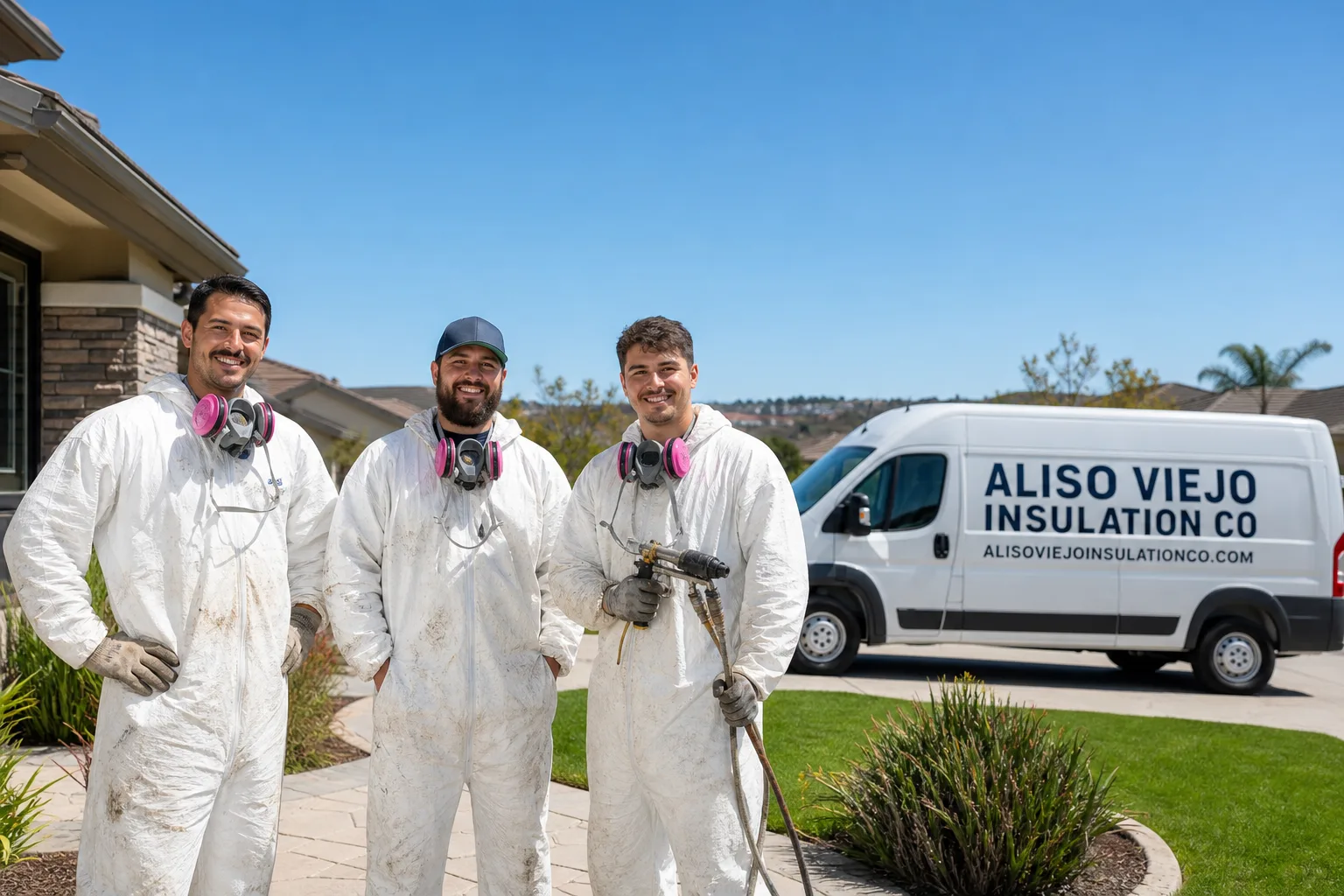
Fast, Reliable Attic Insulation Across Laguna Beach
Attic insulation in Laguna Beach runs $1,900 to $6,800 for a typical full attic on a 1,200 to 2,200 square foot home, with blown-in cellulose and fiberglass landing on the lower end and closed-cell spray foam or Rockwool batts on the higher. We’re out in Laguna Beach most days of the week, and same-week scheduling is usually available for homeowners in 92651 and 92652. Our team knows the canyon hillsides, the beach flatlands, and the specific ways this town’s marine layer and older housing stock create attic problems you won’t find in Newport or Irvine. If you’ve got hot rooms upstairs, musty air, or energy bills that don’t match the size of the house, call Nate and the crew at (877) 352-4780 for a free estimate.
Why Aliso Viejo Insulation Co Is Laguna Beach’s Preferred Attic Insulation Company
We’ve spent years working in the flatlands around Broadway and Coast Highway, and up in Temple Hills, Bluebird Canyon, and Arch Beach Heights where the houses sit on grade transitions and pier-and-beam spans. That matters because the right fix for a 1950s beach cottage on a slab is completely different from what works in a 1970s canyon home with vaulted open-rafter ceilings and zero original ventilation. The brand-agnostic approach is the whole point: when insulation is all you do, you don’t push the product that’s already loaded on the truck. You read the house first.
We’re authorized to install products from eight manufacturers, so the recommendation comes from what that specific attic actually needs: moisture management, ventilation, R-value, or fire resistance. Homeowners in Laguna Beach appreciate that we speak plainly about what’s failing and why, instead of burying them in options. Call (877) 352-4780 and you’ll talk to someone who has worked on homes just like yours in Laguna.
Insulation Contractors in Laguna Beach
Insulation contractors in Laguna Beach handle three distinct conditions most flatland cities never see: hillside hydrology, marine-layer moisture, and wildland-interface ember risk. A full attic insulation job here starts with an inspection of the existing assembly, from the soffit vents to the ridge, and includes air sealing around penetrations, baffles where needed, and the installation itself. Attic batt insulation in Laguna Beach typically runs $1,900 to $3,400 for rockwool or high-density fiberglass; blown-in cellulose or fiberglass comes in at $2,100 to $4,600 depending on depth and prep. The cost swings are driven by access, whether we’re pulling old material, and how much air sealing and baffle work the assembly needs.
Hillside & Canyon Slope Attics
Homes on Pier-And-Beam over canyon drainages need a different sequence: floor sealing before fluffing the attic. Pier-and-beam foundations let seasonal drainage moisture work its way up; that moisture must be cut off before you invest $3,000 in batts that will just go moldy again.
Flatland Beach Cottages
In the 1920s to 1950s flatland cottages, the job is usually about getting access into very shallow attic cavities. Fiberglass batts and blown-in are often the only options; the real task is stopping air movement through open eaves and old can lights.
Attic Ventilation in Laguna Beach
Attic ventilation in Laguna Beach isn’t a formality, it’s the only thing standing between a dry assembly and a rotting one. Coastal fog and overcast mornings mean attics here spend more time in a damp state than inland attics do; when you add unvented cathedral ceilings from 1960s remodels, moisture works into sheathing and rafter bays with nowhere to go. Attic baffles and ventilation prep in Laguna Beach run $400 to $1,200 for typical homes, with ridge vents and soffit work on top of that. If you’ve got sheathing rot visible at the rafter bays, that’s a bigger conversation about repair before insulation.
Soffit & Ridge Ventilation
The standard fix for older Laguna homes with gable-and-soffit ventilation: add baffles to keep the soffit intakes open, then balance the ridge or gable exhaust to get a real air path through the attic. It’s straightforward work but critical before we add new batts or blown-in material.
Unvented Cathedral Ceilings
For canyon homes where rafters run from the ceiling plane to the underside of the roof deck with no air gap, we recommend closed-cell spray foam applied directly to the underside of the sheathing. This is where working with both Icynene and Demilec matters: we can match the product to whether the assembly needs maximum R-value per inch, moisture resistance, or a budget-friendly open-cell option.
Trusted Brands We Service in Laguna Beach
We install and service Owens Corning fiberglass, Johns Manville batt and blown products, and GreenFiber recycled cellulose in Laguna Beach attics. We stock common sizes and have the full manufacturer support for specialized products like Rockwool’s mineral wool batts, which matter in wildland-interface neighborhoods where fire resistance is part of the spec. Because we operate across eight manufacturer lines, the recommendation is driven by the assembly and the budget, not by what’s on a truck. That’s the advantage of a single-source specialist: full-method coverage, one objective recommendation. For Attic Insulation work in the canyon and flatland neighborhoods, we keep turnaround fast because we stock the common Laguna materials locally, not in a warehouse 40 miles inland.
Common Attic Insulation Problems We See in Laguna Beach Homes
- Sagging, wet batts above pier-and-beam crawlspaces. Winter rain drives through the drainage paths under homes in Arch Beach Heights and Bluebird Canyon, and moisture travels up through the floor into the attic assembly. We routinely pull fallen, moldy fiberglass from crawlspaces and attic floors that owners never see until the smell wanders up.
- Vaulted open-rafter ceilings with no air path. 1960s and 1970s canyon homes often have cathedral ceilings with no ridge or soffit ventilation. Marine-layer moisture gets trapped in the rafter bays, silently rotting the sheathing from the inside out.
- Ember intrusion through open gable and soffit vents. In wildland-urban interface zones on the east edge of Laguna, attic vents designed for cooling become funnels for embers during Santa Ana events. Insulation that’s fire-rated doesn’t help if the assembly is open to ignition points.
- Insulation missing behind remodeled rooms and additions. Stucco-over-sheathing assemblies and older remodels often have gaps where walls were moved or rooms added. We find 60-year-old fiberglass compressed to nothing in cavities, or no insulation at all behind newer drywall.
Pricing for Attic Insulation in Laguna Beach, CA
Attic insulation replacement in Laguna Beach runs $2,800 to $6,800 when we’re removing old material and reinstalling. A simple top-up over existing insulation runs $1,100 to $2,400 depending on depth and area. Blown-in attic insulation in Laguna Beach starts around $2,100 for a flatland cottage, while closed-cell spray foam on a hillside vaulted ceiling assembly can push toward $6,800 or more. The spread reflects access difficulty, assembly type, and whether moisture or ventilation work is needed first. Every job gets a free inspection and a written quote before any work starts, so you know the number before you commit. Call (877) 352-4780 to schedule yours.
We Also Serve Cities Near Laguna Beach
Our insulation crews serve Laguna Beach and the surrounding south Orange County communities: San Joaquin Hills, Aliso Viejo where our shop is based, Laguna Woods, and Laguna Hills. If you’re in one of those areas and need attic work, the same free estimate applies.
Serving Laguna Beach, CA — Our Local Coverage Area
We’re based in the Laguna Beach area and know this community well. Use the map below to see our service coverage — if you’re nearby, we can almost certainly help.
FAQs About Attic Insulation in Laguna Beach
In Arch Beach Heights, the moisture isn’t coming from the roof, it’s coming from below. Homes there sit on pier-and-beam foundations over seasonal canyon drainages, and winter rains send water through those crawlspaces. Moisture climbs through the floor assembly and reaches the attic floor, where fiberglass batts soak it up and collapse. The fix is sealing the crawlspace with a vapor barrier and drying the assembly before reinstalling insulation, or you’ll repeat the problem every winter. Call (877) 352-4780 and we’ll inspect the full moisture path from crawlspace to ridge.
Yes, but the sequence matters: ventilation and air sealing come first, then insulation. In these older vaulted assemblies, the typical approach is closed-cell spray foam applied to the underside of the roof sheathing, which creates an air, vapor, and thermal barrier in one product. Depending on the rafter depth and whether you’re keeping the exposed beams, we may use Rockwool batts with a vented air gap instead. The right call depends on whether the roof deck has any sheathing rot, and that’s why we inspect before we quote.
It should. Homes on the east side of Laguna, near the open canyons and wildland-urban interface, face ember intrusion risks during Santa Ana wind events. We recommend ember-resistant vent covers on soffit and gable openings and favor Rockwool mineral wool batts where possible, because they carry a Class A fire rating and don’t smolder from an ember. If the budget allows, closed-cell spray foam from Icynene or Demilec can also seal the attic floor against ember travel. The insulation itself is only part of the equation; the assembly has to resist ignition points.
Inland cities get hot, dry attics that bake insulation from above. Laguna Beach attics run cooler but sit wet longer, especially from May through July when the marine layer hangs into the morning. That persistent dampness penetrates fiberglass batts and reduces their effective R-value, and it feeds mold on the north and west roof slopes. In Laguna, we prioritize air sealing and ventilation before adding insulation volume; adding R-value without controlling moisture just gives you a wetter, moldier attic at higher cost.
Flatland cottages usually have very shallow attics with limited access, often through a small scuttle in a closet. The job involves pulling whatever old material is there, sealing around can lights and wiring penetrations, installing baffles to protect any soffit vents, and blowing in cellulose or fiberglass to the proper depth. These older homes rarely have ridge vents, so we often add ventilation at the same time. Expect the work to take one to two days, depending on access and how much demolition is needed. Call (877) 352-4780 for an exact quote on your cottage.
Written by Nate Calloway, Owner at Aliso Viejo Insulation Co, serving Laguna Beach attics, crawlspaces, and thermal envelopes across south Orange County.