

Answer for March Air Force Base Homeowners
Attic insulation in March Air Force Base typically costs $1,400 to $3,800 for a full attic in a mid-century base home, with attic top-ups running $650 to $1,300. Most jobs take one day once we’re on site. The bigger issue in ZIP 92551 isn’t just the insulation depth, it’s what’s underneath it: unsealed top plates and wire penetrations left over from the quick-build military housing era. If your home was built between 1950 and 1980, call (877) 352-4780 before adding batts, because adding insulation on top of open penetrations is like filling a bucket with a hole in the bottom.
Fast, Reliable Attic Insulation Across March Air Force Base
We work on homes throughout 92551, from the neighborhoods directly adjacent to March ARB to the streets off Van Buren Boulevard and Nandina Avenue. Our crews know these attics: tight access hatches in hallway ceilings, shallow 2×4 top plates, original cellulose that’s turned to dust, and ductwork run through sweltering soffit spaces. The heat load here is serious. Perris Valley afternoons regularly hit triple digits, and the wind moving across the valley floor pushes hot air and fine dust into any unsealed gap in your attic assembly. That’s a March Air Force Base-specific problem, not something you read about in a generic insulation brochure.
We respond to calls in March ARB and the surrounding area fast, usually same-week for estimates and often same-week for installation, depending on the scope. If your attic is pushing 140°F and the AC can’t keep up, call (877) 352-4780. We’ll get someone to your attic, not just your door.
Why Aliso Viejo Insulation Co Is March Air Force Base’s Preferred Attic Insulation Company
Most insulation contractors show up with whatever brand is on the truck. We don’t work that way. Aliso Viejo Insulation Co is authorized to install products from eight manufacturers: Owens Corning, Johns Manville, Knauf, Rockwool, CertainTeed, Icynene, Demilec, and GreenFiber. That breadth matters in March Air Force Base because the housing stock isn’t uniform. A 1950s military-family home near the base needs a different strategy than a 1990s tract house off Alessandro Boulevard. We have the full material range to make that call honestly.
Nate Calloway built this company around building science, not brand loyalty. When we walk a March ARB attic, we’re looking at top plates, baffles, vapor barriers, and the condition of existing material. Then we match the insulation to the structure and the climate, not to what’s easiest to install. Homeowners here tend to ask hard questions, and we’re ready for them.
Radiant Barrier in March Air Force Base
Radiant barrier in March Air Force Base is a foil-based layer installed under the roof deck or over attic insulation to reflect radiant heat before it saturates the attic space. On a 100°F Perris Valley afternoon, the underside of a roof deck can exceed 150°F. That heat radiates down onto your insulation, your ductwork, and eventually your living space. A radiant barrier interrupts that transfer at the source. For March ARB homes with ductwork running through the attic, a radiant barrier typically costs $1,200 to $2,400 depending on attic size and roof geometry, and it makes an immediate difference in ceiling temperature and AC runtime.
When It’s the Right Call
If your home near the base has ductwork in the attic and your upstairs rooms run 8 to 10 degrees warmer than the rest of the house on hot afternoons, a radiant barrier is worth a close look. We see the biggest gains on older March ARB homes with original asphalt shingles, which absorb and hold heat aggressively.
Installation Notes
We install radiant barrier with an air gap against the roofline, which is essential for it to actually reject heat. We may also recommend doubling it with a ventilation check, because a sealed and properly vented attic performs even better under Riverside County sun.
Attic Cleaning Services in March Air Force Base
Attic cleaning services in March Air Force Base involve removing old, broken-down insulation, animal debris, and accumulated dust, then sanitizing and prepping the attic floor and top plate for new material. In 92551, this step matters more than in most places because the Perris Valley winds push fine dust through gable vents and soffit gaps all spring and summer. That dust coats old batts, reduces their effective R-value, and hides air leaks. A full attic cleaning for an average single-story base home runs $900 to $2,000, with cost driven by attic square footage and how much debris has accumulated.
Why Clean Before Insulating
You can’t air-seal a top plate you can’t see. We pull out the old material, inspect for rodent activity and moisture damage, then seal every penetration before new insulation goes in. Skipping this step in mid-century March ARB homes is how you end up with a pretty new layer of batts sitting on top of the same old leaks.
What We Remove
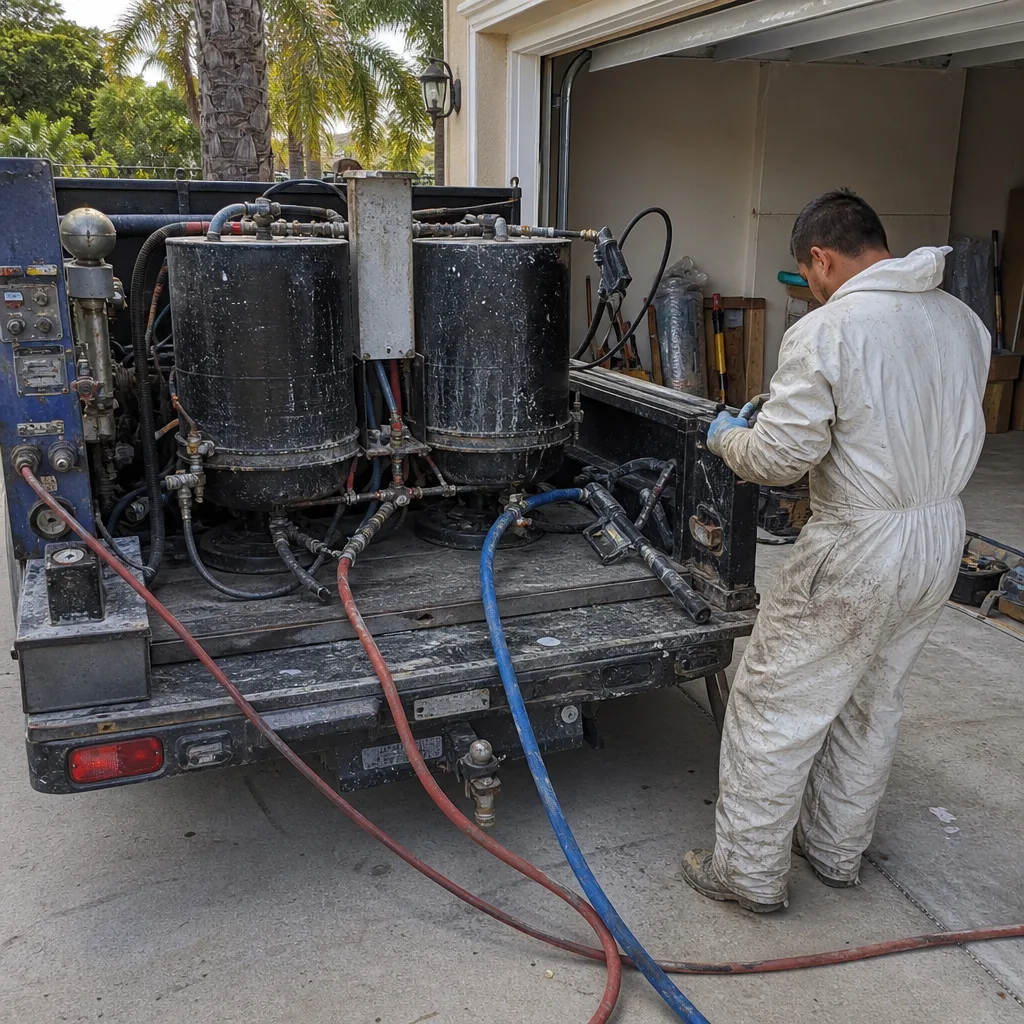
We remove settled fiberglass, decomposed cellulose, rodent droppings, and old vapor barriers that have degraded. Then we prepare the attic so your new insulation performs to its rated spec. This is especially important in the older base-associated housing where original material has been sitting for 40 or 50 years.
What happens when you call
- 1
A real person answersNo phone trees — you reach a local pro.
- 2
You get an upfront price rangeHonest numbers before anyone is dispatched.
- 3
A background-checked tech heads outLicensed & insured, dispatched right away.
- 4
You approve before work beginsNothing starts until you say go.
Trusted Brands We Service in March Air Force Base
Because we’re authorized with eight manufacturers, we’re never stuck recommending one line. For a March Air Force Base attic with air-sealed top plates and good ventilation, we often install Owens Corning R-38 or R-49 fiberglass batts. For older homes requiring fire resistance, Knauf and Rockwool batts and boards give you real fire ratings. For homes where budget or eco-preference drives the conversation, GreenFiber recycled cellulose blown to a dense R-38 makes sense. We stock materials for fast turnaround in 92551 and can adapt quotes to whichever factory line fits your home’s condition.
Common Attic Insulation Problems We See in March Air Force Base Homes
- Settled original batts from the 1950s and 1960s. Many base-adjacent homes still have original fiberglass that’s compacted to under 3 inches, leaving effective R-value below R-11. The fix is removal, air sealing, and replacing with code-level material.
- Unsealed top plates and wire penetrations. Quick-built military-family tracts in March ARB didn’t include air sealing at the top plate. On windy afternoons, hot attic air pushes straight into hallways and bedrooms around ceiling fixtures and partition walls.
- Degraded vapor barriers trapping moisture. Older homes in ZIP 92551 used poly barriers that break down after decades of temperature cycling. The result is trapped moisture against ceiling drywall, which invites mold and rots the barrier.
- Ductwork baking in unvented soffit spaces. Base housing often routes HVAC ducts through unshaded attic spaces with minimal ventilation. In summer, the attic can hit 140°F, and cooled air in those ducts loses 20% or more of its temperature before reaching a register.
Why Older March Air Force Base Homes Need Attic Air Sealing Before Adding Insulation
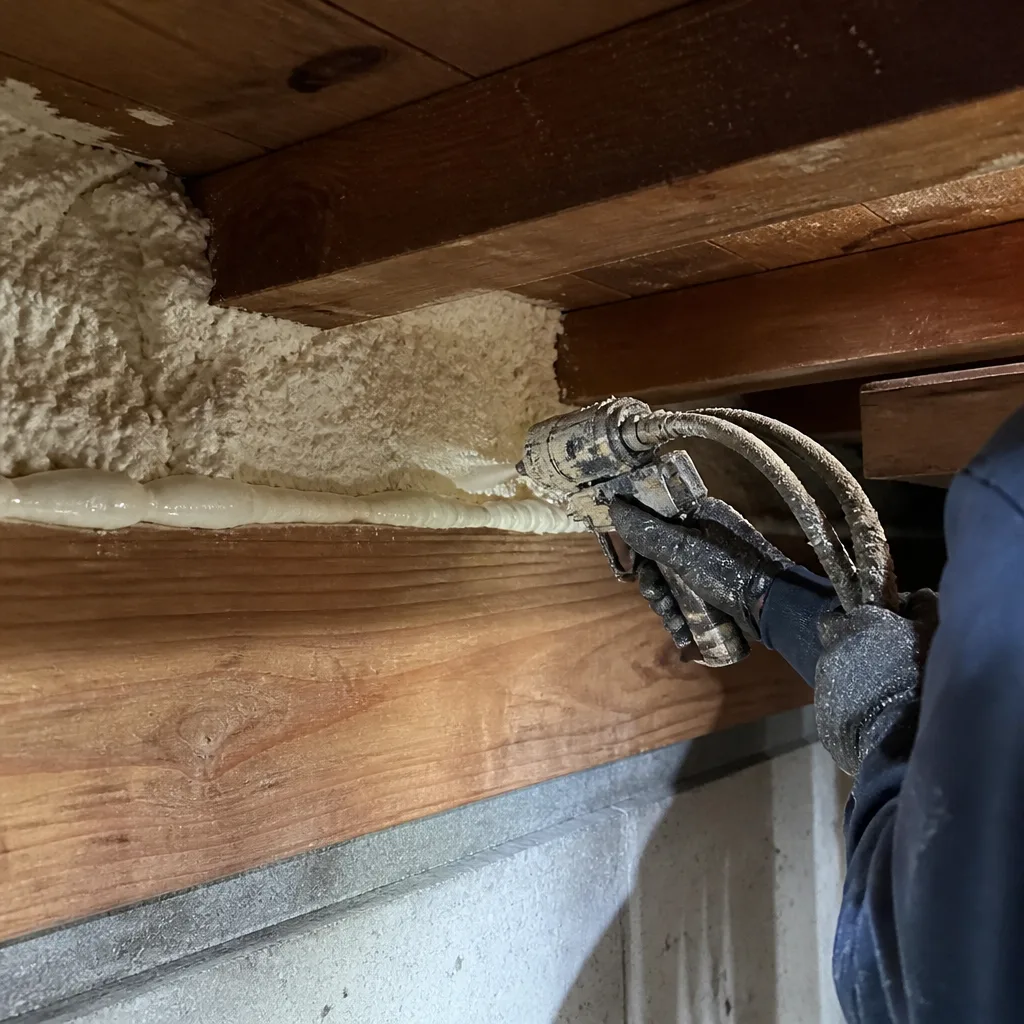
The old military-family tracts around the base were built fast, and the top plates show it. Most 1950s and 1960s homes in 92551 have original 2×4 top plates with unsealed wire and plumbing penetrations from the original construction. Our Attic Insulation crews routinely find gaps around electrical boxes, ceiling fans, and interior partition walls. When the Perris Valley wind blows, it pressurizes the attic and drives that 130°F air straight into living spaces. Adding insulation on top of open penetrations doesn’t fix this condition; it hides it. We recently worked on a 1950s base-adjacent home near March ARB where the original attic insulation had settled to less than 2 inches and the top plates were wide open around every wire and pipe. After air-sealing all penetrations with foam and installing Owens Corning R-38 batts, our tech measured a 15°F drop in the attic temperature on a 100°F afternoon. We also added a radiant barrier to block the intense Perris Valley heat, which had been baking the HVAC ductwork.
How the Perris Valley Wind Affects Attic Insulation in March ARB
The afternoon winds sweeping off Perris Valley don’t just carry dust; they change the pressure dynamics in your attic. Wind hitting the roofline creates negative pressure at gable vents and soffit edges, pulling conditioned air out of the home and pulling hot attic air into the living space through every unsealed joint. This is a March Air Force Base problem first and an insulation problem second. Homes along Nandina Avenue and Van Buren Boulevard catch those winds year-round. Air sealing, upgraded baffles, and proper soffit venting all work together to keep wind-driven air where it belongs: outside the conditioned envelope.
Pricing for Attic Insulation in March Air Force Base, CA
| Service | Typical Range |
|---|---|
| Attic Top-Up (blown-in, to R-38) | $650 – $1,300 |
| Full Attic Replacement (remove + air seal + new batts) | $1,400 – $3,800 |
| Radiant Barrier Installation | $1,200 – $2,400 |
| Attic Cleaning + Prep | $900 – $2,000 |
These are real March ARB numbers based on current material costs and labor. Your final quote moves inside these ranges depending on attic size, access difficulty, condition of existing material, and whether air sealing is included. We give you a line-item breakdown before work starts, and estimates are free. Call (877) 352-4780 to schedule a walkthrough.
Local Coverage in March Air Force Base and Nearby Cities
We serve all of March Air Force Base, including homes near the ARB main gate, the residential streets off Nandina Avenue, and the base-adjacent neighborhoods along Van Buren Boulevard. Our work also extends to Moreno Valley, Woodcrest, Perris, and Good Hope. If you’re anywhere in the Perris Valley or western Riverside County, reach out. Our March Air Force Base service area covers the whole 92551 ZIP.
What R-Value Should I Target for Attic Insulation in March Air Force Base?
R-49 is the smart target for March Air Force Base attics under current DOE guidance for the Inland Empire climate zone. Minimum code in this area is R-38, but given the 100°F afternoons and cold winter nights, we recommend R-38 to R-49 depending on the age of your home’s top plate and the condition of your ductwork. For most mid-century homes with 2×4 plates, blown cellulose to R-49 can work, but we typically dense-pack rather than loose-fill to minimize settling over time.
Is a Radiant Barrier Worth Adding to My March ARB Attic?
Yes, in most cases. The Perris Valley sun doesn’t just heat the roof deck; it radiates heat onto your insulation and ductwork for hours after sunset. A radiant barrier under the roof deck reflects up to 97% of that radiant transfer, keeping the attic cooler and extending the life of your ductwork. For base homes with old asphalt shingle roofs, the gains are even bigger. Expect to pay $1,200 to $2,400 for a single-story home, and call (877) 352-4780 for a free attic assessment.
How Do I Know If My March Air Force Base Home Has Settled Attic Insulation?
Look for three signs: rooms that get hotter than the rest of the house by mid-afternoon, ceiling drywall that’s warm to the touch in summer, and dust coming through ceiling fixtures when the wind kicks up. Those are all local failure modes we see in 92551 homes. The only way to know for sure is to get into the attic with a measuring tape and a light. Our inspections include a full R-value check, top plate inspection, and moisture assessment at no cost.
Serving March Air Force Base, CA — Our Local Coverage Area
We’re based in the March Air Force Base area and know this community well. Use the map below to see our service coverage — if you’re nearby, we can almost certainly help.
FAQs About Attic Insulation in March Air Force Base
Because the quick-built military-family construction left thousands of unsealed penetrations at top plates, wire runs, and plumbing chases, hot attic air moves into living spaces regardless of insulation depth. Air sealing closes those gaps first, then the insulation can actually do its job. Call (877) 352-4780 for an air-leak check before you add material.
The prevailing afternoon winds pressurize your roof and push attic air through every unsealed seam, turning your insulation into a filter instead of a barrier. We address this by sealing top plates and upgrading baffles so wind pressure can’t short-circuit the thermal boundary. This is a standard part of our March ARB attic upgrades.
We keep same-week availability for most March Air Force Base calls, and in many cases we can get a technician to your home within 24 to 48 hours for an estimate. For urgent situations like a collapsed attic hatch or exposed wiring due to insulation failure, call (877) 352-4780 and we’ll work you in.
Expect to pay slightly more in the base-adjacent neighborhoods because of the older housing stock and additional air-sealing work, typically 5% to 10% above Moreno Valley rates for comparable square footage. The extra cost is the sealing work, which older March ARB homes just need more of. A full replacement runs $1,400 to $3,800 versus $1,200 to $3,200 in Perris.
We back our installations with the manufacturer’s warranty on the material and our own workmanship guarantee. Because we’re authorized with eight brands, the warranty follows the product line we install, and we document everything in writing before work begins. Call (877) 352-4780 for the details on your specific project.
Get an Honest Attic Assessment in March Air Force Base
Whether you’re in a 1950s base home off Nandina Avenue or a 1980s tract house near Van Buren, the right fix starts with an accurate look at what’s actually going on in your attic. We don’t upcharge for inspections, and we won’t sell you insulation you don’t need. We’ll show you what we found and what we’d do about it. Call (877) 352-4780 to book a free estimate with Nate Calloway’s team.
Written by Nate Calloway, Owner at Aliso Viejo Insulation Co, serving March Air Force Base with honest, material-agnostic attic insulation work.