
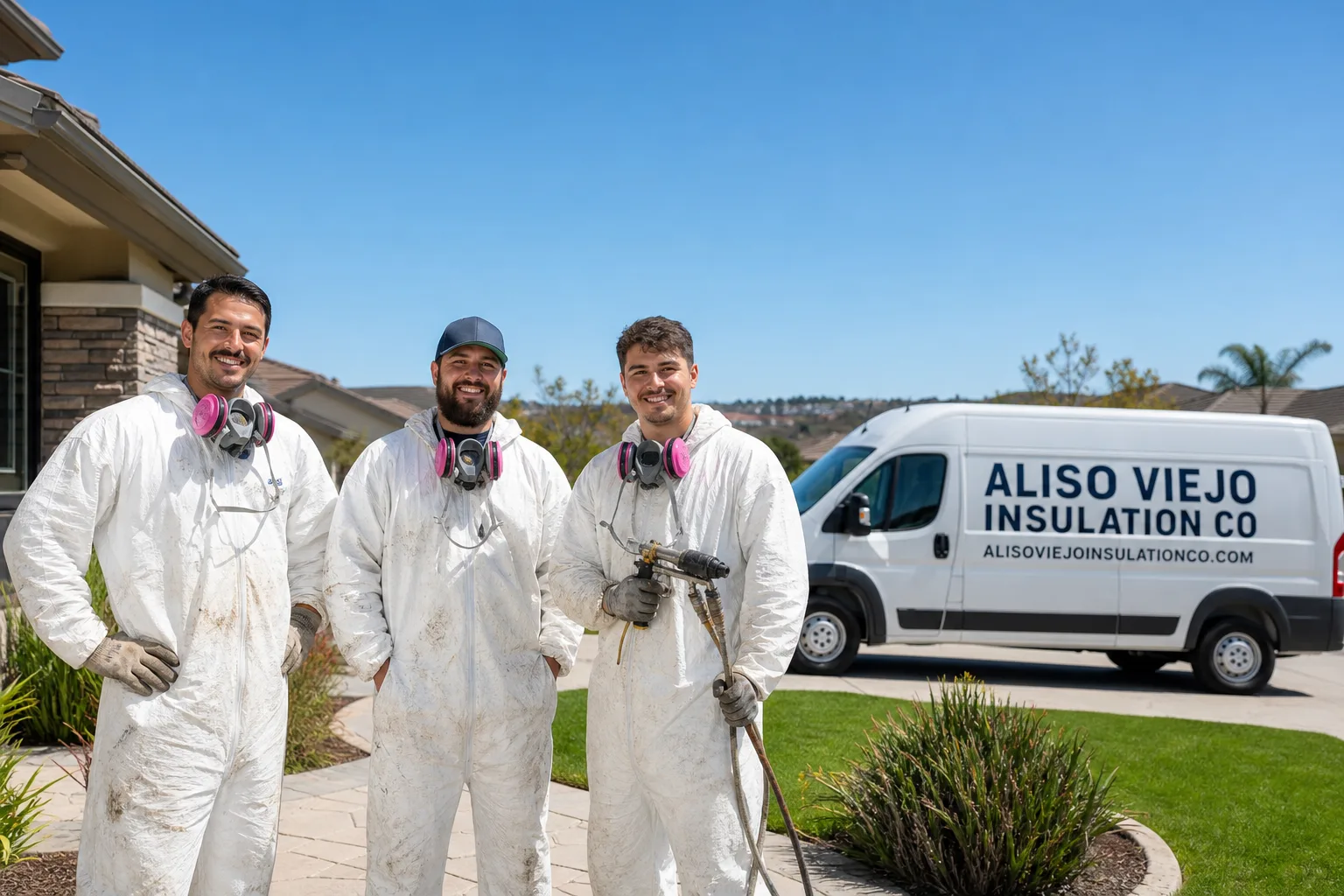
Fast, Reliable Attic Insulation Across Monrovia
Attic insulation in Monrovia runs $1,800 – $4,600 for a typical 1,200 – 1,800 sq ft home, depending on material choice and whether we’re topping up or removing old insulation first. We service both 91016 and 91017 ZIP codes, including the foothill neighborhoods north of Foothill Boulevard where attics bake harder than anywhere else in the San Gabriel Valley. If your summer energy bills climb past $350 and your upstairs rooms never cool down, the attic is almost always the culprit. Call us at (877) 352-4780 and we’ll take a look, usually within 48 hours.
Led by Nate Calloway, our team works on Monrovia attics every week. We know the craftsman bungalows off Myrtle, the ranch homes along Huntington, and the tight clearances that come with century-old framing. You don’t need a generic insulation contractor. You need someone who understands why your attic hits 140°F in July and what to do about it.
Why Aliso Viejo Insulation Co Is Monrovia’s Preferred Attic Insulation Company
Our Attic Insulation team has spent years working in Monrovia’s specific housing stock: early-20th-century Craftsman bungalows, mid-century ranch homes, and newer townhomes squeezed onto narrow lots. That matters because Monrovia attics are not interchangeable with attics in Irvine or Aliso Viejo. Roof pitches are shallower on the old homes. Access hatches are smaller. And in the foothills, the heat load is genuinely extreme.
Nate Calloway and his crew approach every job the same way: diagnose first, recommend second. We carry eight manufacturer brands so we’re never trying to force a product that doesn’t fit the house. If your 1923 bungalow needs fire-resistant cellulose and a radiant barrier, that’s what we quote. If your 1972 ranch just needs an R-38 top-up with Owens Corning fiberglass, we quote that instead. The house drives the recommendation. Always.
Monrovia homeowners repeatedly call us back for follow-up work and refer neighbors. Not because we’re the cheapest. Because we explain what we’re doing, why we’re doing it, and the attic actually performs afterward. For homes in northern Monrovia near the base of the San Gabriels, that’s not a bonus. It’s the whole point.
Attic Mold Removal in Monrovia
Attic mold removal in Monrovia typically costs $1,200 – $3,500 depending on the extent of the mold, the attic’s accessibility, and whether insulation needs to be replaced afterward. Homes in 91016 and 91017 near the foothills see more attic mold than homeowners expect, largely because winter nights drop cool enough to create condensation on the underside of roof sheathing while daytime sun bakes the exterior. That moisture cycle, combined with poor ventilation in older Monrovia homes, gives mold a foothold.
How We Remove Mold Without Burying It
We don’t just fog and walk away. We treat the surface with EPA-registered antimicrobials, scrub visible colonies, and identify the ventilation or air-sealing defect that let moisture accumulate in the first place. In Monrovia bungalows, that usually means blocked soffit vents, bathroom fans venting directly into the attic, or zero ridge venting on a low-pitch roof.
Why Older Monrovia Homes Are at Higher Risk
Craftsman and early ranch homes often have no attic vapor barrier and no mechanical ventilation. Add original knob-and-tube wiring running through the insulation and you’ve got a space that’s difficult to inspect and easy to get wrong. We work around legacy wiring carefully, never burying junction boxes or live conductors, and we always flag wiring that an electrician should review before we reinsulate.
Attic Insulation Removal in Monrovia
Attic insulation removal in Monrovia runs $1.50 – $2.75 per square foot for a standard attic, so a 1,200 sq ft attic typically costs $1,800 – $3,300. You need removal when old insulation has settled, gotten wet, been contaminated by rodent droppings or mold, or simply deteriorated past the point where top-ups will help. In foothill Monrovia, we also recommend removal when decades-old blown fiberglass has compacted unevenly from repeated 140°F heat cycles.
Removal That Doesn’t Disturb Your Wiring
Our crews use commercial HEPA-filtered vacuums and hand tools around electrical runs. In Monrovia’s pre-1940 homes, original knob-and-tube wiring is common, and disturbing it with aggressive vacuuming or rakes can create a fire hazard. We locate circuits first, mark them, and work methodically. If we find compromised wiring, we pause and tell you before proceeding.
What Happens After Removal
Once the old material is out, we inspect the attic deck, top plates, and eave areas. This is when we find the things that caused the problem in the first place: missing baffles, unsealed bypasses, bathroom exhaust leaks. Fixing those before new insulation goes in is the difference between a job that lasts and one that fails in five years. Monrovia attics don’t forgive shortcuts.
Trusted Brands We Service in Monrovia
We’re authorized installers for Owens Corning, Johns Manville, Knauf, Rockwool, CertainTeed, Icynene, Demilec, and GreenFiber. For Monrovia’s hot, dry summers and wildfire-adjacent zones, we frequently recommend GreenFiber cellulose for its fire resistance and air-sealing properties, or Rockwool mineral wool when enhanced flame resistance is the priority. We keep common materials and parts stocked for Monrovia jobs, which means faster turnaround when you’re ready to schedule. No waiting three weeks for a truck from a warehouse across the county.
Common Attic Insulation Problems We See in Monrovia Homes
- Radiant heat degradation north of Foothill Boulevard. Attics in the foothill neighborhoods routinely exceed 140°F in summer, which breaks down standard blown fiberglass faster than manufacturers expect. The material settles, thins at the eaves, and leaves top plates exposed.
- Knob-and-tube wiring complications. Early-20th-century Craftsman bungalows throughout 91016 often still have active knob-and-tube circuits in the attic. Insulation work must be done carefully around them, and some older installations buried the wiring, creating a fire risk we have to correct.
- Poor ventilation on low-pitch roofs. The classic Monrovia bungalow roof doesn’t leave much room for airflow. We regularly find soffit vents blocked by old insulation, no ridge vent, and bathroom fans dumping moist air directly into the attic. That’s a mold problem waiting to happen.
- Tight access in alley-loaded townhomes. Newer attached homes and townhomes near central Monrovia often have narrow side yards, alley-only access, and attic hatches in awkward closet locations. That leads to rushed jobs where baffles and air sealing get skipped. We stage equipment carefully and take the time these jobs actually need.
Pricing for Attic Insulation in Monrovia, CA
A straightforward blown-in top-up for a 1,200 sq ft Monrovia attic starts around $1,400 – $2,200. Full removal and reinsulation to R-38 typically lands between $3,200 and $5,500 depending on material. Radiant barrier installation adds $0.75 – $1.25 per square foot and is one of the best investments for homes north of Foothill Boulevard where roof deck temperatures spike. Spray foam runs higher, $4,500 – $8,000 for a typical attic, but delivers air sealing that batts and loose-fill can’t match. We give written, line-item quotes so you see exactly what you’re paying for. Estimates are free. Call (877) 352-4780 and Nate or a crew lead will schedule a walkthrough.
We Also Serve Cities Near Monrovia
Our Attic Insulation in Monrovia team serves the entire foothill corridor. That includes Mayflower Village, Duarte, Bradbury, and Arcadia. If you’re just outside city limits, call us and ask. If we can get a truck to you within a reasonable window, we’ll take the job. Same team, same material access, same standard of work.
Serving Monrovia, CA — Our Local Coverage Area
We’re based in the Monrovia area and know this community well. Use the map below to see our service coverage — if you’re nearby, we can almost certainly help.
FAQs About Attic Insulation in Monrovia
Monrovia’s foothill neighborhoods sit at higher elevation with direct southern sun exposure against the San Gabriel Mountains, and the slope means less shade from neighboring structures. Attic temperatures routinely pass 140°F in July and August. That extreme heat breaks down standard blown fiberglass faster and makes radiant barriers and cellulose the more durable choice.
Yes, it absolutely changes how we work. We locate and mark all active circuits before vacuuming or raking any insulation, and we never bury junction boxes, splices, or live conductors. If the wiring needs evaluation or replacement, we’ll tell you before any new insulation goes in. This is a safety issue, not a minor detail.
For most Monrovia attics, we recommend fire-resistant blown-in cellulose like GreenFiber or mineral wool from Rockwool when enhanced flame resistance matters. Both materials resist ember ignition better than standard fiberglass and hold up longer in the extreme heat of the foothills. A radiant barrier on the roof deck adds meaningful reductions in summer heat gain.
We stage equipment in the alley or street and run hoses through the narrowest access point available. The key is planning the equipment layout before starting so we’re not cutting corners on baffles, air sealing, or final inspection. Tight access doesn’t excuse a rushed job. We treat those attics the same as any detached home.
We can. We remove the contaminated material, treat the attic surfaces, correct the ventilation or moisture source that caused the mold, and then reinsulate with material matched to the house. Call (877) 352-4780 for a free inspection and an honest assessment of what’s going on up there.
Written by Nate Calloway, Owner at Aliso Viejo Insulation Co, serving Monrovia and the surrounding foothill communities.