
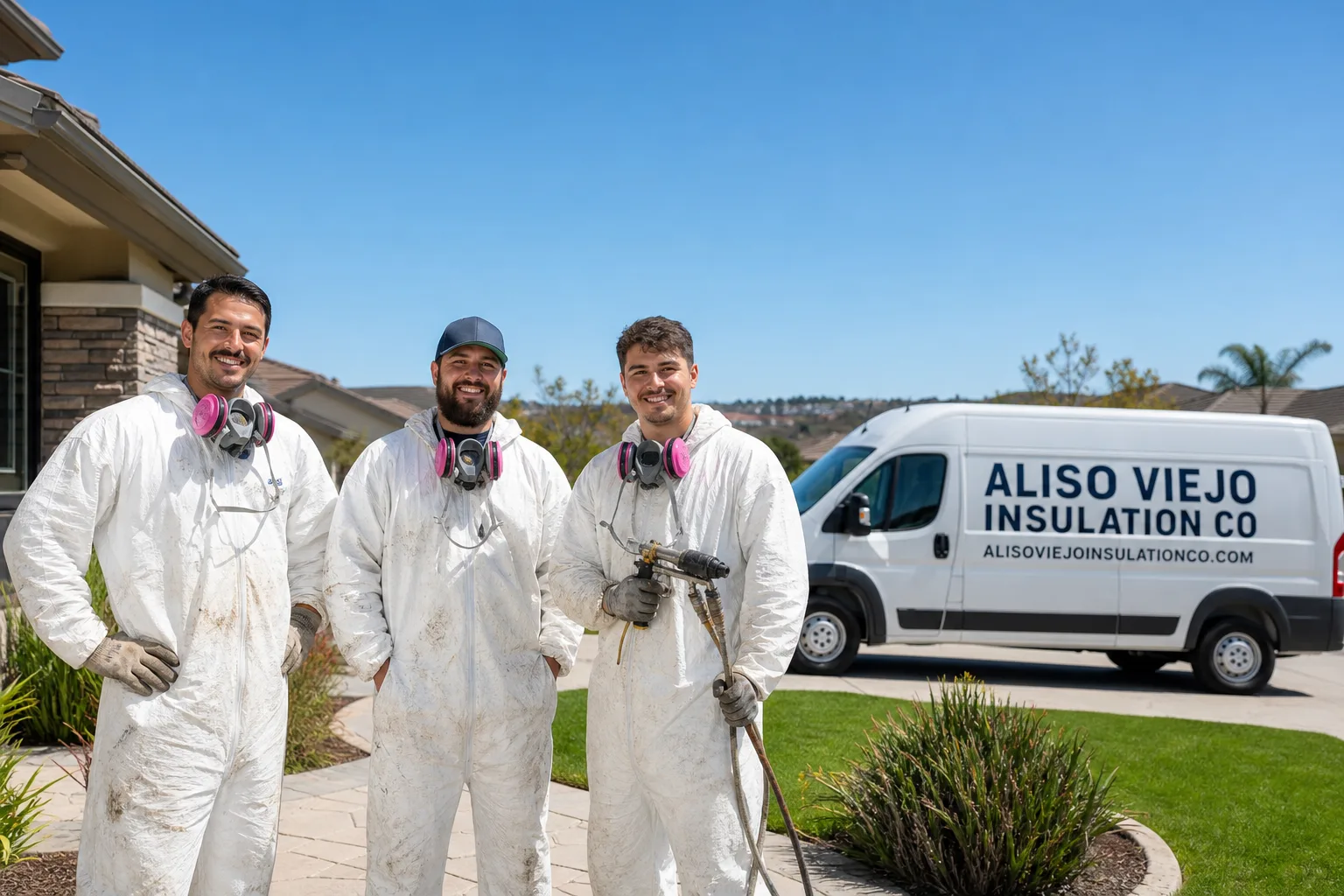
Fast, Reliable Attic Insulation Across Rubidoux
Attic insulation in Rubidoux typically costs between $1,800 and $4,200 for a full removal-and-replacement job on a 1,200 to 1,800 square foot home, with attic-top-up work running $900 to $1,800 depending on depth and venting prep. Most jobs finish in a single day once we’re on site, and we respond to Rubidoux calls within 48 hours, often same week. If your cooling bill spikes every July and the upstairs rooms never quite cool down, the problem is almost always the attic. Call us at (877) 352-4780 and we’ll tell you exactly what’s going on up there before we quote a dollar figure.
We work all over Rubidoux, from the Jurupa Hills-side streets west of Rubidoux Boulevard to the river-adjacent neighborhoods near Flabob Airport and down toward the 60 freeway corridor off Mission Boulevard. Rubidoux isn’t a coastal town. It’s a hot, semi-arid inland pocket where the afternoon sun hits south- and west-facing roofs hard, and attics that were installed decades ago simply weren’t built for it. That’s the work we do, and we’ve seen every version of it.
Why Aliso Viejo Insulation Co Is Rubidoux’s Preferred Attic Insulation Company
Rubidoux homeowners call us because we don’t show up with a single product and try to make it fit. We carry eight manufacturer brands spanning fiberglass, mineral wool, cellulose, and both open- and closed-cell spray foam. That matters here specifically, because Rubidoux’s housing stock runs from mid-century stucco tract homes to 1970s and 1980s self-built slabs, and each one needs a different answer. A single-brand contractor can’t say that.
Nate Calloway built the company around the idea that material matching beats product pushing. He’s authorized to install Owens Corning, Johns Manville, Knauf, Rockwool, CertainTeed, Icynene, Demilec, and GreenFiber systems, which means the recommendation you get is driven by building science: your roof pitch, your venting, your existing insulation depth, your budget. Not by what happens to be stacked in a warehouse. Rubidoux customers tend to be research-minded, and they’re usually tired of getting upsold by contractors who only sell one thing.
Rubidoux response time matters in the Inland Empire heat. When attic temps are past 130°F in August, you don’t want to wait two weeks for a crew. We prioritize Rubidoux calls and typically schedule within 48 hours of your call. Estimates are free, and the quote we give you is the price we stand behind.
Attic Ventilation in Rubidoux
Attic Ventilation in Rubidoux is the highest-payoff upgrade most homes need before any new insulation goes down, because so many of the older houses here were built with zero soffit venting and no ridge vent, leaving superheated attic air trapped inside all summer. A full ventilation correction on a typical Rubidoux home runs $600 to $1,400, depending on how many soffit baffles need to be cut in and whether ridge venting is feasible on the existing low-pitch roof.
Soffit Baffle Installation
On Rubidoux’s mid-century slab-on-grade homes, the soffits were often framed in without venting. We cut and install baffles to open airflow from the eaves, then verify the intake path is clear all the way to the ridge. This is the difference between a hot attic that bakes the rooms below and an attic that actually ventilates as designed.
Ridge and Gable Vent Upgrades
Low-pitch roofs on 1970s stucco tracts don’t always allow for a continuous ridge vent, but gable-end vents and power-vent alternatives can move serious heat. We’ll evaluate what your roofline can support and install the option that gets hot air out fastest, without compromising the roof.
Radiant Barrier in Rubidoux
Radiant Barrier in Rubidoux is one of the most effective upgrades you can make for an attic that regularly hits 130°F+ in summer, because it reflects radiant heat away from the insulation layer instead of letting the roof deck radiate it downward. A foil radiant barrier stapled to the underside of the rafters on a 1,200 to 1,800 square foot home runs $1,000 to $2,200, and we recommend it on nearly every south- and west-facing roof in the area.
Underside-Rafter Foil Installation
We install reflective foil directly to the roof deck rafters in attics where insulation is already in place or planned. The foil reflects the sun’s radiant heat before it ever reaches the insulation, which keeps the insulation surface cooler and makes the whole attic more comfortable for ductwork.
Patio-Roof Hot Zone Correction
On river-adjacent streets where patio additions bake the original attic batts near the junction, the radiant barrier placement matters just as much as the insulation itself. We target the hot zone first: the south-facing patio roof section that was never accounted for in the original build, then extend from there.
Trusted Brands We Service in Rubidoux
Rubidoux customers get access to insulation products from Owens Corning, Johns Manville, Knauf, Rockwool, CertainTeed, Icynene, Demilec, and GreenFiber. That’s the full material spectrum: fiberglass batts, mineral wool, blown cellulose, and both open- and closed-cell spray foam. Because we’re authorized across all eight, we can match your attic’s specific conditions to the right product instead of forcing one brand onto your home. Need fire-resistant mineral wool near a chimney chase? Rockwool’s available. Want recycled cellulose for an eco-priority upgrade? GreenFiber is on the list. We keep common parts and materials stocked for fast Rubidoux turnaround.
Common Attic Insulation Problems We See in Rubidoux Homes
- Crushed, matted R-11 batts from the original build. Low-pitch roofs and years of 100°F+ afternoons compress fiberglass into a dense, useless mat that sits flat against the ceiling drywall. The R-value drops to a fraction of what was installed.
- Upside-down vapor barriers. On older Jurupa Hills-side homes, original batts were sometimes installed kraft-paper-side-up, which traps moisture against the fibers and accelerates breakdown. We find this constantly on 1960s and 1970s tracts.
- Zero soffit venting. A lot of Rubidoux homes were built with solid soffits. No intake air. No ridge vent. The attic becomes a sealed oven: 130°F+ every afternoon from June through September.
- Patio-roof hot zones near the Santa Ana River. River-adjacent additions bake the insulation where the patio roof meets the main attic, creating a hot spot the original install never accounted for. Those rooms directly below never cool down.
Pricing for Attic Insulation in Rubidoux, CA
Here’s the straightforward picture. A full attic insulation replacement on a typical Rubidoux home runs $1,800 to $4,200, including removal of old settled batts, air-sealing, and new blown-in insulation to current code depth. An attic insulation top-up without removal runs $900 to $1,800, and it only works if the existing insulation is still dry and intact. Attic baffles and ventilation prep add $600 to $1,400. Radiant barrier installation runs $1,000 to $2,200 for an average roof area. Attic Insulation pricing isn’t the same as coastal LA because Rubidoux’s inland heat drives deeper insulation needs and higher ventilation requirements. Call (877) 352-4780 for a free, itemized estimate.
We Also Serve Cities Near Rubidoux
Our Rubidoux crews also cover Riverside, Grand Terrace, Highgrove, and Glen Avon. If you’re just down the 60 or over on Jurupa Avenue, same response time applies. Call (877) 352-4780 to schedule an estimate.
Serving Rubidoux, CA — Our Local Coverage Area
We’re based in the Rubidoux area and know this community well. Use the map below to see our service coverage — if you’re nearby, we can almost certainly help.
FAQs About Attic Insulation in Rubidoux
Because most of Rubidoux’s housing stock was built before modern Title 24 attic-venting standards, with low-pitch roofs and no soffit venting. The original R-11 batts bake under 100°F+ afternoon sun, compress to a fraction of their original depth, and often get installed kraft-paper-side-up, which traps moisture. We remove the matted material and start fresh with properly oriented, properly vented insulation. Call (877) 352-4780 for an attic assessment.
Yes, significantly more. Rubidoux’s semi-arid inland heat regularly pushes attic temperatures past 130°F, while coastal LA attics rarely exceed 110°F. That 20-plus degree difference means the roof deck radiates far more heat down into the insulation layer. A foil radiant barrier under the rafters reflects that heat before it reaches the insulation, and in Rubidoux it’s usually the single biggest attic upgrade after venting. Call for a roof-deck evaluation.
Check whether your soffits are vented and whether the existing insulation is compressed or upside-down. If the batts are matted flat and the attic has no intake air, the solution isn’t just adding more insulation: it’s correcting venting, addressing radiant-heat gain, then re-insulating. That’s the sequence we follow on every Rubidoux job. Call (877) 352-4780 and we’ll inspect the whole assembly, free.
Yes, and in most Rubidoux slab-on-grade homes the attic is where the fix belongs anyway. Walls can’t be easily retrofitted on many of these 1970s-era slabs, and the roof is where the heat loads concentrate. We focus on attic insulation, ventilation, and radiant barrier, which delivers most of the comfort improvement without touching your walls. Estimates are free.
We’re authorized to install Owens Corning, Johns Manville, Knauf, Rockwool, CertainTeed, Icynene, Demilec, and GreenFiber products. That covers fiberglass batts, mineral wool, blown cellulose, and both open- and closed-cell spray foam. For Rubidoux’s hot, low-pitch attics, we most often spec blown cellulose or mineral wool with a radiant barrier, but we’ll match the material to your home’s conditions. Call (877) 352-4780 for a specific recommendation.
Written by Nate Calloway, Owner at Aliso Viejo Insulation Co, serving Rubidoux and the Inland Empire.