Fast, Reliable Attic Insulation Across South El Monte
Attic insulation in South El Monte matters more than in most San Gabriel Valley cities because of what’s sitting under those low-pitch roofs. Most homes here were built between the 1950s and 1970s with original R-11 batts that have compressed, settled, and in many cases blown away from the eaves entirely. The result is an attic that barely slows the summer heat beating down on unshaded roofs. If you live in the 91733 ZIP and your upstairs rooms feel like ovens by 3 p.m., the problem is almost always the insulation, not your AC. Call us at (877) 352-4780 and we’ll diagnose exactly what’s happening in your attic, then fix it with the right material for your specific house.
We work across South El Monte every week, from the neighborhoods off Rush Street to the residential pockets near Merced Avenue and the homes bordering the Rio Hondo. Our crews know these houses. We know what original construction looked like, where the additions happened, and what happens to insulation after 50 years of San Gabriel Valley summers.
Why Aliso Viejo Insulation Co Is South El Monte’s Preferred Attic Insulation Company
Nate Calloway built this company around a simple idea: carry enough insulation brands that we never have to force the wrong material into a home just because it’s what we stock. That matters in South El Monte, where a 1958 stucco ranch with a garage conversion needs something very different from a 1970s tract home with a simple gable roof. We’re authorized to install products from eight manufacturers spanning Owens Corning, Johns Manville, Knauf, and Rockwool, plus spray foam systems from Icynene and Demilec. That breadth means the recommendation you get is based on your attic’s actual condition, not our inventory.
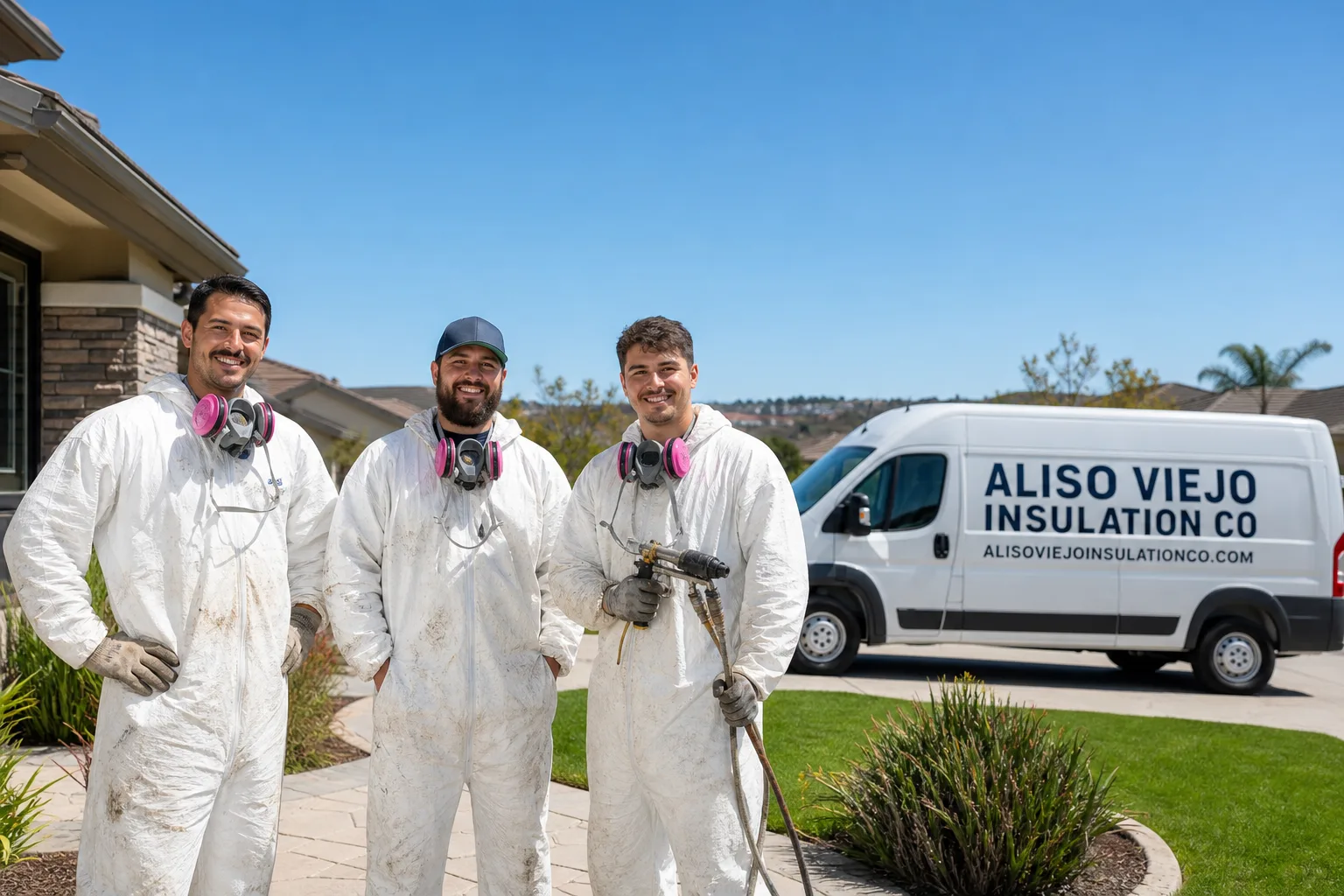
South El Monte homeowners call us because they’ve heard from neighbors that we show up when we say we will and we don’t leave until the attic is done right. Our Attic Insulation team handles everything from removal and air-sealing to blown-in installation and baffle work. We know the local housing stock, we know the heat load, and we know what it takes to get these older homes to a proper R-value without compromising ventilation.
Attic Mold Removal in South El Monte
Attic mold removal in South El Monte is a job we handle frequently, and the cause is almost always the same: decades of inadequate ventilation combined with insulation that blocks the soffit vents. In these older single-story homes, bathroom fans and kitchen vents often exhausted directly into the attic in the original construction, pumping warm, moist air into a space that was already struggling to breathe. Once the roof deck gets damp, mold follows.
What the Job Involves
We start by identifying the moisture source. Removing mold without fixing the ventilation problem is a temporary fix at best. The actual removal involves safely extracting contaminated insulation, treating the affected framing and sheathing with an antimicrobial agent, and then correcting the airflow so the attic doesn’t hold moisture again. South El Monte attics with original R-11 batts often have mold concentrated near the eaves where airflow was blocked by years of debris and settled insulation.
When South El Monte Homeowners Need It
You need this service if you’re seeing dark staining on the roof deck, smelling a musty odor in the hallway near the attic access, or noticing condensation on the underside of the roof sheathing during winter months. In South El Monte’s climate, the mold season runs almost year-round because the temperature swings between hot, humid days and cool nights keep attic dew points fluctuating. A typical attic mold removal and insulation replacement project in South El Monte runs $1,800 to $4,200 depending on attic size and contamination extent.
Attic Insulation Removal in South El Monte
Attic insulation removal in South El Monte is not a luxury service. It’s the necessary first step in most of the retrofits we perform on these older homes. The original R-11 batts installed in the 1950s and 1960s were undersized even when the homes were new, and after 50 to 70 years of settling, compression, and rodent activity, they’re performing at a fraction of their rated value. In many South El Monte attics, the insulation near the eaves has simply eroded away, leaving bare drywall exposed to direct heat transfer.
Signs You Need Removal
Look for inconsistent temperatures between rooms, drafts near ceiling fixtures, or insulation that looks flattened and matted when you peek into the attic. South El Monte homes with converted garages or room additions often have two or even three different insulation materials from different decades, none of them working together. If your attic has original batts with visible rodent droppings or water staining, removal is not optional. Attic insulation removal in South El Monte typically runs $1.50 to $3.00 per square foot, including disposal and sanitizing.
What Happens After Removal
Once the old material is out, we can actually see what’s happening with your framing, wiring, and ventilation. In South El Monte homes, this is where we routinely find gaps in the drywall seam tape, unsealed top plates, and recessed light housings leaking conditioned air into the attic. We air-seal those spots before installing new insulation, because blowing fresh fiberglass over an unsealed attic just wastes material and money.
Trusted Brands We Service in South El Monte
We’re authorized installers for Owens Corning, Johns Manville, Knauf, and Rockwool, and we carry a full range of their attic products for South El Monte projects. That’s not a gimmick. It means when you call us about a 1962 home with a low-pitch roof and an add-on bedroom, we can choose between Rockwool’s mineral wool for fire resistance, Owens Corning’s blown-in fiberglass for cost-effective depth, or a closed-cell spray foam from Demilec when the ceiling assembly needs air-sealing from below. Our shop keeps common materials stocked for same-week installation across the 91733 ZIP, and we can source specialty products from any of our eight manufacturers within days when a job calls for something specific.
Common Attic Insulation Problems We See in South El Monte Homes
- Wind-washed bare spots near the eaves. South El Monte’s original attics were built without baffles, so blown-in fiberglass gets pushed away from the soffit vents by wind and pressure. This leaves the outer two feet of the ceiling uninsulated, which is exactly where summer heat enters first.
- Compressed R-11 batts in low-pitch roofs. Many South El Monte homes have shallow roof cavities. The original fiberglass batts were jammed into cavities too small for them, compressing the material and destroying its thermal performance. A compressed 2×6 batt often tests below R-7.
- Irregular envelopes from garage conversions. Homes along streets like Bickett Avenue and Center Road often have converted garages with flat or near-flat roofs. These additions rarely have proper attic access or ventilation, creating dead zones where heat and moisture collect.
- Unsealed top plates and bypasses. In original 1950s construction, interior and exterior wall plates were never sealed. Conditioned air leaks straight from the living space into the attic, carrying both heat in winter and moisture year-round. Insulation alone can’t fix this; the attic needs air-sealing first.
Pricing for Attic Insulation in South El Monte, CA
For a standard 1,100-square-foot South El Monte ranch home, a full attic insulation replacement with blown-in fiberglass runs $2,200 to $3,800. That includes removal of old material, air-sealing, baffle installation, and blowing new insulation to R-49. If your attic only needs a top-up over existing material, expect $1.20 to $2.50 per square foot. Adding spray foam to the roofline or tackling an irregular envelope from a garage conversion pushes costs higher, typically $5,000 to $9,000 for a full foamed roofline on these smaller homes. Material choice matters too. Rockwool batts cost more than fiberglass but deliver better fire resistance and sound attenuation, which matters in South El Monte’s tight lot configurations where homes sit close together. We give free written estimates for every job, and the number we quote is the number on the invoice. Call (877) 352-4780 to schedule an attic inspection.
One thing that makes South El Monte pricing different from neighboring cities is the age of the housing stock. In newer El Monte or Temple City homes, we’re often just adding insulation to an attic that’s already sealed and vented. In South El Monte, we’re routinely removing six decades of failed material, repairing the attic floor, and correcting ventilation before we ever start installing. That’s real work, but it’s also the only way to get these homes comfortable.
We Also Serve Cities Near South El Monte
While this page is focused on Attic Insulation in South El Monte, our crews also work regularly in El Monte, Rosemead, North El Monte, and Temple City. Each of these communities has its own housing patterns, from the 1940s bungalows of Rosemead to the split-levels of Temple City, and we adjust our approach accordingly. If you’re nearby and your attic is struggling, call (877) 352-4780 and we’ll bring the same material-agnostic approach to your home.
Serving South El Monte, CA — Our Local Coverage Area
We’re based in the South El Monte area and know this community well. Use the map below to see our service coverage — if you’re nearby, we can almost certainly help.
FAQs About Attic Insulation in South El Monte
Because the original builders never installed baffles. These homes were built when R-11 batts were considered adequate and attic ventilation was an afterthought. Wind entering through the soffit vents pushes loose insulation inward, leaving bare drywall at the perimeter. We fix this by installing proper baffles at every rafter bay before blowing new insulation, then air-sealing the exterior top plate so wind can’t reach the insulation in the first place. Call (877) 352-4780 if you suspect wind-washing; it’s one of the most common problems we correct in South El Monte.
Yes, and we do it regularly. Garage conversions create irregular thermal envelopes because the original garage had no attic space, no ventilation, and often a flat or low-slope roof. In many cases, the best solution is open-cell spray foam applied directly to the underside of the roof deck, which insulates and air-seals in one pass without requiring vent channels. We carry Icynene and Demilec systems, so we can match the foam chemistry to your specific ceiling assembly and moisture profile. Call (877) 352-4780 for an assessment.
For most 1950s South El Monte homes, blown-in fiberglass at R-49 is the practical answer for the main attic, provided we install baffles and air-seal first. The low pitch limits how far we can reach from the attic access, but our crew works these tight spaces routinely. If the roof cavity is too shallow for proper ventilation, or if you want the thermal envelope at the roofline instead of the attic floor, closed-cell spray foam performs better. The right choice depends on your specific roof geometry and whether the attic has ductwork running through it, both of which we evaluate during a free inspection.
If your home was built before 1980 and still has its original insulation, it needs removal. R-11 batts from that era have compressed to the point where they effectively perform as a radiant barrier at best, and many contain rodent waste or have been wet at some point. Look for visible darkening in the insulation, an ammonia smell from rodent urine, or ceilings that feel warm to the touch on summer afternoons. In South El Monte’s older housing stock, we recommend removal in roughly 80% of the homes we inspect. Call (877) 352-4780 and we’ll tell you honestly whether removal is needed or a top-up will suffice.
It’s the single most effective change you can make. South El Monte routinely hits 95°F or higher from June through September, and that heat radiates through the roof into the attic, then through the ceiling into your living space. With only R-11 in the attic, your ceiling surface temperature can exceed 90°F. With R-49, that surface stays near indoor temperature. We’ve measured attic temperatures above 140°F in South El Monte homes in August. After insulating properly, that number drops by 30 to 40 degrees, which directly reduces cooling load and extends the life of aging HVAC systems common in these homes. Call (877) 352-4780 for a free attic assessment.
Written by Nate Calloway, Owner at Aliso Viejo Insulation Co, serving South El Monte and the greater San Gabriel Valley.