
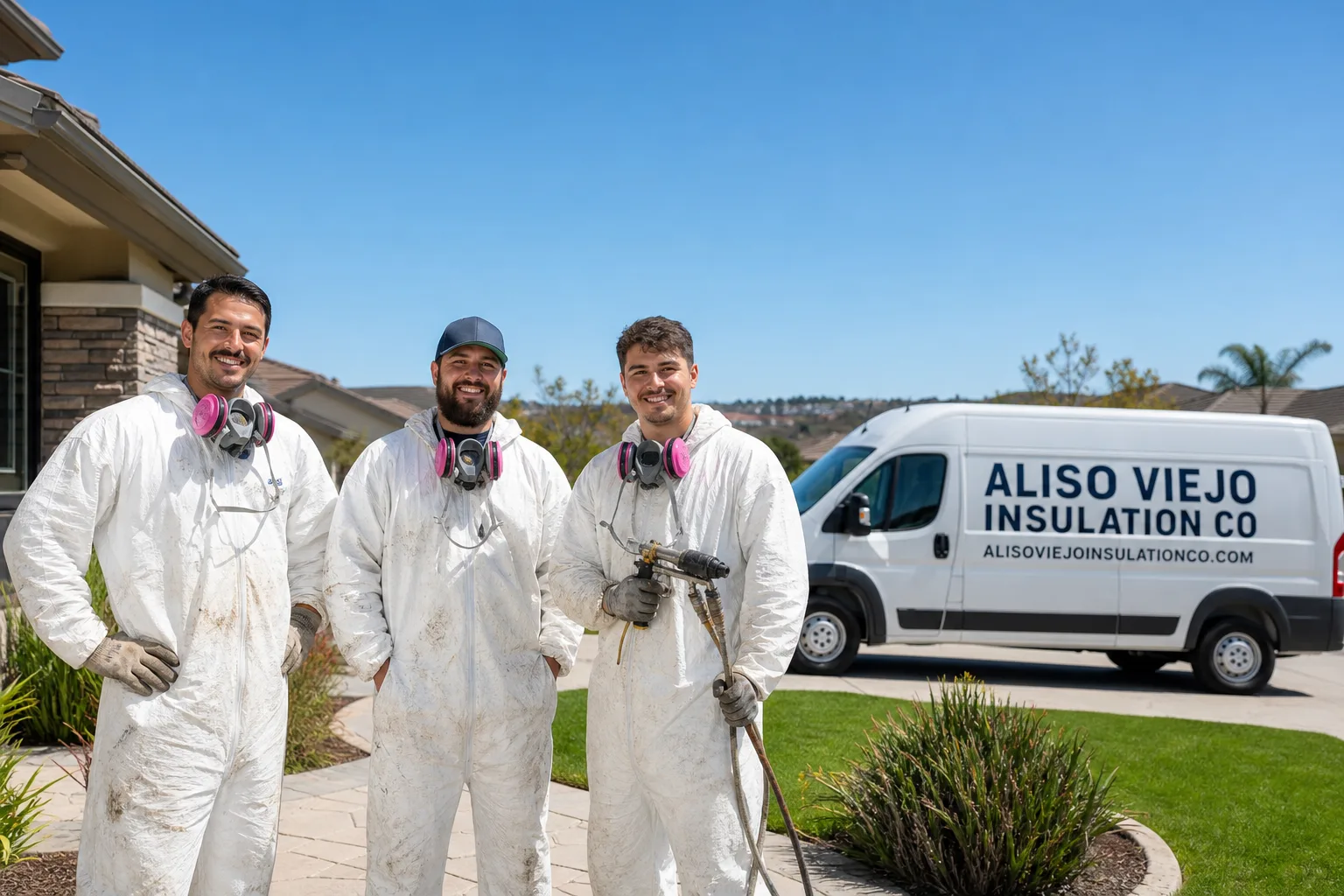
Fast, Reliable Attic Insulation Across Whittier
Most Whittier attics are under-insulated for the heat this inland basin throws at them every summer. That’s not a guess, it’s what we find when we pull the hatch and look. From Uptown bungalows with original 1920s framing to east-side tract homes from the 1950s and 60s, the pattern holds: too little insulation, settled loose fill, and attics that turn into ovens by 2 p.m. We run crews into Whittier regularly and can typically schedule an assessment within a few days. If your upstairs rooms feel like a sauna or your AC never cycles off, call (877) 352-4780 and we’ll tell you honestly what’s going on up there.
Why Aliso Viejo Insulation Co Is Whittier’s Preferred Attic Insulation Company
Whittier homeowners call us because we diagnose before we prescribe. Nate Calloway built this company around a simple rule: the right insulation for your home’s specific conditions, not whatever happens to be on the truck. That matters in Whittier more than most places because the housing stock is genuinely complicated. A 1923 bungalow on Painter Avenue and a 1962 tract home near La Serna High School need very different approaches, and a contractor who treats them the same is guessing.
We’re a full-method contractor. Attic insulation, blown-in, and spray foam all under one roof, so you don’t have to coordinate three companies to get one attic fixed. Our Attic Insulation team works across every insulation category: fiberglass batts, mineral wool, blown cellulose, and both open- and closed-cell spray foam. That breadth means our recommendation is based on building science, not brand loyalty. Built around building science, not brand loyalty – it’s how we’ve always worked.
For Whittier homeowners, that means getting a straight answer. We’ll tell you if your existing insulation can be topped up or if it needs full removal. We’ll tell you if ventilation is your real problem. And we’ll show you the numbers on what each option costs, so you can decide with your eyes open.
Attic Cleaning Services in Whittier
Attic Cleaning Services in Whittier almost always start with the same discovery: years of dust, rodent droppings, and settled insulation that’s lost its loft. For a home in Uptown or the older neighborhoods near Whittier College, that’s often 60 to 90 years of accumulated debris. Attic cleaning here typically means removing old insulation, vacuuming the joist bays, sanitizing surfaces, and prepping the space for new material. Most Whittier attic cleaning jobs run $1,200 to $2,800 depending on attic size, access difficulty, and how much contamination is present. Homes that need full insulation removal and disposal land closer to $2,800 to $5,000.
What We Remove and How
We use commercial HEPA-filtered vacuums and hand removal for tight spaces. Old loose fill, batt fragments, rodent nesting, and decades of dust all come out. We bag everything in the attic and haul it down through the hatch or gable vent, so nothing travels through your living space.
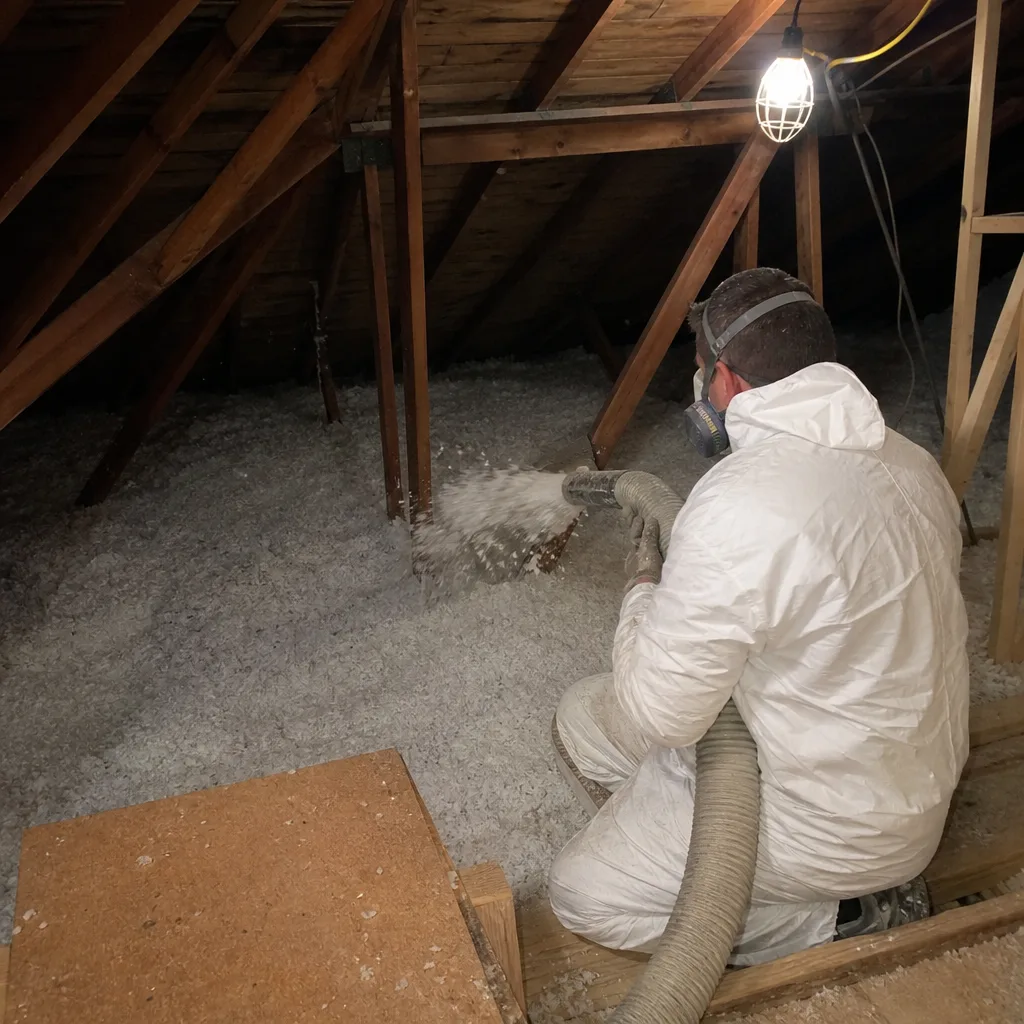
When Whittier Homes Need It
If you can smell a musty odor through the ceiling, see staining on the drywall below the attic, or know rodents have been up there, cleaning is the first step before any new insulation goes in. Installing fresh material over contaminated attic floors just seals the problem in.
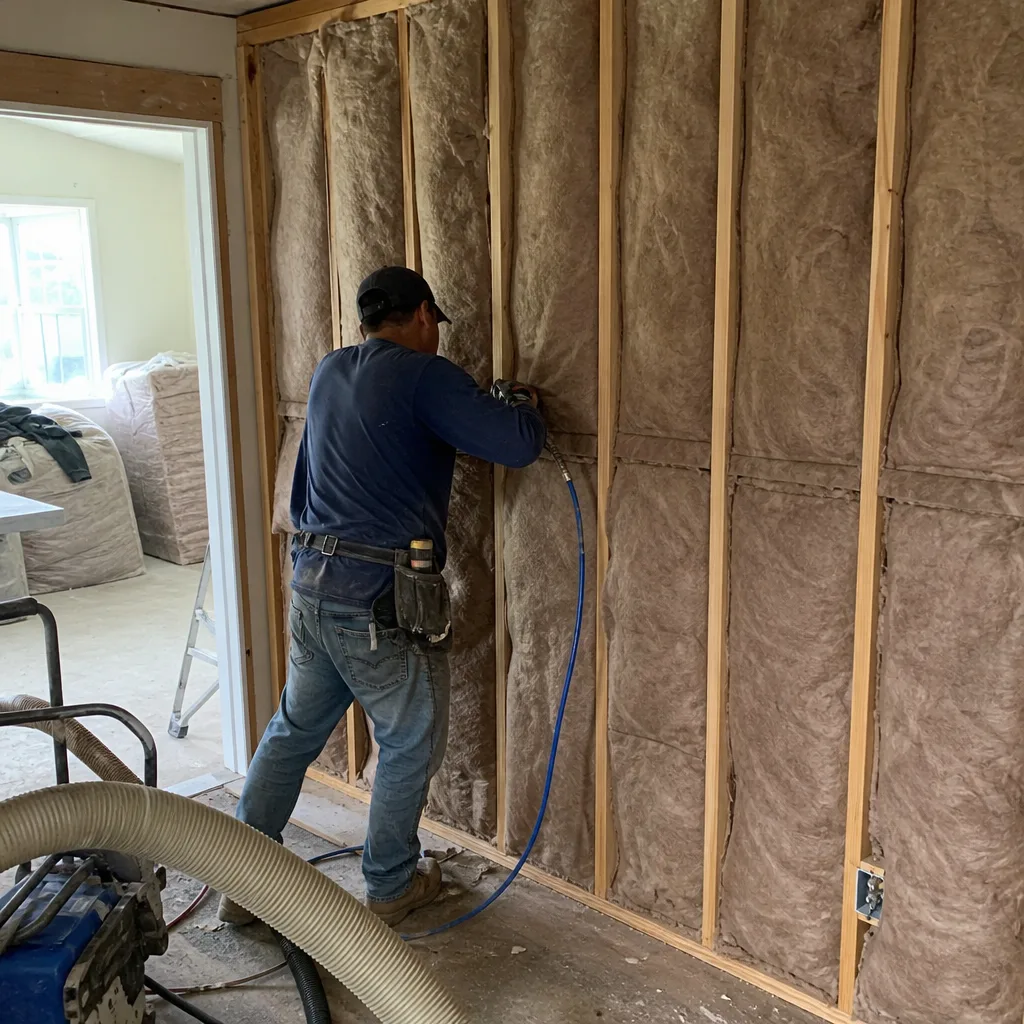
What happens when you call
- 1
A real person answersNo phone trees — you reach a local pro.
- 2
You get an upfront price rangeHonest numbers before anyone is dispatched.
- 3
A background-checked tech heads outLicensed & insured, dispatched right away.
- 4
You approve before work beginsNothing starts until you say go.
Attic Mold Removal in Whittier
Attic Mold Removal in Whittier is a recurring call, especially in east-side tract homes built without proper attic ventilation. When warm, moist air gets trapped under the roof deck, condensation forms on the underside of the sheathing. That condensation feeds mold. By the time we get the call, the mold is usually visible as dark staining on the rafters or roof decking. Mold removal in a typical Whittier attic runs $1,800 to $4,200 depending on the affected square footage and whether the insulation itself is contaminated. If the insulation is moldy, it has to come out too; you can’t treat it in place.
Treating the Source, Not Just the Stains
We treat the mold with appropriate antimicrobial agents and remove contaminated insulation, but the critical step is fixing why it grew. In Whittier that usually means adding or correcting soffit and ridge ventilation so the attic can breathe. Without that correction, the mold returns within a season or two.
Old Insulation and Mold
In older Uptown homes, we often see mold trapped between settled loose fill and the ceiling lathe below, especially where bathroom fans vent into the attic instead of outside. That’s a common shortcut from decades past, and it means the mold problem lives right at the ceiling plane where you breathe it every day.
Trusted Brands We Service in Whittier
We’re authorized to install products from eight nationally recognized manufacturers: Owens Corning, Johns Manville, Knauf, Rockwool, CertainTeed, Icynene, Demilec, and GreenFiber. For Whittier attics, we lean on Owens Corning fiberglass for its consistency, Rockwool mineral wool where fire resistance matters on older wiring systems, and GreenFiber recycled cellulose for dense-pack retrofits and its air-sealing character. We keep common material on hand and can pull from our supplier network for anything specialized, so a Whittier job rarely waits on product. From Owens Corning fiberglass to Icynene spray foam, we carry the full spectrum so you don’t have to compromise on what your home actually needs.
Common Attic Insulation Problems We See in Whittier Homes
- Settled loose fill in 1920s-40s bungalows. Original insulation in Uptown and older Spanish Colonial homes has usually compressed to a fraction of its rated R-value. The top plates and joist bays sit bare, letting attic heat pour straight into the rooms below.
- Knob-and-tube wiring buried in existing insulation. We see this regularly in Uptown and near Whittier College. Cloth-wrapped wiring covered by insulation is a fire hazard, and any retrofit there has to start with a wiring visual before new material goes down.
- Unvented attics in east-side tract homes. Many 1950s-60s homes on the east side were built with minimal or no attic ventilation. Adding insulation without correcting that traps heat and moisture, and the condensation that follows is a mold problem waiting to happen.
- Inadequate depth over living spaces. Even homes that got some insulation later often have only 3 to 6 inches of fiberglass, roughly R-11 to R-19. For Whittier’s summer attic temperatures, that’s well short of the R-38 to R-49 the DOE recommends for this climate zone.
Pricing for Attic Insulation in Whittier, CA
A typical attic insulation top-up for a Whittier home runs $1,400 to $2,600, depending on attic square footage and the material you choose. Full removal and replacement, which we recommend for older Uptown bungalows with contaminated or settled original insulation, runs $3,500 to $7,000. Adding a radiant barrier alongside new insulation—or Reflectix repair in Whittier—adds roughly $1.50 to $2.50 per square foot. If you need ventilation work, budget $400 to $1,200 depending on how many vents and baffles the attic requires. Attic cleaning and mold removal costs sit in the ranges we outlined above. Every project gets a written line-item quote before any work starts, and the estimate is free. Call (877) 352-4780 to get your attic priced.
We Also Serve Cities Near Whittier
In addition to Attic Insulation in Whittier, our crews cover South Whittier, West Whittier-Los Nietos, East La Mirada, and Santa Fe Springs. If you’re just over the city line, the same team and the same eight-brand material access apply. We schedule projects throughout the area, so call (877) 352-4780 and we’ll tell you when we can get to your street.
Serving Whittier, CA — Our Local Coverage Area
We’re based in the Whittier area and know this community well. Use the map below to see our service coverage — if you’re nearby, we can almost certainly help.
FAQs About Attic Insulation in Whittier
That’s knob-and-tube wiring, the original electrical system installed in many Whittier homes built before 1940. The cloth wrapping deteriorates over time, and when insulation was added on top of it at some point in the home’s life, that was a code violation at best and a fire hazard at worst. Knob-and-tube is designed to dissipate heat into open air; burying it under insulation traps that heat. We map and clear a safe distance around every exposed knob and tube before any new insulation goes down, and in many cases we recommend an electrician rewire the affected circuits first. Call (877) 352-4780 and we’ll take a look at what’s actually running through your attic.
Usually it’s two things at once: insufficient insulation and zero ventilation. Many east-side tract homes from the 1950s and 60s were built with unvented attics, meaning there’s no soffit-to-ridge airflow. The roof deck absorbs sun all day and radiates heat into the attic cavity, and that heat has nowhere to go. If you seal the ceiling and add insulation without adding ventilation, you trap the heat and any moisture, and you’ll likely create condensation and mold. The fix is insulation plus ventilation correction, done together. A full retrofit on an east Whittier tract home typically runs $3,000 to $6,000 depending on attic size and what’s already there.
In Whittier, yes, we usually recommend one. Our inland basin location means attics can reach 140°F or higher on summer afternoons. Insulation slows conductive heat transfer, but a radiant barrier reflects the sun’s radiant energy back out before it ever reaches the insulation surface. Layering a radiant barrier beneath the roof deck with insulation on the ceiling plane is the highest-impact combination for cutting cooling costs here. Radiant barrier installation runs $1.50 to $2.50 per square foot in the Whittier market. Call (877) 352-4780 and we’ll calculate what that means for your specific roof.
Yes, and that’s the only way we’ll do it. You cannot treat moldy insulation in place and you cannot install clean material over it. We remove the contaminated insulation, treat the affected framing and sheathing with antimicrobial agents, correct the ventilation issue that caused the mold, and only then install new material. Full removal, mold treatment, and re-insulation in a Whittier attic runs $3,500 to $7,500 depending on attic size and how widespread the contamination is. The estimate is free, and we’ll walk you through the whole scope before we start.
We install products from eight manufacturers: Owens Corning, Johns Manville, Knauf, Rockwool, CertainTeed, Icynene, Demilec, and GreenFiber. For most Whittier attics that means Owens Corning fiberglass batts or blown-in, GreenFiber cellulose for dense-pack retrofits and air sealing, and Icynene or Demilec spray foam when the job calls for open- or closed-cell chemistry. On homes with knob-and-tube wiring or other fire-sensitive conditions, we lean toward Rockwool mineral wool because it’s non-combustible. Eight manufacturer brands, one objective recommendation – the job decides what we install, not inventory.
If your attic is under-insulated, contaminated, or just not doing its job, call (877) 352-4780. We’ll schedule a free assessment, explain what’s actually happening up there, and give you a written quote for exactly what your Whittier home needs. No push, no single-brand pitch, just the honest answer.
Written by Nate Calloway, Owner at Aliso Viejo Insulation Co, serving Whittier since the company’s founding.