
Insulation Company in Rolling Hills Estates, CA
Blown in insulation is the most common call we get from Rolling Hills Estates homeowners, and it’s usually not because the house lacks insulation entirely. Mid-century homes here often still have their original 1960s fiberglass batts, but those batts have settled, gone limp from marine-layer moisture, or were installed poorly around the irregular framing common in hillside construction. The result is a thermal envelope that performs far below what the R-value printed on the bag suggests. We solve that with loose fill insulation blown to spec, whether it’s cellulose or fiberglass, matched to what the specific house actually needs. If you’re tired of rooms that never hold temperature, call us at (877) 352-4780 for a straight answer.
Why Rolling Hills Estates Homes Are Different
Rolling Hills Estates sits on the Palos Verdes Peninsula, where the marine layer isn’t a seasonal nuisance, it’s a daily weather system. Coastal fog pushes up through vented attics from the south-facing slopes, carrying moisture that condenses on nail points and roof decking. That damp air is exactly what turns original fiberglass batts limp and settled against the eaves, leaving the upper sections of vaulted ceilings bare. We see this pattern on nearly every 1950s and 1960s ranch we inspect in the 90505 ZIP code.
The housing stock itself compounds the problem. Most homes here were built between the 1950s and 1970s as ranches and split-levels with wood-frame walls and vented attics. Those attics were designed for passive airflow, but on the peninsula, that airflow delivers salt-laden moisture instead of dry ventilation. Fasteners corrode, insulation loses its loft, and what’s left often hosts mold that homeowners never see until a renovation opens the ceiling. Custom hillside builds add another layer: irregular framing cavities and sloped ceilings mean standard batt coverage never quite fits, and the gaps become thermal bypasses. So vapor management and material selection matter more here than a big R-value sticker.
Salt air is the second villain. Homes closer to the coastline get corrosion on metal fasteners, staples, and vent screens within a decade. That’s why we’re particular about the materials we specify in Rolling Hills Estates, and why we don’t treat this ZIP code like an inland job.
Our Main Rolling Hills Estates Services
Rolling Hills Estates homeowners call us most about two jobs: attic insulation and spray foam insulation. Here’s what each looks like on the peninsula.
Attic Insulation in Rolling Hills Estates
Most attic jobs in Rolling Hills Estates start with removing compromised fiberglass batts that have absorbed years of marine-layer moisture. In vented attics, we assess whether the existing ventilation is helping or hurting before we add anything. Then we air-seal the attic floor penetrations, top plates, and can light housings before installing new insulation. For homes with vaulted ceilings that were never properly insulated, we evaluate cavity depth and roof assembly to recommend the right material. Blown in fiberglass or cellulose often makes more sense than batts in these irregular cavities. See Attic Insulation in Rolling Hills Estates for the full breakdown.
Spray Foam Insulation in Rolling Hills Estates
Spray foam solves a specific problem in Rolling Hills Estates: sealing the building envelope against moisture-driven air movement. Open-cell foam allows some vapor permeability, which can be the right call in vented attics where you want the roof deck to dry toward the interior. Closed-cell foam acts as a vapor barrier and adds structural rigidity, which matters on hillside homes with irregular framing. On the peninsula, choosing the wrong chemistry can trap moisture and create rot, so we match open-cell or closed-cell to the specific attic or crawlspace condition. Read Spray Foam Insulation in Rolling Hills Estates for a full application guide.
What happens when you call
- 1
A real person answersNo phone trees — you reach a local pro.
- 2
You get an upfront price rangeHonest numbers before anyone is dispatched.
- 3
A background-checked tech heads outLicensed & insured, dispatched right away.
- 4
You approve before work beginsNothing starts until you say go.
Blown In Insulation in Rolling Hills Estates
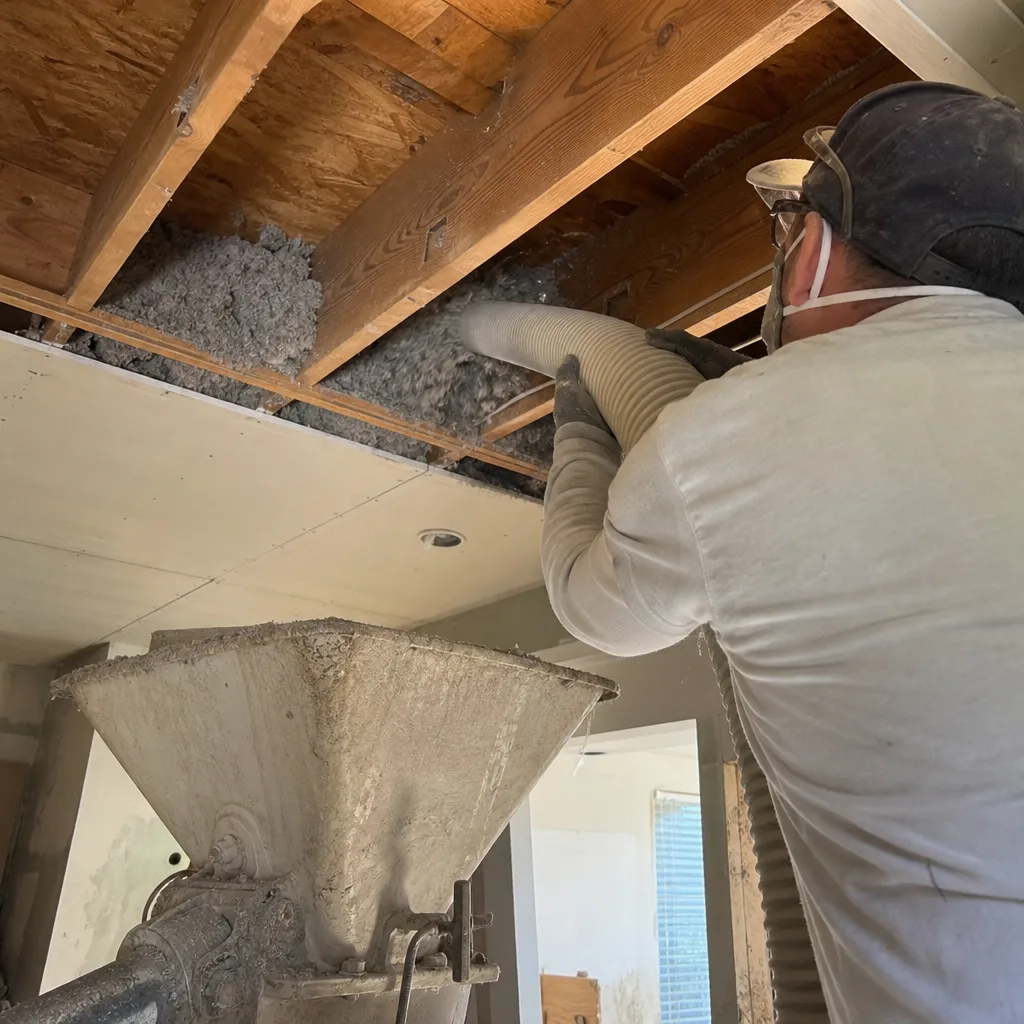
Blown in insulation is the workhorse fix for Rolling Hills Estates homes because it handles what batts can’t: irregular cavities, settling old material, and the hard-to-reach spaces behind knee walls and around cathedral ceiling framing. Homes in the 90505 ZIP code from the 1950s through the 1970s often have original fiberglass batts that the marine layer has rendered limp and ineffective. We blow loose fill insulation to a consistent density that fills every odd cavity, which is why most peninsula homes end up better served by blown material than by trying to retrofit fresh batts. This is a core service we install across the full spectrum of Blown In Insulation options, from cellulose to fiberglass.
Cellulose Insulation
Signs you need it
You have settled or missing insulation in an attic that shows humidity damage, or you want a dense-packed material that resists air movement better than standard fiberglass.
What it costs in Rolling Hills Estates
Blown-in cellulose in Rolling Hills Estates typically runs $1.50 – $3.20 per square foot installed, with most attic jobs landing between $1,800 and $4,200 depending on depth and access.
How we do it
We remove any moisture-compromised material, air-seal the attic floor, then blow cellulose through a hose at a consistent density until we reach the specified R-value depth across the entire attic.
Blown In Attic Insulation
Signs you need it
Rooms directly under the attic run noticeably warmer or cooler than the rest of the house, or you can see bare spots and settled piles when you look across the attic floor.
What it costs in Rolling Hills Estates
Blown-in attic insulation in Rolling Hills Estates runs $1.20 – $3.50 per square foot, with a typical 1,500 – 2,000 square foot attic priced between $1,800 and $7,000 before any rebates.
How we do it
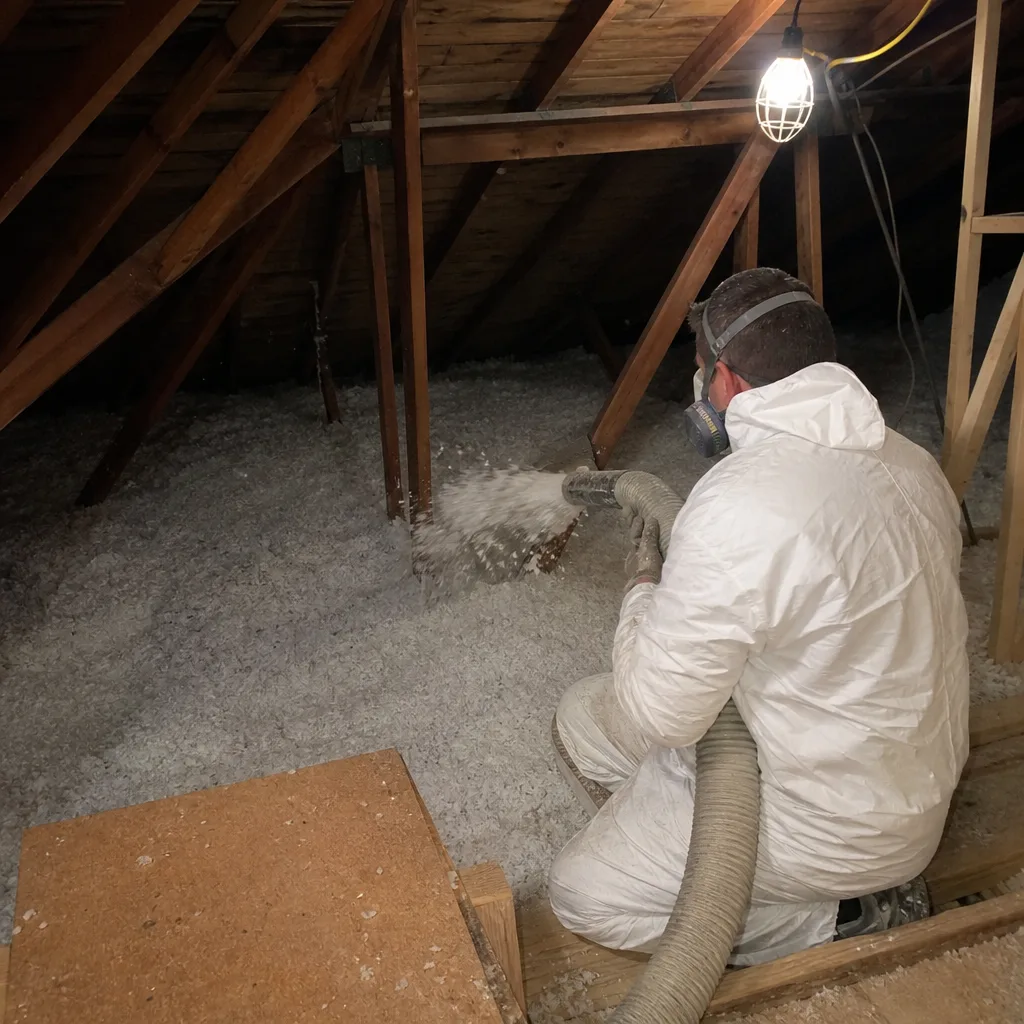
We air-seal every penetration first, then blow loose fill to a consistent depth that meets or exceeds the DOE recommended R-38 for this climate zone.
Blown In Cellulose Insulation
Signs you need it
You want a dense-pack material in sloped ceiling cavities or rim joist areas where fiberglass batts won’t stay in contact with the surfaces they’re meant to insulate.
What it costs in Rolling Hills Estates
Dense-pack cellulose in Rolling Hills Estates runs $2.00 – $3.50 per square foot, and typical whole-attic dense-pack jobs come in between $3,000 and $7,000.
How we do it
We dense-pack cellulose into enclosed cavities at 3.5 – 4.0 pounds per cubic foot using a high-pressure hose, which stops air movement and resists the settling that plagues older batts.
Blown In Fiberglass Insulation
Signs you need it
You have a large open attic with easy access and want a clean, consistent insulation layer that won’t absorb moisture the way older paper-faced batts do.
What it costs in Rolling Hills Estates
Blown-in fiberglass in Rolling Hills Estates runs $1.00 – $2.80 per square foot, with most whole-attic installs between $1,500 and $5,500 depending on depth and existing material removal.
How we do it
We blow loose-fill fiberglass over an air-sealed attic floor, checking depth with markers so every section reaches the target R-value without low spots that waste energy.
Loose Fill Insulation
Signs you need it
You have areas where batts have shifted, fallen out of place, or left bare spots, and you want a material that fills cavities completely without cutting and fitting.
What it costs in Rolling Hills Estates
Loose fill insulation in Rolling Hills Estates runs $1.00 – $3.20 per square foot, and the per-job cost shifts with whether we’re topping off existing material or starting from bare framing.
How we do it
We blow loose fill into attics, sloped cavities, and other enclosures, keeping the hose moving so no area gets overpacked and every corner gets full coverage.
What Blown In Insulation Costs in Rolling Hills Estates
| Item | Typical range in Rolling Hills Estates |
|---|---|
| Blown-in fiberglass (attic) | $1,500 – $5,500 |
| Blown-in cellulose (attic) | $1,800 – $4,200 |
| Dense-pack cellulose (enclosed cavities) | $3,000 – $7,000 |
How long does blown in insulation last in Rolling Hills Estates?
In Rolling Hills Estates, loose fill insulation lasts 20 – 30 years, but real-world performance depends entirely on moisture control in the attic. If the marine layer is moving through a poorly vented attic, the material loses loft and effectiveness far sooner. We always address ventilation and air sealing before blowing in new material. Call (877) 352-4780 to set up an inspection.
Can you blow insulation over existing attic insulation in Rolling Hills Estates?
Yes, we can blow new cellulose or fiberglass over existing insulation if the old material is dry, mold-free, and not settled below code. In Rolling Hills Estates, though, we often find existing batts too moisture-damaged or compressed to leave in place. We’ll tell you honestly whether topping off or full removal makes more sense. Call (877) 352-4780 to schedule a look.
Brands We Service in Rolling Hills Estates
Aliso Viejo Insulation Co is authorized to install Owens Corning, Johns Manville, Knauf, and Rockwool products in Rolling Hills Estates. We stock common fiberglass and cellulose materials locally for faster turnarounds, and Rockwool mineral wool is available for homes that want fire resistance or sound attenuation along with thermal performance. See our brands for the full roster.
Pricing for Insulation Company in Rolling Hills Estates, CA
| Service | Typical range in Rolling Hills Estates |
|---|---|
| Blown-in fiberglass (attic) | $1,500 – $5,500 |
| Blown-in cellulose (attic) | $1,800 – $4,200 |
| Dense-pack cellulose | $3,000 – $7,000 |
| Loose fill insulation (bare framing) | $1,800 – $6,000 |
| Attic insulation (remove and replace) | $2,500 – $8,000 |
| Spray foam (open-cell) | $2.00 – $4.50 per sq ft |
| Spray foam (closed-cell) | $3.00 – $6.50 per sq ft |
| Attic air sealing + insulation | $3,000 – $9,000 |
Prices in Rolling Hills Estates push upward when we’re removing old, moisture-damaged batts, working in tight hillside crawlspaces, or dealing with vaulted ceiling cavities that need dense-packing. Every quote is line-itemed before any work starts, so you know exactly what you’re paying for. There are no surprise add-ons at the end.
Neighborhoods We Serve in Rolling Hills Estates
We work across the 90505 ZIP code and the surrounding Palos Verdes Peninsula neighborhoods. The hillside sections take more setup time than the flatter ranch tracts, but we schedule so we can reach most Rolling Hills Estates homes within a day or two for insulation work.
- The Vantage
- Rolling Hills Park
- Peninsula Center area
- The Terraces
- Silver Spur
Service Area – Cities Near Rolling Hills Estates
Aliso Viejo Insulation Co has served Rolling Hills Estates since 2014, and we regularly work in nearby cities across the South Bay and Palos Verdes area. If you’re in Manhattan Beach, CA, Torrance, CA, Lomita, CA, or Palos Verdes Estates, CA, we can schedule an insulation inspection and provide a written estimate.
Serving Rolling Hills Estates, CA — Our Local Coverage Area
We’re based in the Rolling Hills Estates area and know this community well. Use the map below to see our service coverage — if you’re nearby, we can almost certainly help.
FAQs About Insulation Company in Rolling Hills Estates
We can typically reach most Rolling Hills Estates homes within one to two business days for an inspection, and we schedule full installations based on material availability and crew capacity. Same-week installation is common for standard attic jobs. Call (877) 352-4780 and we’ll give you a realistic arrival window, not a vague promise.
Most insulation work in Rolling Hills Estates happens inside the building envelope, so it rarely triggers HOA review. However, some neighborhoods require approval for exterior-venting changes or visible roof modifications that sometimes accompany spray foam jobs. We’ll flag any concerns during the initial inspection and help you understand what your specific HOA requires.
Yes, we cover the entire 90505 ZIP code in Rolling Hills Estates, including the hillside sections and the flatter tracts near Silver Spur. Our crews are familiar with the parking and access constraints in the steeper neighborhoods, and we plan our equipment accordingly. If you’re not sure whether your street is in our service area, call (877) 352-4780 and ask.
If your Rolling Hills Estates home needs a real insulation evaluation, not a sales pitch, call Aliso Viejo Insulation Co at (877) 352-4780. We’ll walk the attic, show you exactly what’s there, and give you a written estimate for the right fix, whether that’s blown in insulation, spray foam, or new attic batts. Free estimates, no pressure, and no obligation.
What happens when you call
- 1A real person answersNo phone trees — talk to a local insulation pro.
- 2You get an upfront price rangeHonest numbers before anyone is dispatched. No surprises.
- 3A background-checked tech heads outLicensed & insured, typically within 1-hour.
- 4You approve before work beginsNothing starts until you say go.
What Rolling Hills Estates Customers Say
"Told me the crawlspace didn't need doing and only the attic did. Half the job, half the money."
— Marcy Anderson"Found and sealed a gap around the chimney chase that was basically an open chimney to the attic."
— Sanjay Patel"Installed baffles at the soffits so the new insulation didn't block the ventilation, which the previous contractor apparently never considered."
— Luis Salazar