
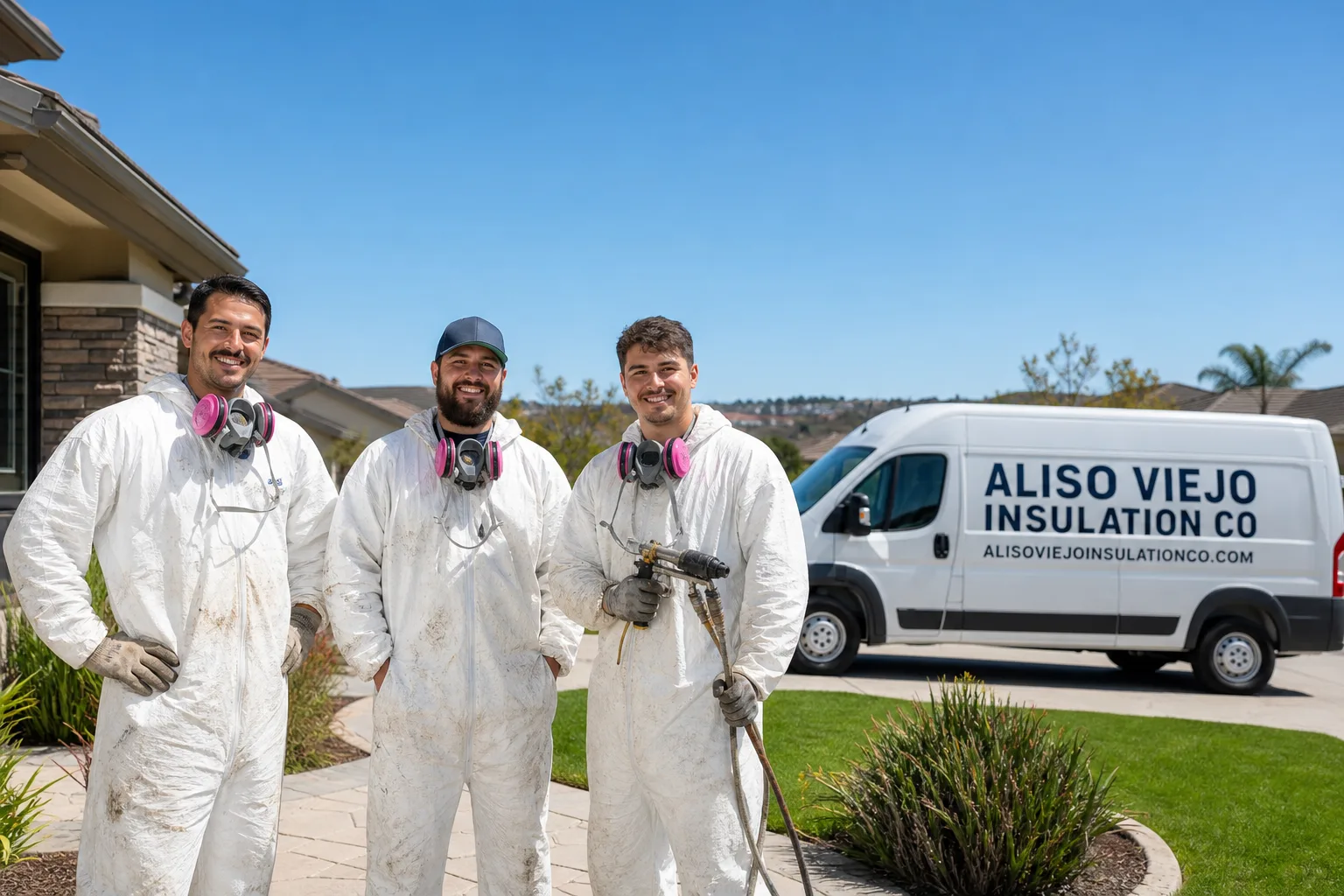
Fast, Reliable Spray Foam Insulation Across Alondra Park
Spray foam insulation in Alondra Park typically costs $2.50 to $6.00 per board foot installed, with a full attic roof deck running $4,800 to $9,600 depending on square footage and foam type. Most jobs in the 90249 zip code are completed in one to two days. If your postwar stucco home near Alondra Park is fighting afternoon heat or damp walls, we can be out to assess it quickly. Call (877) 352-4780 for a free estimate from a team that knows this neighborhood’s houses.
We work on the small-footprint, slab-foundation homes that define this area, from the streets off Prairie Avenue to the blocks near the park itself. The marine layer changes how insulation should be done here. Most homeowners in Alondra Park don’t need the heavy winter-focused packages sold in colder markets. They need a vapor-control strategy built for fog, onshore flow, and sun-baked low-slope roofs. That’s the work we do.
Why Aliso Viejo Insulation Co Is Alondra Park’s Preferred Spray Foam Insulation Company
Led by Nate Calloway, our crew has spent years working inside Alondra Park’s attics, wall cavities, and enclosed patios. We know what the original 1940s-through-1970s insulation looks like after sixty years of marine-layer fog. We know which stucco wall assemblies trap moisture and which ones breathe. That local familiarity means we don’t show up with a generic spray-and-leave approach.
Homeowners in Alondra Park regularly call us after another contractor quoted them a single-brand solution that didn’t fit their house. Because we install both open-cell and closed-cell foam, plus blown-in and batt options, our recommendation is driven by what your walls and attic actually need. We carry products from Owens Corning, Johns Manville, and Knauf, but we’re not tied to moving any one of them. We’re tied to getting your house right.
Our response time to Alondra Park is usually same-week, often within a few days. If you’ve got damp wall cavities or a sun-baked front room, we’ll schedule a look and give you straight answers about what’s happening behind your stucco.
Open Cell Spray Foam in Alondra Park
Open cell spray foam is a lower-density foam that expands aggressively and fills irregular cavities, making it a strong choice for Alondra Park attics where odd framing, low-slope transitions, and postwar additions leave gaps that batts never sealed. In an Alondra Park home, open cell works best for interior attic applications, sound-dampening between rooms, and filling the awkward framing around enclosed patios. A typical open-cell attic application in this area runs $2.50 to $4.00 per board foot installed.
Open cell foam is not a vapor barrier. That matters in Alondra Park because of the marine layer. In an attic with proper ventilation, open cell performs well and lets moisture move through the assembly rather than trapping it. The key is pairing it with airflow, which is something we check before any foam goes in.
Where open cell fits Alondra Park attics
Older homes near the park often have vented attics with gable or soffit vents still functioning. Open cell works well here because it insulates and air-seals without cutting off the cavity’s ability to dry. When we find original 1960s batts flattened and damp, we clear them out, check the ventilation, and then decide whether open cell or closed cell is the right call. The answer depends on what the roof deck and wall assembly are doing.
When to choose open cell vs. closed cell
If moisture is your concern and the walls are stucco on slab, closed cell usually wins because it blocks vapor. Open cell wins when the priority is air sealing, sound control, and budget, and when the cavity already breathes. We’ll show you both options and explain the trade-offs for your specific house rather than selling you whichever product is on the truck.
Spray Foam Insulation Contractors in Alondra Park
Spray foam insulation contractors in Alondra Park are not all working with the same material depth. Our team installs both open-cell and closed-cell systems, including Icynene and Demilec, two of the industry’s leading spray-foam chemistries. We don’t do HVAC, we don’t do roofing, and we don’t do drywall. Insulation is the only trade we work in, which means the person assessing your attic is the same specialist doing the install.
Closed-cell spray foam is the workhorse for Alondra Park’s damp stucco walls and unvented low-slope roof decks. It adds structural strength, blocks moisture vapor, and delivers the highest R-value per inch of any product we install. A closed-cell roof deck application in this area typically runs $4.00 to $6.00 per board foot, with whole-attic jobs falling in the $5,500 to $9,600 range.
Because Alondra Park sits in a mild, humid climate, the wrong foam choice in a stucco wall can seal condensation where it shouldn’t be. We spend a lot of time on moisture diagnosis before recommending a product. That’s the difference between a contractor who sprays and one who solves the actual problem.
Closed-cell for stucco wall assemblies
On a postwar stucco-on-slab home near Alondra Park, our crew opened an attic that still held the original 1960s-era batt insulation, flattened to a damp mat, sagging between joists and smelling of trapped fog moisture. After clearing the compressed batts and sealing the roof deck with closed-cell spray foam, we paired it with added attic ventilation so the cavity could dry. The homeowner reported the front rooms no longer baking under afternoon sun.
That job is typical of what we see. The marine layer keeps moisture in these wall cavities longer than inland neighborhoods like Gardena. Closed cell is often the right choice here specifically because it stops that vapor at the wall rather than letting it pass through and condense on the back of the siding.
Roof deck foam for sun-baked low-slope roofs
Alondra Park’s housing stock includes plenty of low-slope and gable roofs that soak up South Bay sun all afternoon. Roof-deck spray foam, especially closed cell, cuts that radiant heat gain before it ever reaches your living space. But foam alone doesn’t fix a roof that’s trapped heat. We check the ventilation, the existing roof condition, and the attic’s moisture history before we spray. Doing this wrong means sealing heat and humidity inside instead of keeping them out.
Trusted Brands We Service in Alondra Park
For Alondra Park homeowners, brand selection often comes down to the specific conditions of the house. We’re authorized to install products from eight manufacturers, including Owens Corning, Johns Manville, and Knauf. That matters because a 1950s stucco duplex near Alondra Park Boulevard needs different chemistry than a 1970s rancher near the park’s eastern edge. Our ability to draw from multiple brands, including Icynene and Demilec for spray foam, means your recommendation isn’t shaped by what’s in our warehouse. It’s shaped by what your house asks for.
Common Spray Foam Insulation Problems We See in Alondra Park Homes
- Compressed, damp original batts. Decades of marine-layer fog settle into attic fiberglass until it mats down and loses its R-value. We clear it out, let the cavity dry, and then foam over a clean surface.
- Condensation sealed into wall cavities. Closed-cell foam sprayed over moisture-trapped walls without proper prep can lock condensation in place. We dry and inspect before foam goes on, especially in stucco assemblies.
- Enclosed patios with no thermal break. Many postwar additions in Alondra Park were framed without any attention to air sealing or vapor control. These spaces bake in summer and weep in fog season. Foam, properly fitted, gives them their first real thermal envelope.
- Roof-deck foam without ventilation work. Spraying a sun-baked low-slope roof deck while ignoring ventilation just moves the heat problem around. We pair foam with airflow changes so the attic can actually dry.
Pricing for Spray Foam Insulation in Alondra Park, CA
Open-cell spray foam in Alondra Park runs $2.50 to $4.00 per board foot installed. Closed cell runs $4.00 to $6.00 per board foot. A full attic roof deck, depending on square footage and access, lands between $4,800 and $9,600. Rim joist sealing in a typical slab-foundation home here runs $900 to $2,200. Enclosed patio retrofits run $1,800 to $4,500 depending on framing complexity. What shifts the price most is access: tight attics on 1940s homes with low clearance take longer and require more careful prep. We give free estimates and will walk you through exactly where your money goes. Call (877) 352-4780 to schedule a look.
We Also Serve Cities Near Alondra Park
Our crews work throughout the South Bay, so if you’re in Gardena, Inglewood, Lawndale, or Hawthorne, the same team can help. For a full look at how we approach Spray Foam Insulation across the region, start there, or read more about Spray Foam Insulation in Alondra Park on our local page. We serve the 90249 zip code and the surrounding area from our base in Aliso Viejo.
Serving Alondra Park, CA — Our Local Coverage Area
We’re based in the Alondra Park area and know this community well. Use the map below to see our service coverage — if you’re nearby, we can almost certainly help.
FAQs About Spray Foam Insulation in Alondra Park
Closed-cell spray foam is often the right choice for Alondra Park’s stucco walls because it acts as a vapor barrier and stops marine-layer moisture from condensing inside the wall cavity. Open cell does not block vapor, so it’s generally not the first pick for stucco assemblies unless ventilation is already excellent. We inspect the wall and attic before recommending either one. Call (877) 352-4780 to schedule that inspection.
Decades of marine-layer fog and onshore flow keep attic cavities in Alondra Park humid for long stretches, and original 1960s batt insulation absorbs that moisture, compresses, and loses its thermal performance. The fix starts with clearing the old material, letting the cavity dry, and then addressing ventilation before new insulation goes in. If your attic insulation looks like a damp mat, that’s a fixable Alondra Park-specific problem.
Yes. Enclosed patios and postwar additions in Alondra Park were typically framed without air sealing or vapor planning, so they leak conditioned air and bake during summer afternoons. Spray foam, especially closed cell on the ceiling and knee walls, creates the first proper thermal envelope these spaces ever had. Expect to pay $1,800 to $4,500 depending on size and framing.
In cold-winter markets, spray foam is chosen to hold heat in and block freezing temperatures. Here, the job is different: the marine layer means moisture control and radiant heat rejection matter more than extreme cold. We prioritize vapor control, ventilation pairing, and roof-deck sealing because that’s what Alondra Park’s stucco-on-slab houses actually demand. The foam chemistry and placement change accordingly.
No. Spray foam needs direct contact with the surface it’s sealing, so old, damp, or compressed insulation must be removed first. In Alondra Park, that usually means pulling out 1960s-era batts that have absorbed decades of fog moisture. Once the cavity is clean and dry, we spray. If you’re unsure what’s in your attic, we’re glad to take a look.
Written by Nate Calloway, Owner at Aliso Viejo Insulation Co, serving Alondra Park and the South Bay.
Ready to get your Alondra Park home insulated right? Call (877) 352-4780 for a free, no-pressure estimate. We’ll walk your attic, check your walls, and tell you straight what your house needs and what it doesn’t.