
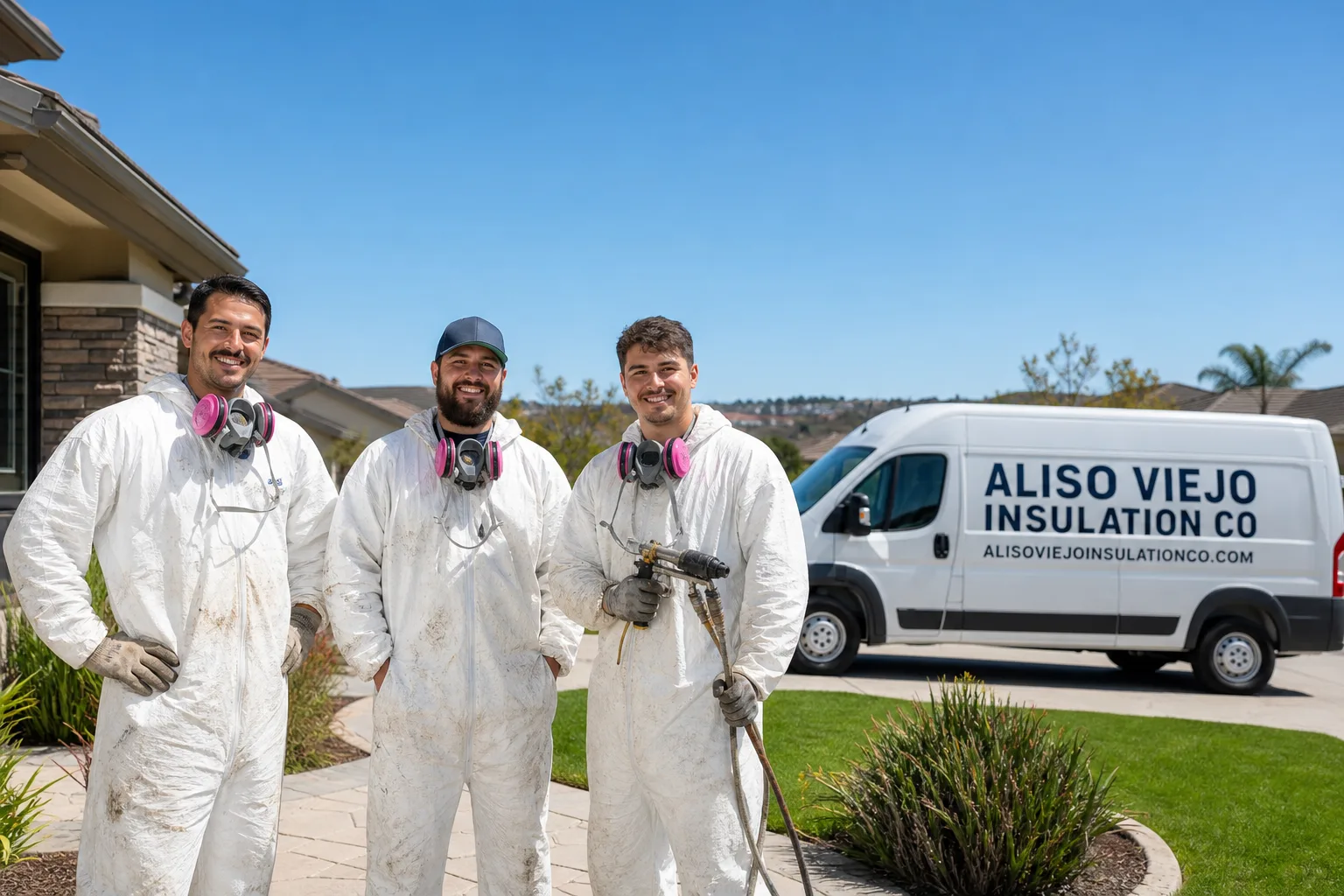
Fast, Reliable Spray Foam Insulation Across El Segundo
Spray foam insulation in El Segundo typically costs $2.50 to $6.50 per board foot installed, with most whole-attic jobs landing between $3,800 and $8,200 depending on foam type and cavity depth. We run crews into El Segundo most days of the week, often with next-day availability for small to mid-size jobs. If you’re fighting a fog-damp wall cavity in Smoky Hollow or an unvented attic near Sepulveda, call (877) 352-4780 and we’ll give you a straight answer on what the job needs.
Why Aliso Viejo Insulation Co Is El Segundo’s Preferred Spray Foam Insulation Company
El Segundo is a tight-knit town and the word travels fast when a contractor doesn’t show. We’ve worked enough stucco tract homes here to know the difference between a house that needs open-cell for sound and a house that needs closed-cell for moisture control. Our name gets passed between neighbors on the same block, and that’s the reputation we want.
Nate Calloway runs our crews and he’s particular about coastal assembly details. Every spray foam job in El Segundo starts with a moisture assessment of the existing wall or attic cavity. That’s not a standard step for inland installers, but it’s the only way to know whether you need a vapor barrier or vapor-permeable foam. We do it on every job, no exceptions.
We’re not locked into one brand or one foam chemistry. We install Icynene and Demilec spray foam systems, and we also carry Owens Corning, Johns Manville, Knauf, and Rockwool products when a job calls for fiberglass or mineral wool instead. That means when we recommend spray foam for your El Segundo home, it’s because spray foam is actually the right answer, not because it’s the only product on our truck.
Closed Cell Spray Foam Insulation in El Segundo
Closed Cell Spray Foam Insulation in El Segundo is the go-to option for the moisture-heavy conditions along the coast. At roughly R-6.5 to R-7 per inch, it’s the denser of the two foam types and it acts as its own vapor barrier, which matters in a town where the marine layer sits against exterior walls for hours every morning. Homeowners in Smoky Hollow, near Rec Park, and along the Sepulveda corridor choose closed-cell when condensation is the core problem.
A typical closed-cell job in El Segundo runs $3,200 to $7,800 depending on square footage, cavity depth, and whether we’re foaming wall cavities, rim joists, or an attic deck. The material cost is higher than open-cell, but when moisture control is the priority, it’s the right tool.
Vapor-Sealing Wall Cavities in Older Stucco Homes
Homes built in the 1940s and 1950s around Smoky Hollow and the downtown blocks often have uninsulated exterior walls with no vapor management. Closed-cell foam expanded into those cavities seals air movement and blocks moisture migration. We’ve pulled damp fiberglass out of walls where the sheathing was sweating behind it.
Rim Joist and Raised-Foundation Sealing
El Segundo has a lot of raised foundations, and the rim joist is where fog-damp air sneaks into the floor system. A 2-inch closed-cell application on rim joists plus careful air-sealing at penetrations keeps salt-laden humidity out of the crawlspace-to-wall transition. Rushed jobs that skip the air-sealing step trap moisture behind the foam and cause problems later.
Open Cell Spray Foam in El Segundo
Open Cell Spray Foam in El Segundo is the right call for interior sound control and attic air-sealing where you’re less concerned about bulk water and more focused on comfort. It runs about R-3.5 to R-3.8 per inch, which is lower than closed-cell, but it expands more aggressively and fills awkward cavities better. In El Segundo it costs roughly $2.20 to $4.50 per board foot installed.
For interiors, it buys you a quiet house, which matters in a town where you can hear LAX departures and the 405 hum from certain blocks. For attics, open-cell at the roofline is common in newer infill townhomes near downtown and Campus El Segundo where the roof assembly is already designed for unvented insulation.
Sound Control for Homes Near the Airport Flight Path
El Segundo sits directly under the LAX approach. Open-cell foam in interior wall cavities and floor assemblies reduces the low-frequency drone that passes through uninsulated stud bays. This is a quality-of-life upgrade that most homeowners don’t think about until they’ve experienced it.
Attic Air-Sealing in Newer Townhomes
The newer infill units near downtown and Campus El Segundo were framed under modern energy codes, but attic air leakage at top plates and recessed fixtures still wastes energy. Open-cell foam applied to the roofline creates a continuous air barrier without adding the rigidity or cost of closed-cell where a vapor barrier isn’t needed.
Trusted Brands We Service in El Segundo
We install Icynene and Demilec spray foam systems, two of the most established names in open- and closed-cell chemistry. When the job calls for fiberglass or mineral wool, we’re authorized with Owens Corning, Johns Manville, Knauf, and Rockwool. Carrying that many brands means we stock long-shot parts and fasteners for El Segundo jobs instead of special-ordering them and making you wait a week. If you’ve got a specific product in mind from a previous quote, we’ll match it or explain honestly why a different option fits your house better.
Common Spray Foam Insulation Problems We See in El Segundo Homes
- Fog-belt condensation on exterior sheathing. In Smoky Hollow and the older downtown blocks, the marine layer works through stucco and hits the back of the sheathing. Unvented wall cavities with the wrong insulation turn that moisture into rusted nails, mold, and peeling paint on the inside.
- Closed-cell applied too thick in a single pass on cold mornings. Spray foam needs surface warmth to bond properly. On a 55-degree foggy morning, rushing a 3-inch pass traps heat and creates voids behind the foam. We spray in controlled lifts and check adhesion with a thermal camera.
- Open-cell foam without a vapor retarder in damp wall cavities. Open-cell is vapor-permeable. In El Segundo’s marine air, that means moisture can move through it and condense on the cool sheathing behind. If open-cell is chosen for a wall cavity here, it needs a vapor management strategy.
- Raised-foundation rim joists foamed without air-sealing. Salt-laden damp air from the crawlspace gets behind the foam and condenses against the rim board. We see hidden rot on older homes when a previous installer sprayed foam over unsealed penetrations. The fix is to remove, seal, and re-apply.
Pricing for Spray Foam Insulation in El Segundo, CA
Spray foam in El Segundo runs higher than inland South Bay cities because the moisture management details add labor. Here’s what you’re looking at:
- Open-cell attic or wall cavity: $2.20 to $4.50 per board foot installed
- Closed-cell wall cavity or rim joist: $3.50 to $6.50 per board foot installed
- Whole-attic closed-cell project (1,200 to 1,800 sq ft): $5,200 to $9,800
- Rim joist air-seal and foam package on a raised foundation: $1,400 to $2,600
- Garage ceiling spray foam in a detached El Segundo garage: $1,600 to $3,200
What moves the price: foam type, cavity depth, whether we’re removing old insulation first, and how much air-sealing prep the surface needs. Estimates are free. Call (877) 352-4780 and we’ll give you a firm number.
Spray Foam Insulation in El Segundo: Coastal Moisture, Not Just R-Value
El Segundo has an insulation problem that most contractors from inland cities don’t recognize. The marine layer, the famous “El Segundo” fog bank, keeps the coastal edge cool and damp from late spring through early fall. That’s not a comfort nuisance. It’s a moisture engine. When warm indoor air meets cool exterior sheathing, condensation forms inside the wall cavity. In unvented or under-insulated walls, that condensation doesn’t dry out because the next morning’s fog re-wets the surface. Over time you get water staining, mold on the back of the drywall, and rust on fasteners.
This is a different problem than what homeowners face in Gardena or Torrance, where heat gain drives insulation decisions. Here, the priority is vapor control and cavity sealing. That’s why closed-cell spray foam dominates our El Segundo exterior wall jobs. It insulates and acts as a vapor barrier in one application. It’s also why we won’t put open-cell in an exterior wall here without a vapor management plan. In El Segundo, the wrong foam in the wrong cavity is worse than no foam at all.
In a 1948 stucco home in Smoky Hollow, our crew found water staining and condensation on the back of the exterior sheathing behind uninsulated wall cavities. We removed the damp fiberglass, applied closed-cell spray foam (Icynene) to seal the cavity and act as a vapor barrier, and verified with a moisture meter that the assembly stayed dry through the next fog cycle. That’s the kind of fix you can only do after you understand what the marine layer does to a wall. We do, because we’ve pulled apart enough El Segundo walls to see the failure mode repeat itself.
We Also Serve Cities Near El Segundo
Our crews run spray foam jobs across the South Bay. In addition to El Segundo, we serve Lennox, Del Aire, Hawthorne, and Marina del Rey. If you’re a few blocks over the city line, the same crew and the same foam systems are available. Our full Spray Foam Insulation service area covers the coastal strip from the 105 to the marina.
Serving El Segundo, CA — Our Local Coverage Area
We’re based in the El Segundo area and know this community well. Use the map below to see our service coverage — if you’re nearby, we can almost certainly help.
FAQs About Spray Foam Insulation in El Segundo
Closed-cell spray foam works well in El Segundo’s fog belt because it’s vapor-impermeable, meaning it stops moisture from moving through the wall cavity. The key is proper installation at the right thickness. Applied in controlled lifts with good surface adhesion, it seals the cavity and blocks the condensation cycle that causes water staining in older stucco homes. Call (877) 352-4780 to get an assessment of your specific wall assembly.
Yes, in most cases closed-cell spray foam is the fix. The staining comes from condensation inside uninsulated or poorly insulated wall cavities. We remove any damp existing insulation, treat the surface, then apply closed-cell foam to seal the cavity and stop future moisture movement. Every El Segundo wall job gets a moisture meter check before and after.
Older raised-foundation homes around Smoky Hollow and the downtown core need rim joist sealing and exterior wall cavity work first, with closed-cell foam handling the vapor control. Newer infill townhomes near downtown and Campus El Segundo already have code-mandated wall insulation, so the work is usually attic air-sealing and sound control where open-cell makes more sense. The house tells you which one it needs.
Closed-cell spray foam reduces salt air intrusion into wall and floor cavities because it air-seals. Salt-laden damp air moves through gaps and cracks, and when it hits cool surfaces, it condenses and accelerates corrosion on fasteners and electrical boxes. Sealing those pathways with foam is one of the best defenses for coastal homes. Open-cell does not provide the same protection.
Yes. For unvented attics, we typically apply closed-cell or open-cell foam to the roofline depending on the existing roof assembly and whether the attic has a vapor diffusion issue. El Segundo’s marine air means unvented attics need the right foam type and thickness to prevent condensation on the underside of the roof deck. We’ll inspect the attic and tell you what’s safe.
Get a Free Spray Foam Estimate in El Segundo
If your energy bills are climbing or you’re finding condensation on walls and windows, call us at (877) 352-4780. We’ll schedule an inspection, check your wall and attic cavities with a moisture meter, and give you a written quote with a firm price. No product pitch, just the right insulation for your home’s specific conditions.
Written by Nate Calloway, Owner at Aliso Viejo Insulation Co, serving El Segundo since day one.