
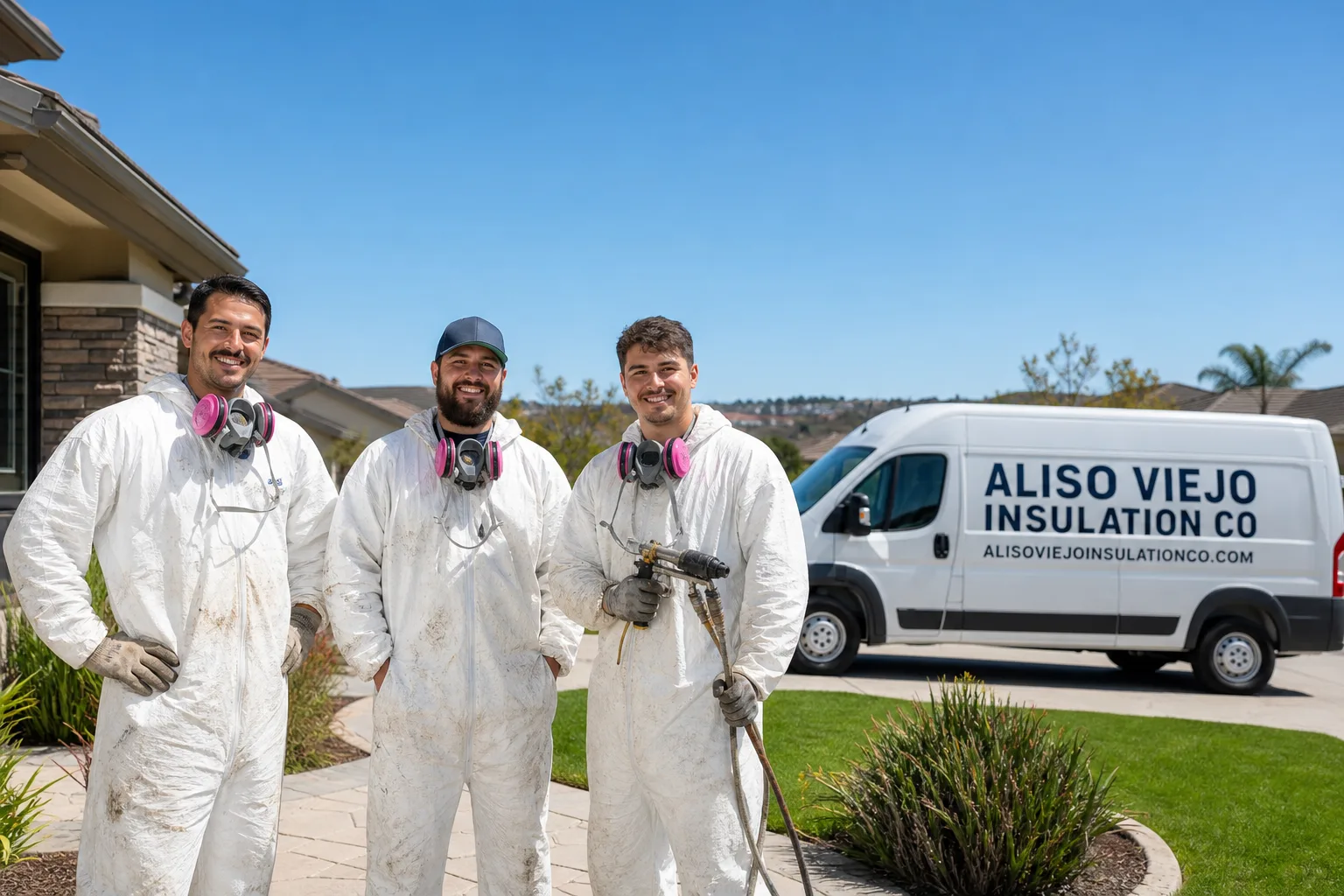
Fast, Reliable Spray Foam Insulation Across Shadow Hills
Spray foam insulation in Shadow Hills runs $2.50 to $6.50 per board foot installed, with most whole-attic jobs landing between $4,800 and $11,500 depending on depth and access. We serve all of 91040, from the horse properties off Sunland Boulevard to the canyon-edge lots along La Tuna Canyon Road. Our crews know Shadow Hills homes are different from the tract houses in Burbank or Tujunga. They’re custom builds with quirks, and that’s what we plan for before a single hose comes off the truck. Call (877) 352-4780 for a straight answer about your house.
Why Aliso Viejo Insulation Co Is Shadow Hills’s Preferred Spray Foam Insulation Company
We work here regularly, which means we know what a 1950s ranch with an unvented attic and exposed rafter tails actually needs. That’s not theoretical knowledge. It’s what we’ve fixed on this side of the Valley more times than we can count. Shadow Hills homeowners call us because we identify the real problem before recommending a product, not the other way around.
Nate Calloway leads our crews with a simple rule: match the foam to the structure, not the invoice. Since we install Icynene and Demilec systems side by side, we can specify open-cell for a detached barn that needs sound control or closed-cell for a rim joist that has to block moisture and ember intrusion. One truck, both chemistries, zero pressure to push the wrong one.
Response time to Shadow Hills is typically 48 to 72 hours for estimates, and we schedule installs around equestrian hours when a job involves barns or tack rooms. That matters when you’re feeding horses at 6 a.m. and don’t need a crew in the way. Call (877) 352-4780 and we’ll give you a window, not a vague “sometime next week.”
Spray Foam Wall Insulation in Shadow Hills
Spray foam wall insulation in Shadow Hills usually means retrofitting the 2×4 exterior walls of a 1960s or 1970s custom ranch that was built with fiberglass batts now compressed, mouse-chewed, or missing entirely. We inject or stud-bay spray open-cell foam to fill the cavity completely, sealing the gap where drywall meets the sole plate and cutting the dust and draft that move through wall cavities on windy canyon days. The cost for a typical 1,800-square-foot Shadow Hills home runs $3,800 to $7,200 depending on how much of the wall has to be accessed from the exterior versus the interior. Homes off Wheatland Avenue with stucco exteriors often need injection through the sheathing; houses with wood siding are faster.
What to Expect on Installation Day
Crews mask off the work area, pull any old batts that are loose or soiled, and spray in lifts so the foam cures without pulling the drywall. The foam reaches full R-value within 24 hours. In most Shadow Hills homes we’re in and out in a day for a single wall section, two days for a full exterior wall retrofit.
When Wall Foam Is the Right Call
You’ll know because rooms facing the afternoon sun off the Verdugos run 10 to 15 degrees hotter than the rest of the house. Or because the wall feels warm to the touch at 7 p.m. in July. That’s the thermal mass of the stucco radiating back into the house, and cavity-filling foam is the most direct fix we offer.
Rim Joist Spray Foam in Shadow Hills
Rim joist spray foam in Shadow Hills is the single highest-ROI insulation job on most of the homes we see here. The rim joist, the band of framing where your floor joists meet the foundation, sits right at grade level on a half-acre lot. In Shadow Hills that means exposure to ground moisture from irrigation for paddocks and horse turnout, plus air leaks that draw hot canyon air into the crawlspace. We spray closed-cell foam across each joist bay, typically 2 inches, which air-seals and insulates in one pass. A standard rim joist job on a 1,600-square-foot home runs $2,200 to $3,600 but stops the stack effect that’s overheating your living space. Homeowners near Hansen Dam see the biggest difference because their crawlspaces get the most ground moisture.
Why Closed-Cell at the Rim
Open-cell foam is cheaper, but it isn’t right at the rim in this climate. Closed-cell gives you R-6.5 per inch, blocks vapor drive, and won’t sponge up the moisture that wicks up from Shadow Hills’ clay-heavy soil during winter rains. We use Icynene closed-cell for rim joists on nearly every job here.
Signs Your Rim Joist Is Failing
Cold floors in December. A crawlspace that smells earthy after rain. Spider webs in the corners of the floor above the crawlspace, which means air is moving through. Call (877) 352-4780 and we’ll scope it with a camera before quoting.
Trusted Brands We Service in Shadow Hills
We stock and install Icynene and Demilec spray foam systems because they cover opposite ends of the performance spectrum and we want both on the truck. For Shadow Hills homeowners researching options, that means you get an honest comparison instead of a sales pitch for whatever brand the contractor has a deal with. We also carry Owens Corning fiberglass and GreenFiber cellulose for homes where spray foam is overkill or the budget points elsewhere. Having eight manufacturer relationships sounds like a marketing line, but on the ground in 91040 it means we can spec Rockwool mineral wool for a garage wall facing a horse turn-out where fire resistance matters more than R-value alone. Parts and foam are stocked locally, so most Shadow Hills jobs start within a week of estimate.
Common Spray Foam Insulation Problems We See in Shadow Hills Homes
- Foam sprayed over fiberglass in unvented attics. This is the most common mistake we correct here. Somebody sprays foam over old batts without addressing the blocked wildfire vents, and the attic turns into a hot, damp box that cooks the roof deck. The fix is removing the old material, clearing the vents, then starting clean.
- Rim joist foam cracking and pulling away. Spray foam expands and contracts, and when someone uses the wrong chemistry for a 150°F+ attic in July, it cracks at the seams. We see this on canyon-edge homes near La Tuna Canyon Road where temperature swings are extreme.
- Overspray in barns and tack rooms. We’ve been behind crews who left foam bulging around tack racks or let overspray settle near hay storage. It’s a fire hazard and it makes the building less usable. Our barn jobs get trimmed flush and cleared before we consider the work done.
- Blocked wildfire vents negating the insulation. Shadow Hills is in a very high fire hazard severity zone, which means code requires specific vent coverings. When those get covered over or clogged, the attic can’t breathe and the foam’s thermal performance drops. We check vent function on every attic job.
Pricing for Spray Foam Insulation in Shadow Hills, CA
Open-cell spray foam in Shadow Hills runs $2.50 to $4.50 per board foot. Closed-cell runs $3.75 to $6.50. A full attic spray on a 1,500-square-foot ranch typically lands between $6,200 and $9,800. Wall cavity retrofits run $3,800 to $7,200. Rim joist sealing runs $2,200 to $3,600. What moves the number is access: a detached barn with clean framing is faster than a cramped attic with old wiring draped everywhere. Material depth matters too. We give fixed quotes before starting, not estimates. Call (877) 352-4780 and we’ll price your actual scope, not a square-footage guess.
One thing worth stating plainly: the equestrian angle here changes the conversation about spray foam. Shadow Hills’ 91040 ZIP has a high concentration of horse properties, so spray foam insulation is as likely to be specified for tack rooms, barns, and covered arenas as for houses. That’s a demand that doesn’t exist in neighboring Valley suburbs like Sun Valley or Pacoima, and it’s why generic insulation advice from a contractor who mostly works those areas falls short. We recently sprayed Icynene closed-cell foam in a tack room on a half-acre horse property off Sunland Boulevard, where the owner needed to stabilize temperature for leather saddles and feed. The existing fiberglass batts were sagging and rodent-soiled, and summer heat was pushing interior temps past 110°F. After removing the old insulation, we applied 2 inches of closed-cell foam to the walls and rim joists, sealing gaps that let in dust and insects, and the room now holds a steady 80°F even on 105°F afternoons. That’s the kind of job that only exists in this ZIP code.
We Also Serve Cities Near Shadow Hills
Our crews regularly work in Sunland, Tujunga, La Crescenta-Montrose, and Burbank, which means we’re already on the road to your property and can schedule without the long lead times you get from contractors based across the Valley. Learn more about our Spray Foam Insulation team’s full capabilities or explore Spray Foam Insulation in Shadow Hills for local project examples. Same crew, same standards, whether the job’s a crawlspace off Foothill Boulevard or a tack room off Sunland.
Serving Shadow Hills, CA — Our Local Coverage Area
We’re based in the Shadow Hills area and know this community well. Use the map below to see our service coverage — if you’re nearby, we can almost certainly help.
FAQs About Spray Foam Insulation in Shadow Hills
Yes, and we do it regularly. Closed-cell foam works best in barns and tack rooms because it seals out dust, insects, and moisture while adding R-6.5 per inch. For tack rooms, temperature stability matters for leather. For feed rooms, sealing gaps keeps out rodents and humidity. Call (877) 352-4780 to get a specific recommendation for your outbuilding.
It pushes us toward closed-cell foam and mineral wool in exposed locations, and it forces careful attention to wildfire vent code. In unvented attics within the fire zone, adding foam over blocked or code-required vents creates a heat and moisture trap. We verify vent function and material fire ratings on every job so the insulation performs without creating a new hazard.
Spraying foam over existing fiberglass without removing the old material and clearing wildfire vents. That traps heat against the roof deck and reduces the foam’s effectiveness by up to half. We remove old insulation, address venting, then spray clean for full contact and maximum air seal.
Yes. Covered arenas and detached garages are different from conditioned living space, and the foam spec changes accordingly. We’ve done open-cell on the underside of arena roof decks where the goal is radiant-heat rejection and sound control, not a full thermal envelope. The right product depends on whether the space is open-air, partially enclosed, or fully conditioned.
Yes, and this is the argument that convinces most skeptical homeowners. Spray foam applied to the roofline keeps attic temperatures within 10 to 15 degrees of living space, which means your HVAC isn’t fighting a 150°F oven every afternoon. That’s a direct load reduction, and it shows up in the July and August electric bill. Call (877) 352-4780 to talk about your attic specifically.
Key Takeaways for Shadow Hills Homeowners
- Spray foam pricing in 91040 runs $2.50 to $6.50 per board foot depending on open-cell or closed-cell chemistry.
- Shadow Hills’ horse properties often need spray foam in barns, tack rooms, and arenas, not just houses.
- Wildfire vent code and 150°F+ summer attics make foam selection different here than in Burbank or Sun Valley.
- We stock Icynene and Demilec systems and can spec either without bias toward one product.
- Any spray foam job should start with vent and existing-insulation inspection, not just a hose through the attic hatch.
If your Shadow Hills home or outbuilding is fighting the heat, losing conditioned air, or has an attic that never cools down, let’s talk straight about what will fix it. We’ll give you a fixed quote before starting, explain exactly what we’re installing and why, and leave the space clean and usable. Call Nate and the crew at (877) 352-4780 for a free estimate and a real answer about your property.
Written by Nate Calloway, Owner at Aliso Viejo Insulation Co, serving Shadow Hills and the northeast San Fernando Valley.