
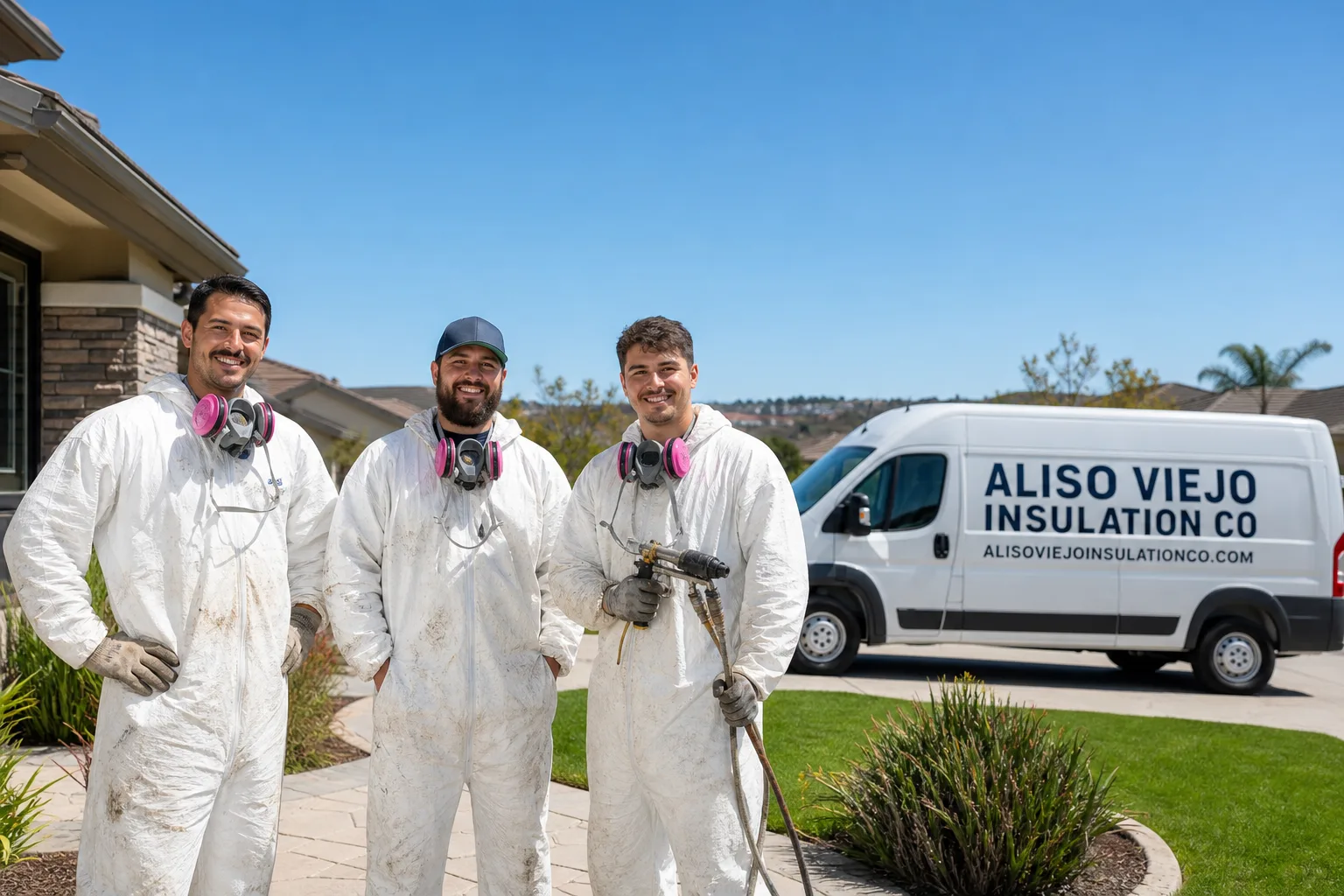
Fast, Reliable Spray Foam Insulation Across Valinda
Spray foam insulation in Valinda typically costs $3,200 – $6,800 for a full attic roofline application on a mid-century tract home, and most jobs take one to two days. We run crews into the 91744 zip code weekly, so scheduling is straightforward and we’re rarely more than a few days out. If you’re chasing down high summer cooling bills in a 1950s or 1960s single-story with original insulation, the problem is almost always the attic, and the fix starts with a phone call to (877) 352-4780.
Valinda’s unincorporated status changes how permits and inspections work, and those details matter when foam goes in wrong. We know this area’s housing stock, its inspection sequence, and the heat issues that come with being this far inland. That local knowledge is the difference between a foam job that passes inspection cleanly and one that gets flagged.
Why Aliso Viejo Insulation Co Is Valinda’s Preferred Spray Foam Insulation Company
We’ve worked enough attics off Valinda’s residential blocks to know what county inspectors look for before they’ll sign off on foam. Knob-and-tube wiring, non-IC recessed lights, attic access clearances – these prerequisites come up on nearly every original mid-century home in the area, and we handle the insulation side in sequence with your electrician rather than after the fact. That sequencing keeps permits moving and prevents the re-inspection fees that catch homeowners off guard.
Nate Calloway built this company around one principle: match the material to the actual conditions of the home, not to whatever’s on the truck. We carry open-cell and closed-cell systems from Icynene and Demilec, plus the full spectrum of fiberglass, mineral wool, and cellulose from six other manufacturers. When we recommend open-cell foam for a Valinda attic, it’s because the roof geometry, ventilation, and heat profile call for it – not because we only sell one product.
Response time to Valinda runs same-week for most attic evaluations. We schedule inspections in the morning before attic heat builds, which gives us an honest read on your current insulation performance and keeps the work conditions safer for the crew.
Open Cell Spray Foam in Valinda
Open Cell Spray Foam is the workhorse option for Valinda attics where the primary enemy is heat gain through the roof, not extreme cold. It expands to fill the rafter bays, seals the thermal boundary at the roofline, and does a lot of its work by stopping air movement – which matters when Santa Ana winds push smoke and fine dust against every gap in an older home’s roofline. For most unincorporated Valinda tract homes built between the 1950s and 1970s, open-cell foam on the attic roofline runs $3,200 – $5,800 depending on square footage and the prep work required.
One-Trip Job Sequencing
Open-cell foam goes in clean and fast when the attic has been prepped correctly. On a recent mid-century single-story off Valinda’s residential blocks, our crew found an unfinished attic over 140°F in July, with old settled fiberglass batts, knob-and-tube runs, and a cluster of non-IC recessed lights poking through. We capped and re-rated the cans, had the wiring addressed, then applied Icynene open-cell foam to the roofline in one trip – sealing the Santa Ana smoke paths and knocking the attic heat gain down so the aging central AC stopped short-cycling.
What Open-Cell Does Not Fix
Open-cell foam is not the answer for a wet crawlspace or a foundation leak. In Valinda, moisture problems are less common than in coastal cities, but when they show up – usually from a leaking swamp cooler pan or an old roof penetration – the water source has to be addressed before foam touches the surface. Foam seals cavities, it doesn’t dry them out.
Spray Foam Insulation Contractors in Valinda
Spray Foam Insulation Contractors who work Valinda regularly need to understand one thing most out-of-town crews don’t: every job in the 91744 zip code pulls an LA County building permit, not a city one, and the county inspection sequence is stricter about what can and cannot be buried in foam. We’ve worked through this process enough times to know the prerequisites before we quote, which means fewer surprises during inspection and less chance of a red-tag on work that was avoidable. Full spray foam work on a Valinda home – whether rim joist, attic roofline, or a combination – typically runs $2,900 – $6,800.
Permit-Ready Attic Prep
County inspectors in unincorporated LA County routinely flag two things before foam gets signed off: active knob-and-tube wiring and non-IC recessed light cans sitting in the insulation. Both are fire hazards when foam, or any insulation, wraps them. We coordinate attic prep so the electrical work is complete before we spray, then return for a clean one-trip foam application. The sequence saves you re-permitting and re-inspection fees.
Rim Joist and Garage Ceiling Applications
Valinda’s original stucco tract homes have open rim joists where the floor framing meets the foundation, and that gap between conditioned and unconditioned space leaks more air than most homeowners realize. Closed-cell foam at the rim joists stops that pathway and adds structural rigidity to homes sitting on older foundation systems. Garage ceiling spray foam is equally common here, especially when a converted garage or a bonus room above contributes to the home’s thermal envelope.
Trusted Brands We Service in Valinda
We’re authorized to install insulation products from eight nationally recognized manufacturers, which means the recommendation you get reflects your home’s actual conditions, not a sales quota. For spray foam, we install Icynene and Demilec systems – two of the most established open-cell and closed-cell chemistries in the industry. For homes where foam isn’t the right call, we also install Owens Corning fiberglass, Rockwool mineral wool, and GreenFiber recycled cellulose. In Valinda specifically, we keep open-cell Icynene material stocked for the mid-century attic profiles we see most often, so your job doesn’t wait on a distributor. The material depth matters because an honest answer to “foam or not foam” only works when you can actually install either option.
Common Spray Foam Insulation Problems We See in Valinda Homes
- Foam sprayed over knob-and-tube wiring or non-IC cans. This is the number one red-tag source from LA County inspectors in Valinda’s 1950s and 1960s housing stock. Insulation of any kind wrapping active knob-and-tube is a fire hazard, and non-IC recessed lights need rated covers before foam can go over them.
- Open-cell foam applied too thick in a single pass in 140°F+ attic heat. Open-cell foam relies on an exothermic chemical reaction to cure, and excessive ambient heat plus too-thick a pass causes blistering and incomplete cure. The result is a foam layer that never fully seals, so Santa Ana smoke paths remain open and the R-value underperforms.
- No air sealing at top plates and wall penetrations before foam. Original 2×4 stucco walls in Valinda leak air at the top plates, plumbing penetrations, and electrical boxes. Foam in the roofline can’t fix what’s happening at the wall-to-attic junction if that seam was never sealed. Heat still migrates into the living space and cooling bills barely move.
- Old recessed light fixtures left uncovered under new foam. Many Valinda tract homes have original non-IC recessed cans from the 1960s and 1970s. These need IC-rated covers or replacement fixtures before foam touches the ceiling plane, otherwise they overheat and create a fire risk – and fail inspection.
Pricing for Spray Foam Insulation in Valinda, CA
A full attic roofline open-cell foam application in Valinda typically runs $3,200 – $5,800 for a standard single-story tract home in the 91744 zip code. Closed-cell foams run higher – $5,500 – $8,900 for the same attic profile – because the material cost per board foot is substantially higher and the install requires different equipment. Rim joist work alone usually lands between $900 and $1,900 depending on accessible linear feet and whether we’re using closed or open cell. Garage ceiling spray foam for a standard two-car garage runs $1,200 – $2,400. The prep variables that move the final number: knob-and-tube abatement sequencing, number of non-IC recessed cans to cover, attic access size, and whether the attic needs air sealing at top plates first. We give a written, line-item quote after an attic walkthrough, and we don’t charge for the estimate. Call (877) 352-4780 to schedule one.
We Also Serve Cities Near Valinda
Our crews work the eastern San Gabriel Valley corridor daily, so Spray Foam Insulation in Valinda is only part of our coverage area. We regularly run jobs in La Puente, West Covina, South San Jose Hills, and Hacienda Heights. If you’re near the 60 freeway corridor or the city boundaries, chances are we’ve already worked your block. For more on what full-method insulation coverage looks like, see our Spray Foam Insulation service hub.
Serving Valinda, CA — Our Local Coverage Area
We’re based in the Valinda area and know this community well. Use the map below to see our service coverage — if you’re nearby, we can almost certainly help.
FAQs About Spray Foam Insulation in Valinda
Yes. Valinda is unincorporated Los Angeles County territory, so spray foam insulation work pulls a county building permit through LA County Building and Safety, not a city permit office. County inspectors review insulation work the same way they review electrical or structural changes, which means the prerequisites – knob-and-tube wiring status, recessed light ratings, and attic access – get checked before foam gets signed off. We handle the permit sequencing for you and can tell you before the job starts what the inspector will want to see. Call (877) 352-4780 for a free evaluation and we’ll walk you through it.
No, and this is the most important safety answer on this page. Spray foam, cellulose, fiberglass – no insulation should ever be sprayed or blown over active knob-and-tube wiring because the wiring runs hot under load and needs open air to dissipate heat. Buried in foam, it becomes a fire hazard and an automatic inspection failure in unincorporated LA County. The wiring has to be decommissioned or replaced by a licensed electrician first, then we can foam the roofline cleanly. We coordinate the sequencing so you’re not managing two contractors on a calendar.
Yes, significantly. Santa Ana winds push smoke and fine particulates under eaves, through gable vents, and into the attic, where they migrate down through wall penetrations, can lights, and the attic hatch. Open-cell foam’s job is to seal the attic thermal boundary and close those pathways. We also air-seal top plates, plumbing penetrations, and electrical boxes as part of the prep, which stops the bypass routes foam can’t reach. The combination usually makes a noticeable difference in indoor air quality during wind events.
A Valinda attic in July and August routinely exceeds 140°F because of the San Gabriel Valley’s hot, dry inland climate and the dark composition shingle roofs common on 1950s-1970s tract homes. That heat affects both the install and the material choice. Open-cell foam has to be applied in controlled passes when ambient attic temperature is above 120°F – too thick a lift in extreme heat causes blistering and incomplete cure. Our crews schedule installs in the early morning during summer months, and we account for the attic temperature in the day’s work plan.
It doesn’t block the whole job, but it’s a prerequisite step. Non-IC (non-insulation-contact) recessed lights cannot be buried in foam or any insulation because they overheat. They either need to be replaced with IC-rated fixtures or covered with a rated protective box that maintains the required air gap. We identify every recessed can during the attic walkthrough and include the covers or replacements in your quote. Skipping this step means a red-tag at inspection, so we’d rather handle it before we spray. Call (877) 352-4780 with questions – estimates are free and we’ll tell you exactly what your attic needs.
Written by Nate Calloway, Owner at Aliso Viejo Insulation Co, serving Valinda and the greater San Gabriel Valley.