Insulation Company in Spring Valley Lake, CA
Blown in insulation is the workhorse fix for Spring Valley Lake homes built between the late 1960s and the 1980s, where thin original attic batts have settled and compressed under decades of high-desert sun and wind. We’re Aliso Viejo Insulation Co, and we’ve served Spring Valley Lake since 2014. What sets this community apart is the lake itself: open lakefront lots mean west- and south-facing walls absorb afternoon heat that radiates straight into attic spaces, so the right insulation here has to handle both winter R-value and summer heat gain. Call (877) 352-4780 for a free estimate.
Why Spring Valley Lake Homes Are Different
Spring Valley Lake sits in the Victor Valley high desert, where summer afternoons routinely push past 100 degrees while winter nights dip below freezing. That swing is brutal on insulation, especially in the 1970s-era stucco-and-tile homes that make up much of the original housing stock around the lake. Many of those homes still carry their original attic batts, now compressed to a fraction of their rated R-value. The wind off the open desert adds another layer: it drives heat through west-facing walls and forces attic air to move in ways that exposed fiberglass alone can’t stop.
The lakefront lots create a specific problem we see constantly in Spring Valley Lake. Homes with western exposure to the water get reflected sunlight coming at them from two directions: direct sun overhead and glare bouncing off the lake surface. Cathedral ceilings over living rooms with big lake-view windows are where heat gain shows up first. We’ve measured attic temperatures in those spaces running 30 to 40 degrees hotter than shaded attics on the same street. That’s why blown in insulation here often needs to be paired with proper ventilation and, in some cases, radiant-barrier thinking built into the material choice.
One more reality: Spring Valley Lake is an HOA community, and the association’s architectural review process applies to exterior changes. Insulation work inside the attic or walls typically doesn’t require HOA approval, but anything that alters rooflines, venting visible from the street, or exterior appearance might. We help homeowners sort that out before the job starts, and we’re familiar with the common roof pitches and truss layouts in the older lake-oriented builds.
Our Main Spring Valley Lake Services
Most Spring Valley Lake homeowners call us about two things: attics that need a full insulation overhaul and homes where spray foam is the right answer for odd-shaped or hard-to-reach spaces. Here’s what each involves locally.
Attic Insulation in Spring Valley Lake
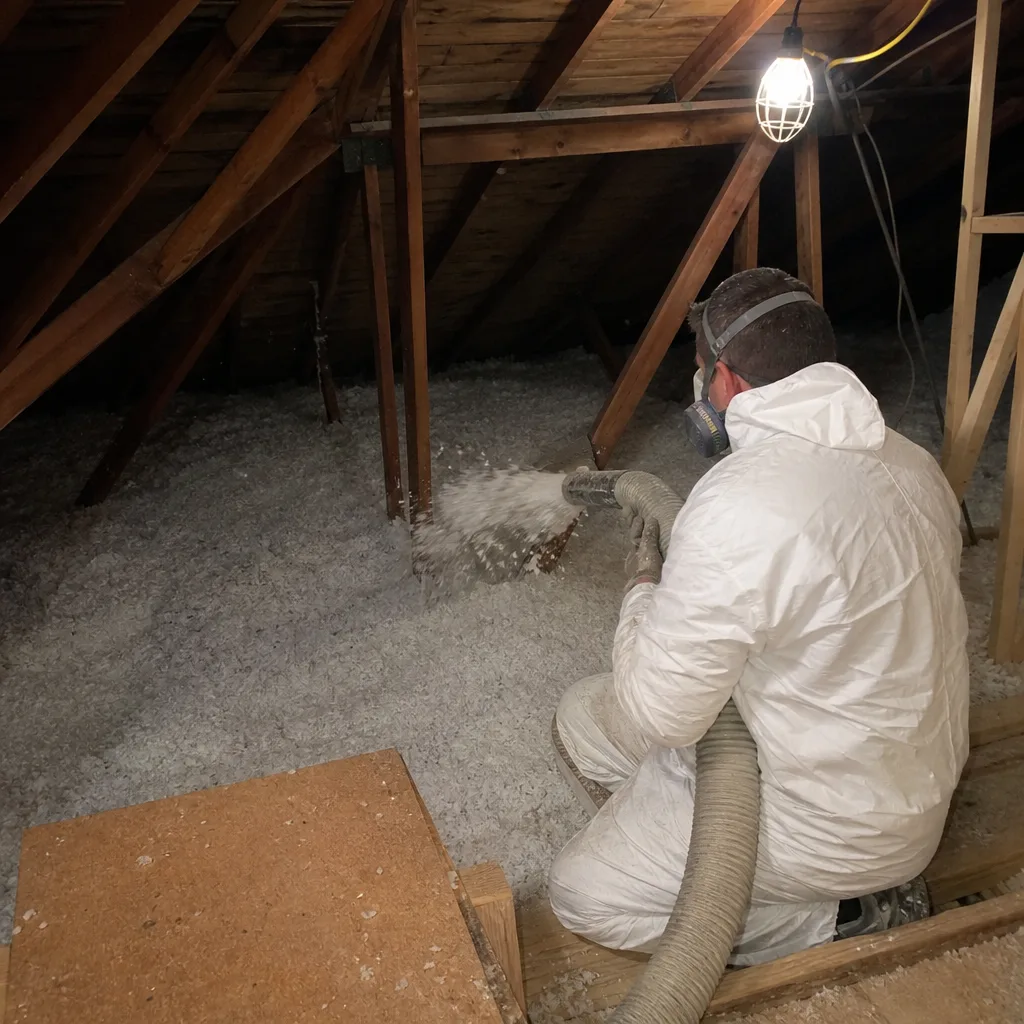
Attic insulation in Spring Valley Lake usually means pulling out compressed, dusty old batts from a 1970s or 1980s home and bringing the space up to current Title 24 levels. We work with the existing roof lines, including the cathedral ceilings common in lake-view living rooms, and we account for the HOA’s exterior standards by keeping all work inside the building envelope. The goal is a thermal barrier that handles both the summer heat load off the lake and the winter freeze cycles that hit the high desert. Attic Insulation in Spring Valley Lake
Spray Foam Insulation in Spring Valley Lake
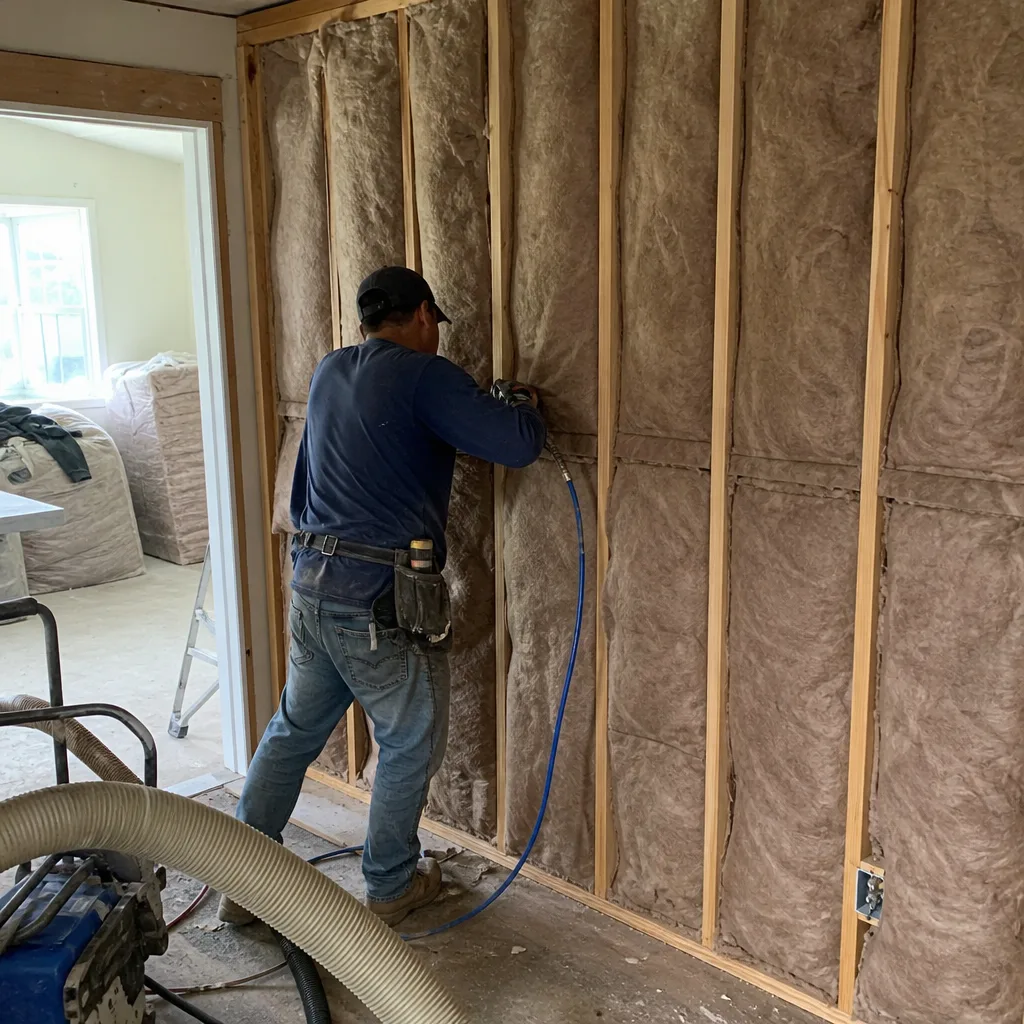
Spray foam in Spring Valley Lake gets specified most often for lakefront homes with unusual framing, recessed lighting, or cathedral ceilings where traditional batts leave gaps that hot attic air finds immediately. Open-cell foam from Icynene handles the breathability needs of standard vented attics, while Demilec closed-cell foam works where we need higher R-value per inch or a moisture barrier on a lakeside wall. Both systems air-seal as they insulate, which matters when desert wind is pushing unconditioned air through the envelope. Spray Foam Insulation in Spring Valley Lake
What happens when you call
- 1
A real person answersNo phone trees — you reach a local pro.
- 2
You get an upfront price rangeHonest numbers before anyone is dispatched.
- 3
A background-checked tech heads outLicensed & insured, dispatched right away.
- 4
You approve before work beginsNothing starts until you say go.
Blown In Insulation in Spring Valley Lake
Blown in insulation is the most common service we perform in Spring Valley Lake because it’s the fastest, cleanest way to fix the thin, settled attic insulation that plagues homes built here in the 1970s and 1980s. The high-desert climate punishes those old attics: summer heat bakes the top of the house while winter nights pull heat out through the ceiling, and blown in material fills every cavity evenly, including the odd corners around trusses and ductwork that old batts never covered. We install both fiberglass and cellulose blown systems, depending on the home’s exposure, ventilation, and budget. For homes with lake-facing attics that cook in the afternoon sun, we often recommend cellulose for its higher density and better resistance to air movement. Our crews work with Blown In Insulation systems from GreenFiber, Owens Corning, and Johns Manville, matched to each attic’s conditions rather than what’s on the truck.
Cellulose Insulation
Signs you need it
Your attic insulation is thin, dusty, or compressed below the top of the ceiling joists, and your upstairs rooms heat up fast on summer afternoons even with the AC running.
What it costs in Spring Valley Lake
Blown cellulose in a typical Spring Valley Lake attic runs $1.00 to $2.50 per square foot installed, with most full-attic jobs landing between $1,200 and $3,500 depending on depth and access.
How we do it
We remove or top over the existing insulation, air-seal the attic floor penetrations, and blow GreenFiber recycled cellulose to the specified depth using a calibrated machine that ensures even coverage.
Blown In Attic Insulation
Signs you need it
Your energy bills climb every summer and winter, rooms directly under the attic feel 5 to 10 degrees warmer or cooler than the rest of the house, and the existing insulation is uneven or missing in spots.
What it costs in Spring Valley Lake
Blown in attic insulation in Spring Valley Lake typically runs $1.50 to $3.00 per square foot installed, with whole-attic jobs on 1,200 to 2,000-square-foot homes usually falling between $1,800 and $5,000.
How we do it
We seal gaps around recessed lights, vents, and framing, then blow loose-fill fiberglass or cellulose to a uniform depth that meets or exceeds current Title 24 R-value requirements for the high desert climate zone.
Blown In Fiberglass Insulation
Signs you need it
You want an insulation material that won’t settle or absorb moisture, and your attic has good access for a hose-based blown application.
What it costs in Spring Valley Lake
Blown fiberglass in Spring Valley Lake costs $1.50 to $2.50 per square foot installed, with most attics in the community running between $1,500 and $3,800 for a full job.
How we do it
We install Owens Corning or Johns Manville loose-fill fiberglass through a pneumatic hose, maintaining consistent density and depth across the attic floor so there are no thin spots over living areas.
Blown In Cellulose Insulation
Signs you need it
Your attic has existing wiring, plumbing, and ductwork that make batt installation impractical, and you want a dense material that resists air movement from desert wind.
What it costs in Spring Valley Lake
Blown in cellulose costs $1.00 to $2.50 per square foot in Spring Valley Lake, with full-attic jobs ranging from $1,200 to $3,500 on typical single-story lake homes.
How we do it
We blow GreenFiber recycled cellulose over an air-sealed attic floor, packing it to the manufacturer’s specified density so it bridges gaps around framing and old duct runs without settling.
Loose Fill Insulation
Signs you need it
Your attic has hard-to-reach areas, shallow pitch, or irregular joist spacing where batts would leave gaps, and you want a single material that flows into every cavity.
What it costs in Spring Valley Lake
Loose fill insulation in Spring Valley Lake runs $1.00 to $2.50 per square foot depending on material and depth, with most homes landing between $1,200 and $3,500 for a complete attic.
How we do it
We use a calibrated blower to distribute loose-fill material evenly, checking depth with markers as we go so the stated R-value is achieved across every square foot of attic floor space.
What Blown In Insulation Costs in Spring Valley Lake
| Item | Typical range in Spring Valley Lake |
|---|---|
| Blown cellulose attic (1,200 – 1,800 sq ft home) | $1,200 – $3,500 |
| Blown fiberglass attic (1,200 – 1,800 sq ft home) | $1,500 – $3,800 |
| Whole-house blown-in upgrade with air sealing | $2,500 – $6,000 |
How long does blown in insulation last in Spring Valley Lake?
Blown cellulose and fiberglass both hold their R-value for 20 to 30 years in Spring Valley Lake’s dry climate, though settling of up to 10% happens in the first year and should be factored into initial depth. Wind-driven attic air movement can accelerate settling near eaves without proper baffles.
Is blown in insulation worth it in Spring Valley Lake?
Yes, especially for pre-1990 homes with thin original batts. Most Spring Valley Lake homeowners see the fastest payback from blown in attic insulation because summer heat gain through the ceiling is the single biggest comfort problem in this climate, and blown material fills gaps old batts never touched. Call (877) 352-4780 for a free assessment.
Brands We Service in Spring Valley Lake
We install blown insulation from Owens Corning, GreenFiber, and Johns Manville, plus batts from Knauf, with common depths and densities stocked for immediate Spring Valley Lake jobs. Ordering specialty Rockwool or CertainTeed products for a specific project typically adds just a few days. Our brands span the full range so the recommendation fits your attic, not our inventory.
Pricing for Insulation Company in Spring Valley Lake, CA
| Service | Typical range in Spring Valley Lake |
|---|---|
| Blown cellulose attic insulation | $1,200 – $3,500 |
| Blown fiberglass attic insulation | $1,500 – $3,800 |
| Loose fill insulation (attic) | $1,200 – $3,500 |
| Attic air sealing + blown insulation | $1,800 – $4,500 |
| Insulation removal and re-blow | $2,000 – $5,000 |
| Attic insulation upgrade to Title 24 minimums | $1,500 – $4,000 |
| Spray foam (open-cell, attic) | $1.50 – $3.50 per sq ft |
| Spray foam (closed-cell, attic or walls) | $2.00 – $4.50 per sq ft |
Prices in Spring Valley Lake run higher when attics have low clearance, multiple roof levels, or old insulation that needs full removal first. We quote a firm, upfront price before any work begins, so there are no surprise charges tied to depth changes or access issues.
Neighborhoods We Serve in Spring Valley Lake
We work throughout the 92395 ZIP code, from the lakefront properties ringing the water to the older single-story tracts further out where the 1970s-era builds dominate. Most jobs in Spring Valley Lake are scheduled within three to five days of the initial estimate.
- Spring Valley Lake waterfront and lake-view homes
- The original 1970s tracts north and east of the lake
- 1980s-era subdivisions near the community’s main entrance
- Newer infill and remodeled properties throughout Spring Valley Lake
- Single-story stucco homes on the community’s western edge
Service Area – Cities Near Spring Valley Lake
We also serve the surrounding Victor Valley communities where housing stock and climate conditions are similar, including Victorville, CA, Apple Valley, CA, Hesperia, CA, and Mountain View Acres, CA. Each area has its own mix of older homes and newer builds, but all share the high-desert heat and wind that make proper attic insulation essential.
Serving Spring Valley Lake, CA — Our Local Coverage Area
We’re based in the Spring Valley Lake area and know this community well. Use the map below to see our service coverage — if you’re nearby, we can almost certainly help.
FAQs About Insulation Company in Spring Valley Lake
We typically schedule Spring Valley Lake estimates within two to three business days and can often begin installation within a week of the estimate, depending on material availability and the scope of the job. For urgent issues like exposed attic insulation after a leak, we prioritize same-week service when possible.
Most insulation work in attics and existing wall cavities doesn’t trigger HOA architectural review because it’s invisible from the outside. If your project involves changes to roof vents, soffit appearance, or anything visible from the street, we’ll help you identify what needs association approval before work begins.
Yes. Many lakefront homes in Spring Valley Lake benefit from a combination: dense cellulose in the main attic space and spray foam in cathedral ceilings or awkward bump-outs where batts and blown material can’t seal effectively. We’re a single-source contractor for both methods, so one crew handles the entire job consistently. Call (877) 352-4780 to talk through what your home needs.
What happens when you call
- 1A real person answersNo phone trees — talk to a local insulation pro.
- 2You get an upfront price rangeHonest numbers before anyone is dispatched. No surprises.
- 3A background-checked tech heads outLicensed & insured, typically within 1-hour.
- 4You approve before work beginsNothing starts until you say go.
What Spring Valley Lake Customers Say
"Found and sealed a gap around the chimney chase that was basically an open chimney to the attic."
— Sanjay Patel"Installed baffles at the soffits so the new insulation didn't block the ventilation, which the previous contractor apparently never considered."
— Luis Salazar"Plastic laid from the front door to the attic hatch and they vacuumed the hallway afterward."
— Brooke Pruitt