
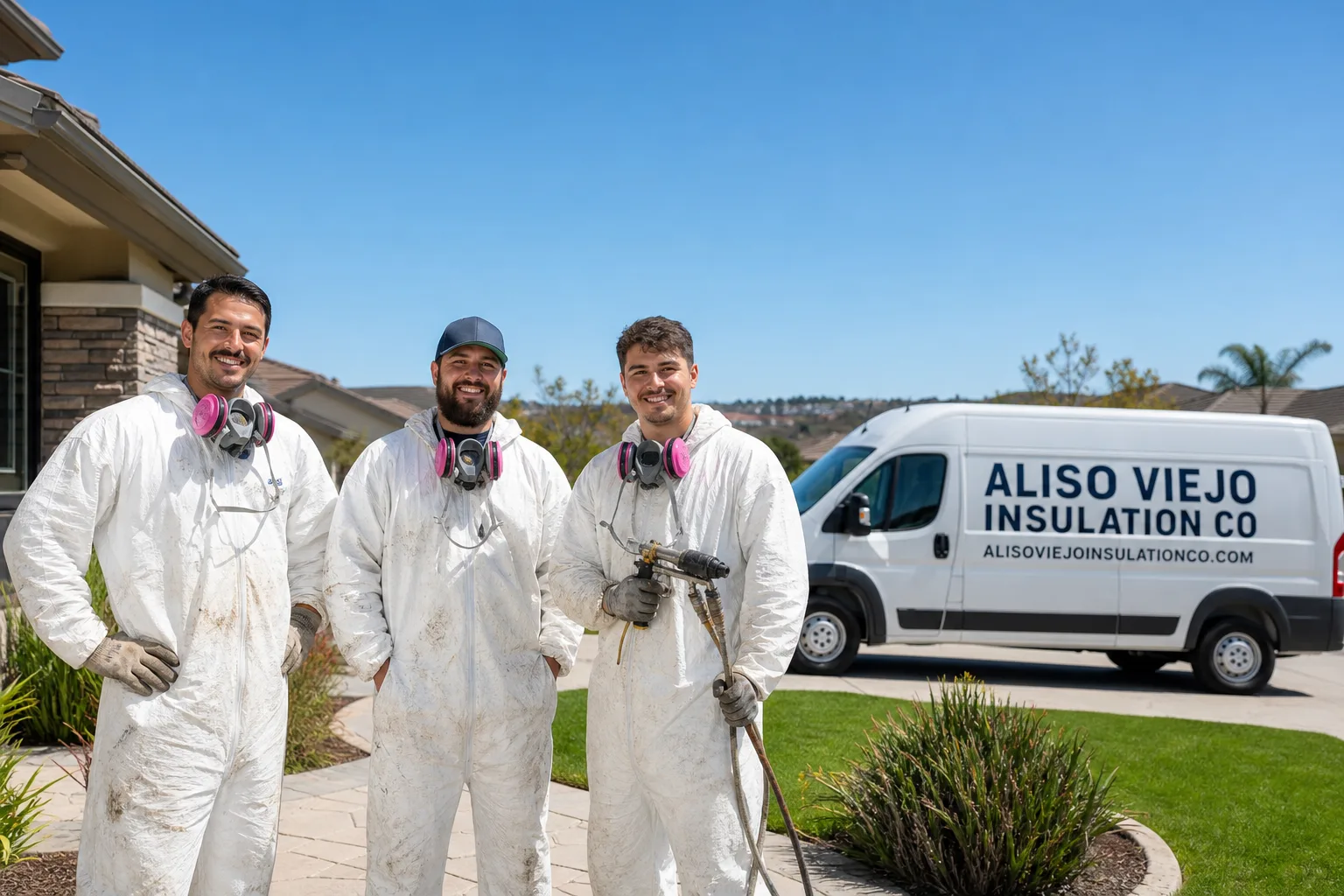
Fast, Reliable Attic Insulation Across Spring Valley Lake
Attic insulation replacement in Spring Valley Lake typically runs $1,800 – $4,600 depending on attic size, existing material condition, and whether we’re doing a removal-plus-new-install or a top-up over older batts. Most jobs take our crew a single day. Spring Valley Lake homes, especially the 1970s and 80s stock ringing the lake, rarely perform to current Title 24 on their original insulation. If your west-facing rooms cook by 3 p.m. in July or your heater runs all night in January, the attic is usually the culprit. Call (877) 352-4780 and we’ll put eyes on it, usually within 24 to 48 hours, with a written quote in hand before we leave.
Why Aliso Viejo Insulation Co Is Spring Valley Lake’s Preferred Attic Insulation Company
Nate Calloway built Aliso Viejo Insulation Co around a simple premise that most contractors in the high desert ignore: the right insulation for a lakefront home in Spring Valley Lake is not necessarily the right insulation for a tract house in Victorville. Wind-driven grit off the open water, baked stucco walls, cathedral ceilings over lake-view living rooms, an HOA with architectural review. These are not abstractions to us, they’re the specifics we walk into on nearly every job here.
We’re authorized to install products from eight manufacturers including Rockwool, CertainTeed, Johns Manville, and Knauf. That matters because we don’t show up with one truck full of one product and a sales pitch. We show up with options and a recommendation built on what your attic actually needs.
Attic Mold Removal in Spring Valley Lake
Attic mold removal in Spring Valley Lake homes usually costs $900 – $2,800 depending on the square footage, how deep the mold has set into the sheathing, and whether the source is a plugged ventilation path or a roof leak. Mold in a high-desert attic almost always starts the same way: warm, moisture-laden air rises into an attic that can’t breathe, condenses against the underside of cool roof sheathing on winter mornings, and feeds the spores that were already there. The lakefront properties have it worse because wind-blown grit slowly chokes the soffit intakes until there’s no replacement air moving through the space at all.
Surface Treatment and Source Correction
We treat the visible mold, but the real fix is correcting the airflow path. That means clearing and re-screening plugged soffit vents, checking the baffles aren’t buried, and confirming bathroom and dryer exhausts terminate outside rather than dumping into the attic.
When Mold Is Structural
In older Spring Valley Lake homes where mold has penetrated the plywood sheathing, surface cleaning won’t hold. We assess sheathing condition, quote replacement or encapsulation as needed, and pull the necessary permits so the HOA and the county stay out of your hair.
Attic Insulation Removal in Spring Valley Lake
Attic insulation removal in Spring Valley Lake typically costs $1.50 – $3.00 per square foot, so a 1,500-square-foot attic lands between $2,250 and $4,500 for full extraction, bagging, and disposal. The older lake-adjacent homes, mostly built between 1968 and 1985, often have original fiberglass batts that compressed to half their rated depth decades ago, plus rodent activity or dust-bowl-level accumulation from decades of high-desert wind. You can’t top-up over material that’s already failed.
Duct Insulation Replacement
While the attic is open is the cheapest time to pull aging duct wrap that’s broken down and compressed. In Spring Valley Lake’s summer afternoons, a superheated attic against bare ducts dumps cooled air straight into 140-degree airspace. The AC runs harder, the rooms stay warm, and the bill climbs. We replace the duct insulation as part of the removal scope so everything under that roof plane is current.
Blown-In Replacement
After the old material comes out, most Spring Valley Lake homeowners go with blown fiberglass or cellulose to hit R-38, Title 24’s attic minimum for the high desert. Cellulose goes in on cooler mornings to keep density consistent. Fiberglass goes in deeper for the same R-value. We’ll recommend one or the other based on your roof geometry and whether the HOA requires anything specific above the ceiling line.
Trusted Brands We Service in Spring Valley Lake
We stock and install Johns Manville and CertainTeed fiberglass, Knauf batts, and Rockwool mineral wool for homeowners who want fire resistance along with thermal performance. For lakefront properties where wind and airborne grit are constant, Rockwool’s density holds up better than low-density fiberglass over time. We keep a local supply chain primed so Spring Valley Lake jobs don’t stall waiting on material, and every removal, top-up, or baffle repair gets matched to a product that fits the house, not a product that fits our warehouse.
Common Attic Insulation Problems We See in Spring Valley Lake Homes
- Grit-plugged soffit intakes. Wind-driven desert grit off the open lake packs the screen vents on lakefront and near-water homes within a few seasons. Intake airflow dies, the attic heat-soaks, and the living spaces below start radiating heat into the evening.
- Heat-soaked cathedral ceilings. West- and south-facing roof planes over lake-view living rooms bake through thin original 1970s and 80s batts. Radiant heat gain shows up inside long before you’d notice an R-value problem on paper.
- Compressed original batts. We regularly find original fiberglass in Spring Valley Lake attics compressed to half of its rated depth. R-11 batts performing at R-5 or worse, starved of air, doing almost nothing against either summer heat or winter cold.
- Failed duct insulation. Aging duct wrap breaks down and compresses, dumping conditioned air into a superheated attic during Victor Valley afternoons. The AC works, the attic gets the cooling, and the rooms stay warm.
Pricing for Attic Insulation in Spring Valley Lake, CA
Attic insulation top-up over existing batts in Spring Valley Lake runs $1,200 – $2,800 depending on attic square footage and target R-value. Full removal plus new blown-in insulation runs $3,500 – $6,500 on the same-size home. Attic baffles and ventilation prep adds $300 – $900 when we’re also correcting airflow. What moves the number: attic access difficulty, cathedral ceiling complexity, whether ducts get re-wrapped during the job, and how much old material needs extraction and disposal. Estimates in Spring Valley Lake are free, written, and specific to your attic. Call (877) 352-4780 to schedule.
We Also Serve Cities Near Spring Valley Lake
Our crew covers the Spring Valley Lake area and the surrounding Victor Valley regularly, including Spring Valley Lake itself, Mountain View Acres, Victorville, Apple Valley, and Hesperia. If you’re in any of these communities and the attic’s been cooking you for years, we can get there fast. For the full scope of what we do, see our Attic Insulation service page.
Serving Spring Valley Lake, CA — Our Local Coverage Area
We’re based in the Spring Valley Lake area and know this community well. Use the map below to see our service coverage — if you’re nearby, we can almost certainly help.
FAQs About Attic Insulation in Spring Valley Lake
Because you’re on the water or facing the afternoon sun across it. Spring Valley Lake’s open lakefront lots expose west- and south-facing roof planes to direct sun plus wind-driven heat coming off the water and open desert. The same wind that cools the yard pushes heat across your roof, and if the soffit intakes are even partly grit-plugged, that hot attic has nowhere to vent. Call (877) 352-4780 and we’ll diagnose exactly which part of the path has failed before you pay for anything.
Indirectly, yes. The wind itself doesn’t touch the batts inside an attic, but it carries fine desert grit that clogs soffit vent screens on the lakeward side of the home. When intake airflow dies, the attic overheats, duct insulation bakes, and the whole thermal envelope degrades years faster than it would in a sheltered neighborhood. We see it repeatedly on the lakefront properties.
Almost never. Original 1970s fiberglass batts in Spring Valley Lake homes typically measure R-11 to R-19 at install, and after 40 to 50 years of compression, dust, and desert grime, they perform far below that. Title 24 currently requires R-38 in high-desert attics. The gap between R-11-as-installed and R-38-required is why old lake house attics bake in July and freeze in January.
In most cases, no. Adding insulation inside an existing attic does not change the exterior appearance and falls outside the Spring Valley Lake HOA’s architectural review scope. Where review does apply is when the work changes roofline, adds exterior vents visible from the street, or alters roofing materials. We’ll flag it before we quote if your project touches any of that.
If the existing material is compressed, rodent-soiled, moldy, or mixed with broken-down duct wrap, yes. Blowing new fiberglass over failed batts doesn’t restore lost performance, it just buries the problem. On lakefront homes where grit has been washing through the soffits for decades, removal and fresh install is the only route that gets the attic back to Title 24. Call (877) 352-4780 for an attic-by-attic answer and a free written estimate.
Written by Nate Calloway, Owner at Aliso Viejo Insulation Co, serving Spring Valley Lake and the Victor Valley with eight-brand insulation expertise.