
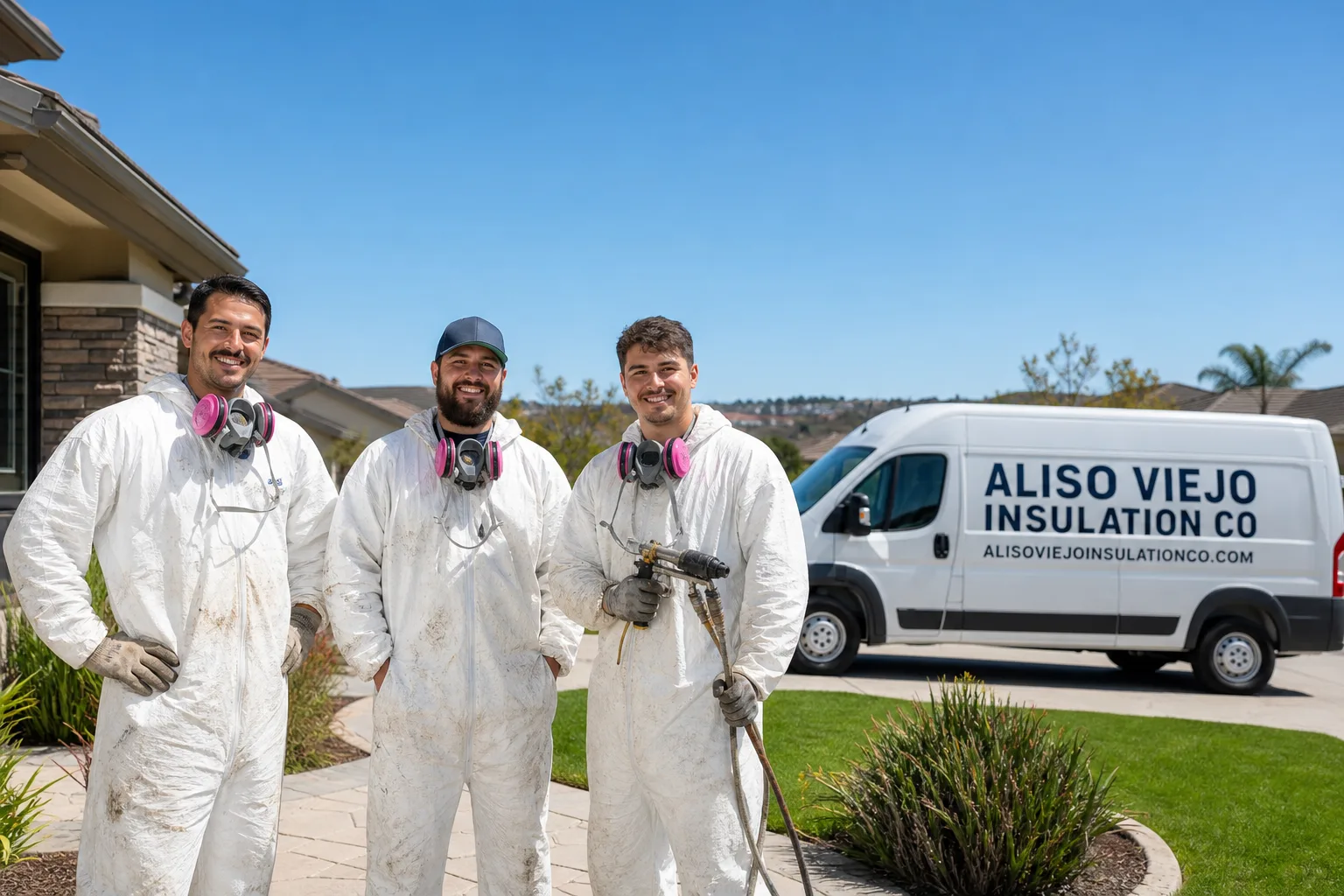
Fast, Reliable Attic Insulation Across Apple Valley
Attic insulation in Apple Valley costs between $1,800 and $6,500 for a typical single-story ranch home, depending on the material and method. That’s the honest range we quote, and we stand behind it with free estimates. Our crews roll into Apple Valley from the 15 or Bear Valley Road within about an hour of your call. We know the 92307 and 92308 zip codes well, because we’ve been inside hundreds of attics off Kiowa, Navajo, and Apple Valley Road. If your attic needs a top-up, a full replacement, or a radiant barrier to cut the summer solar load, call (877) 352-4780 and we’ll get you on the schedule.
We’re not an HVAC company, not a roofer with a side business. We do insulation. Specifically attic insulation, Attic Insulation top-ups and replacements, blown-in, batts, spray foam, and radiant barrier. That focus means we diagnose thermal problems in Apple Valley homes faster than a general contractor would. And because we install products from eight major manufacturers instead of pushing one brand, the material we recommend is the one your attic actually needs, not the one we happen to have on the truck.
Why Aliso Viejo Insulation Co Is Apple Valley’s Preferred Attic Insulation Company
Apple Valley homeowners call us because the thermal envelope here is unforgiving. At roughly 3,000 feet on the high Mojave, your attic has to fight 100°F summers and sub-freezing winter nights. That’s not a normal Southern California insulation problem. Most coastal or basin contractors never see the kind of settling, UV degradation, and duct-wrap failure we find in nearly every pre-2005 Apple Valley home we open up.
We’ve earned a strong local reputation in Apple Valley by diagnosing the actual failure mode before proposing any product. Sometimes that’s a top-up of settled blown-in cellulose. Sometimes it’s a full removal and air-seal. Sometimes the fix is a radiant barrier paired with attic baffles so your existing insulation can actually breathe. The point is we tell you what’s wrong and what fixes it. Our recommendation is built on building science, not brand loyalty.
Response time to Apple Valley matters. A 100°F July afternoon with no attic insulation is not a comfort problem, it’s a health problem for anyone in the house. We prioritize Apple Valley calls and can typically be on-site same day or next morning for urgent assessments. Estimates are free, and we never charge for the diagnostic walkthrough, even if you decide to wait.
Our lead on every Apple Valley job is Nate Calloway. Nate has spent years in attics across the high desert and knows exactly what a 1990s Spanish-style tract home off Apple Valley Road needs versus a custom build near Spring Valley Lake. That experience means the scope of work we propose is right the first time.
Radiant Barrier in Apple Valley
Radiant Barrier in Apple Valley is one of the highest-ROI additions you can make to a home at 3,000 feet. The high-desert sun beats down on your roof deck all summer. Attic temperatures climb past 140°F even when the outdoor air is only 100°F. A radiant barrier reflects that radiant heat before it ever reaches your insulation, dropping attic temps by 20 to 30 degrees. In Apple Valley’s 92307 and 92308 zip codes, a radiant barrier install typically runs $1,200 to $3,000 depending on attic size and whether we’re stapling to rafters or laying over existing insulation.
Most homes we see in Apple Valley don’t have one. Builders in the 1980s and 1990s rarely spec’d radiant barriers here, even though the climate demands them. If your AC runs constantly from June through September and your ceiling feels warm to the touch at dusk, you’re a strong candidate. The material degrades faster here than anywhere on the coast because of the intense UV and dry air, so if you have an older radiant barrier, it may have lost most of its reflectivity. We can test it and replace it if needed.
Radiant Barrier Lifespan in the High Desert
In coastal cities, a radiant barrier lasts decades. In Apple Valley, the ultraviolet load and temperature cycling shorten that. We regularly see barriers from the early 2000s that have oxidized to a dull gray and lost half their reflectivity. A new barrier, properly installed with the right air gap, will typically hold its performance for 10 to 15 years out here. We spec the product accordingly.
Pairing Radiant Barrier With Attic Ventilation
A radiant barrier works best when the attic can exhaust the heat it reflects. Apple Valley homes with older ridge vents or insufficient soffit vents often need baffle work before a barrier goes in. We handle both pieces, so the barrier doesn’t just push heat into a dead air space.
Attic Cleaning Services in Apple Valley
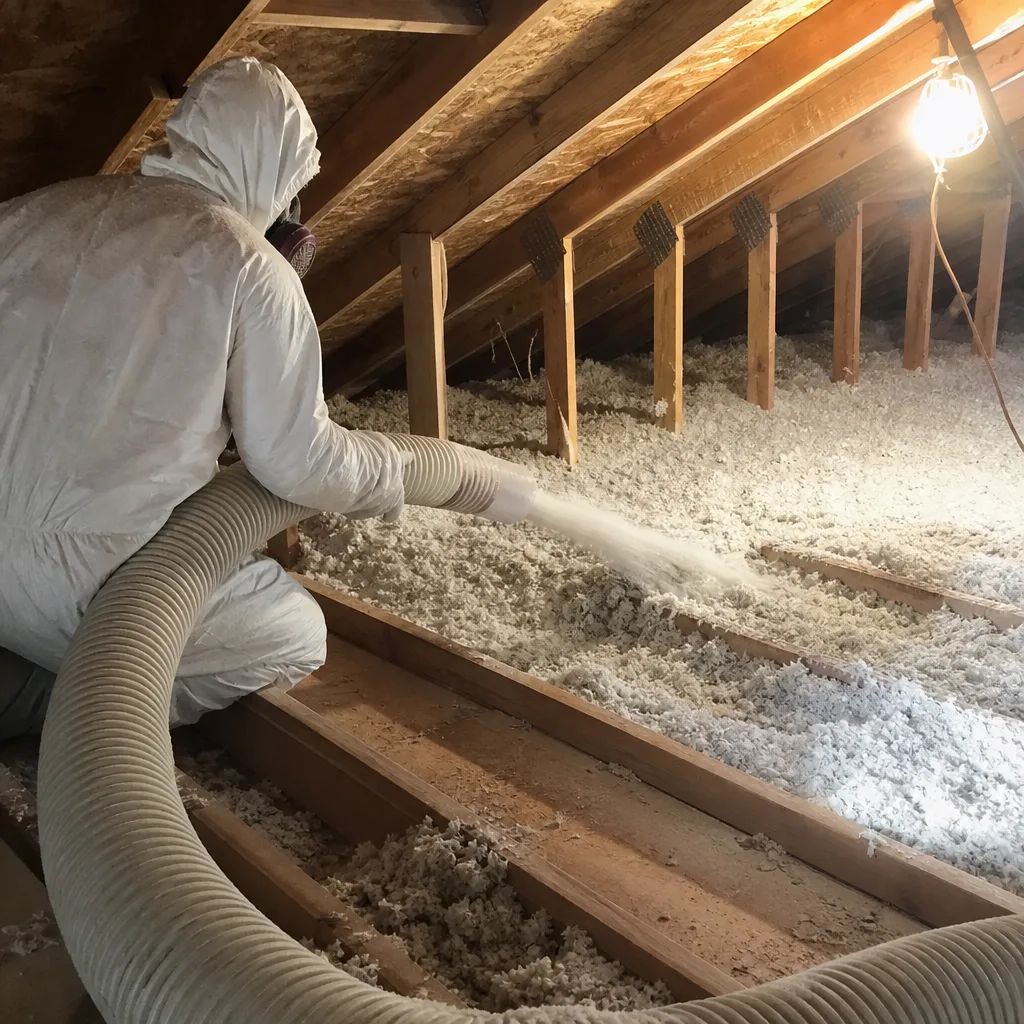
Attic Cleaning Services in Apple Valley are not about tidiness. They’re about making your insulation work again. Years of high-desert wind push fine dust and sand through gable vents and around can lights. Rodent activity leaves droppings and nesting material that compress the insulation below it. A dirty attic with settled, contaminated insulation loses R-value fast. We offer full attic cleaning in Apple Valley starting around $800 to $1,800, with the cost scaling by attic square footage and the amount of debris removal required.
The process here is a deep clean, not a surface sweep. We remove loose debris, vacuum out rodent waste, check for air leaks around penetrations, and assess whether your existing insulation can be salvaged or needs removal. In most Apple Valley homes built before 2000, the answer is removal. The original batt or blown-in material has settled, absorbed dust, and lost its loft. We haul it out, sanitize the space, and prep for new insulation in one visit.
Rodent Remediation and Insulation Replacement
Rats and mice are common in Apple Valley attics, especially on larger lots near open desert. Their waste contaminates insulation and their nesting compresses it. We remove contaminated material, clean the area, and recommend a full replacement. Top-ups over contaminated insulation just seal the problem in.
Debris Removal Before a Top-Up
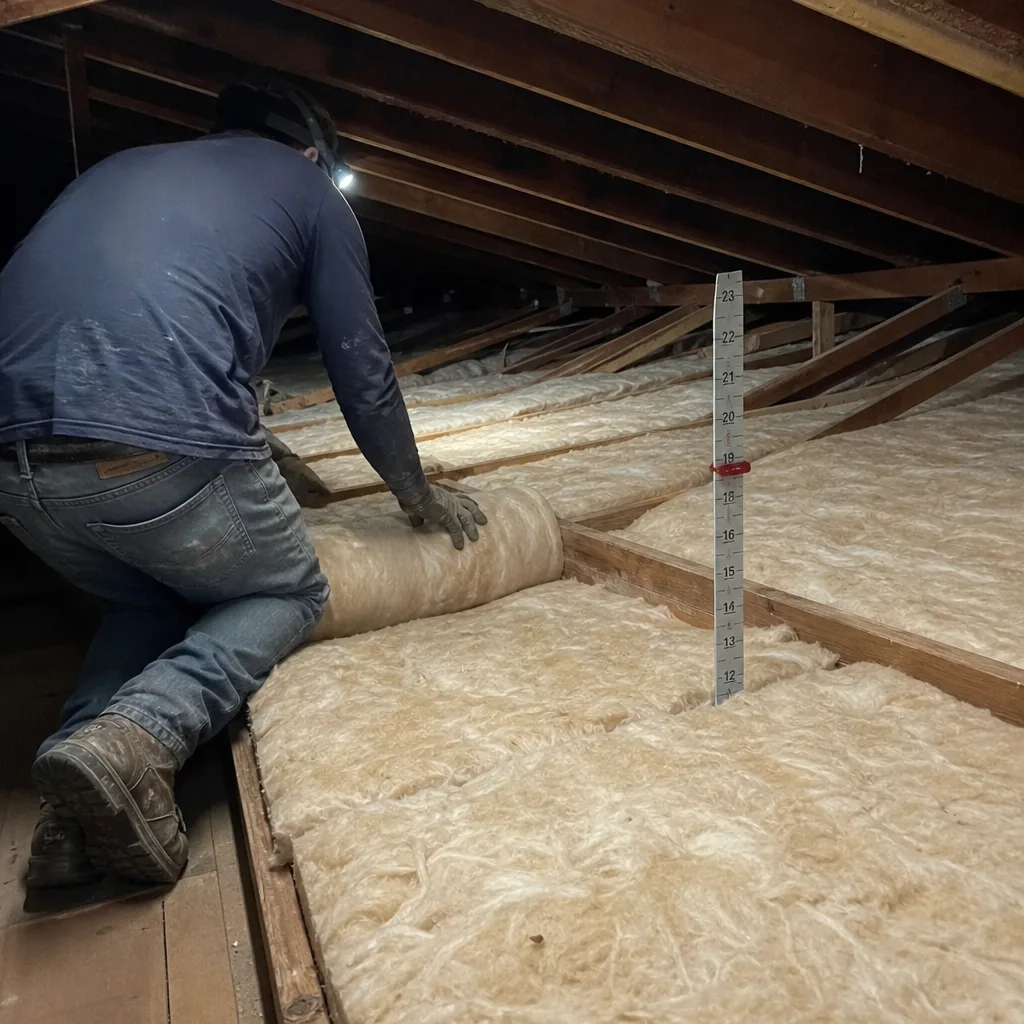
If dust and small debris are the only issue, we can clean without a full demo. That said, if your blown-in insulation has settled to half its rated depth, cleaning alone won’t restore R-value. We’ll tell you plainly which path makes sense after we get eyes on the attic floor.
What happens when you call
- 1
A real person answersNo phone trees — you reach a local pro.
- 2
You get an upfront price rangeHonest numbers before anyone is dispatched.
- 3
A background-checked tech heads outLicensed & insured, dispatched right away.
- 4
You approve before work beginsNothing starts until you say go.
Trusted Brands We Service in Apple Valley
We install and service insulation from eight manufacturers, and that breadth matters here more than most places. Apple Valley’s climate doesn’t reward one-size-fits-all insulation. We spec Johns Manville fiberglass where budget and performance align, Rockwool mineral wool when fire resistance and sound attenuation matter for a custom build near the golf course, and CertainTeed batts for standard attic replacements. For custom and manufactured homes off Bear Valley Road, we stock the materials that match the existing assembly rather than forcing a mismatch. Because we source from all of them, the recommendation you get is the one your attic actually needs. We keep common Apple Valley materials on hand for fast turnarounds, particularly during the spring and fall insulation seasons when demand spikes.
Common Attic Insulation Problems We See in Apple Valley Homes
- Blown-in insulation settled to half its rated depth. The thermal swing between July afternoons and January nights cycles the fibers and compresses them. A home that was insulated to R-30 in 2005 is often performing at R-15 or less today, which is why so many Apple Valley homes feel cold in winter despite the furnace running.
- Duct wrap baked brittle by UV and dry air. Attic ducts in unconditioned space lose their outer jacket over time. The wrap crumbles at a touch, and the bare duct underneath leaks conditioned air into a 140°F attic. This is one of the biggest hidden energy losses we find in Apple Valley ranches from the 1980s and 1990s.
- Missing or failed radiant barriers. Most homes built before 2005 here never had one, and those that did often have barriers that have oxidized into dull gray foil with little reflectivity left. The summer heat gain through the roof deck then hits the insulation directly and overwhelms it.
- Air leaks around can lights and ceiling penetrations. High-desert winds push dust and hot air through every unsealed gap. We routinely find six to a dozen can light housings leaking attic air into the living space. Air-sealing those penetrations before adding insulation is the difference between a fix that works and a fix that just covers the problem.
Pricing for Attic Insulation in Apple Valley, CA
Real numbers, because you’re going to ask: a blown-in cellulose top-up for a 1,500-square-foot Apple Valley home runs $1,500 to $2,800. A full removal and replacement with air-sealing runs $3,000 to $6,500. Batt insulation replacement is $2,000 to $4,000. Radiant barrier is $1,200 to $3,000. Attic cleaning starts at $800 and scales with size and condition. The variables are attic square footage, access, depth of existing material, and whether rodent remediation or air-sealing is required. What doesn’t change: estimates are free, and the number we quote is the number on the invoice. No surprise add-ons after the truck shows up. Call (877) 352-4780 for an exact quote on your Apple Valley home.
We Also Serve Cities Near Apple Valley
Our crews cover the entire high desert from Apple Valley outward. You’ll find us in Mountain View Acres, Spring Valley Lake, Victorville, and Hesperia most weeks, often on the same day as an Apple Valley job when scheduling aligns. If you’re in one of those communities and need the same thickness of expertise, the same eight-brand material access, and the same honest diagnostic, call the same number: (877) 352-4780.
Serving Apple Valley, CA — Our Local Coverage Area
We’re based in the Apple Valley area and know this community well. Use the map below to see our service coverage — if you’re nearby, we can almost certainly help.
FAQs About Attic Insulation in Apple Valley
Because Apple Valley sits at roughly 3,000 feet on the high Mojave Desert, where summer highs push past 100°F and winter nights dip below freezing. Insulation here has to resist heat gain from an unrelenting summer sun and slow heat loss during cold January nights. A material spec that works in a mild coastal basin won’t hold up to that swing. This is why we recommend against one-size-fits-all insulation and instead match material to the home’s orientation, attic ventilation, and existing assembly. Call (877) 352-4780 for a free assessment of what your specific attic needs.
Faster than anywhere else in Southern California. The extreme summer-to-winter temperature cycling compresses blown-in material, and we routinely find insulation that was installed at R-30 in the 1990s or 2000s performing at R-11 to R-15 today. That’s half its rated depth within about a decade. If your home was insulated more than ten years ago and your energy bills keep climbing, settling is the likely culprit. We can measure the depth and tell you the actual R-value you have right now, not the R-value on the original invoice.
It bakes. The combination of intense UV exposure, dry desert air, and attic temperatures that exceed 140°F in summer breaks down the outer jacket on duct wrap. By the time we open most pre-2005 Apple Valley attics, the wrap crumbles at a touch. Bare or torn duct insulation leaks conditioned air into an unconditioned attic, which is why so many homes here have hot bedrooms in July and cold spots in January even when the HVAC system is running fine.
Yes, and it may be the single highest-impact upgrade you can make on a custom build that already has good insulation. High-desert solar load is brutal on roof decks, and a radiant barrier reflects that heat before it reaches the insulation below. For custom homes near the golf course or larger lots off Bear Valley Road, we’ve seen attic temperatures drop 20 to 30 degrees after a proper radiant barrier install. It’s especially useful if you have a tile roof, which absorbs and radiates heat into the attic all afternoon.
Yes, that’s the core of how we work. We carry fiberglass, mineral wool, blown cellulose, and spray foam, so the material we recommend is matched to your attic’s current configuration, ventilation, and the climate conditions your home actually faces. A 1980s ranch off Navajo Road doesn’t get the same spec as a 2015 custom home near Spring Valley Lake. We make the call based on building science, not what’s convenient to install. Call (877) 352-4780 and we’ll walk your attic and give you a straight answer.
Get Your Apple Valley Attic Assessed
If your Apple Valley home struggles with heat in July, cold in January, or energy bills that don’t match the thermostat setting, the problem is probably above your ceiling. We’ll climb up, diagnose the failure mode, and tell you exactly what it takes to fix it, whether that’s a simple top-up or a full removal, air-seal, and radiant barrier. No obligation, no pressure, just an honest read on what’s happening in your attic. Call (877) 352-4780 to schedule your free estimate today.
Written by Nate Calloway, lead insulation specialist at Aliso Viejo Insulation Co, serving Apple Valley and the surrounding high desert.