
Insulation Company in Desert Edge, CA
Blown in insulation is the workhorse retrofit for Desert Edge homes, because most of the housing stock here was built when R-11 fiberglass batts were considered adequate and nobody thought much about air sealing. The wind through the San Gorgonio Pass changes that math entirely. When summer air sits above 110°F and dust blows sideways for weeks, gaps in your thermal envelope aren’t just inefficient – they actively pull grit and heat into the house. Aliso Viejo Insulation Co has served Desert Edge since 2014, and we approach every job here with the same question first: where is the air getting through? Call (877) 352-4780 for a free estimate.
Why Desert Edge Homes Are Different
Desert Edge sits at the wind-swept western edge of the Coachella Valley, where the San Gorgonio Pass funnels relentless westerly wind across the community. That wind is not a minor factor in insulation work – it is the defining one. In a typical summer, daytime temperatures exceed 110°F, then drop into the 60s at night, which means your insulation faces near-continuous thermal cycling from April through October. Materials expand and contract, settle, and shift. On top of that, the prevailing winds carry fine grit that finds every gap in the exterior envelope, working its way through can lights, electrical boxes, and poorly sealed top plates.
The housing stock compounds this. Most Desert Edge homes are mid-century and later tract builds – small stucco-on-slab ranches and manufactured homes, often with minimal original attic insulation and unsealed can lights that leak conditioned air directly into the hot attic. Many attics have R-19 or less, and in some we find wind-scoured insulation batts in west-facing attic corners, where the Pass winds have literally eroded the material over time. The region’s low humidity also means dust migration is constant, so air sealing is every bit as important as the R-value you install.
Our Main Desert Edge Services
Desert Edge homeowners call us most often about two things: upgrading attic insulation that’s either too thin or wind-damaged, and sealing the building envelope with spray foam where dust and heat intrusion are worst. Both are covered below.
Attic Insulation in Desert Edge
Attic insulation here is a different job than it is on the coast, because your attic is a radiant heat trap. On a 110°F day, the underside of a low-slope stucco roof can hit 150°F, and all of that heat radiates down through whatever insulation is up there. In many Desert Edge homes we find original fiberglass batts compressed, wind-scoured at the west-facing edges, and full of dust. We pull the old material, air-seal the ceiling plane, and install to current DOE recommended levels. Read our full breakdown of Attic Insulation in Desert Edge.
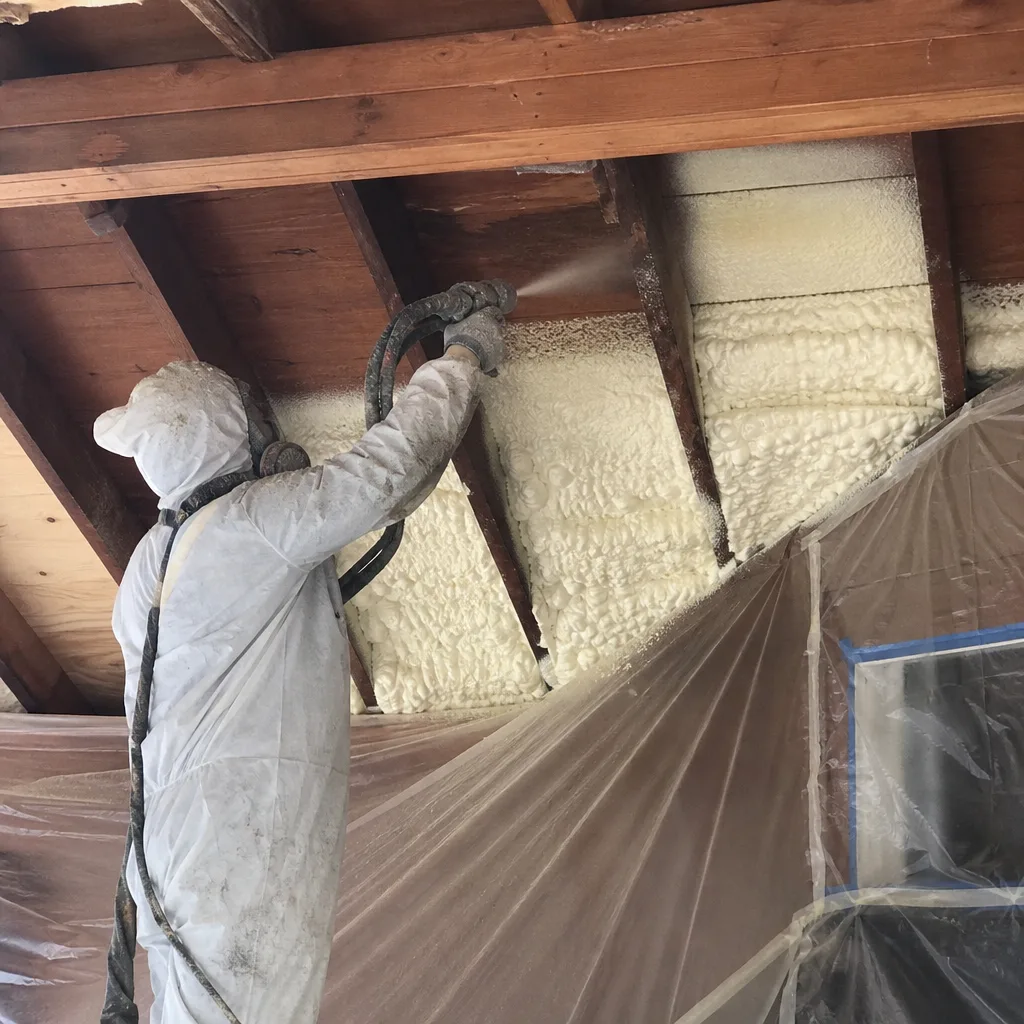
Spray Foam Insulation in Desert Edge
For homes where wind-driven dust and heat gain are the primary complaints, spray foam is often the better answer. Closed-cell foam in particular does two things at once: it insulates and it seals, filling every crack and crevice where Pass wind finds its way in. In Desert Edge’s manufactured homes and older stucco ranches, we often apply spray foam at the rim joist, under the roof deck in unvented attics, or in wall cavities where blown-in products can’t reach effectively. Learn about open-cell versus closed-cell options on our Spray Foam Insulation in Desert Edge page.
What happens when you call
- 1
A real person answersNo phone trees — you reach a local pro.
- 2
You get an upfront price rangeHonest numbers before anyone is dispatched.
- 3
A background-checked tech heads outLicensed & insured, dispatched right away.
- 4
You approve before work beginsNothing starts until you say go.
Blown In Insulation in Desert Edge
Blown in insulation in Desert Edge is the most common retrofit we do, because it reaches areas that batts simply can’t – especially in the shallow, awkward attics of older tract homes and manufactured housing. In a house with minimal or wind-scoured insulation, blowing in a dense layer of fiberglass or cellulose over the existing material, after air sealing, cuts both heat gain and dust infiltration in one pass. It’s fast, it’s affordable relative to spray foam, and it fills the irregular cavities that are so common in mid-century Desert Edge construction. For more on the method itself, see our Blown In Insulation service hub.
Cellulose Insulation
Signs you need it
Your attic has old batts that are thin, dusty, or compressed, and rooms below the attic never seem to hold temperature no matter how hard the AC runs.
What it costs in Desert Edge
For a standard Desert Edge ranch, cellulose blown into an existing attic typically runs $1,500 – $2,800, depending on square footage and target depth.
How we do it
We air-seal the attic floor, then blow GreenFiber recycled cellulose to a uniform depth using a calibrated hose system, filling around framing, ducts, and recessed light fixtures.
Blown In Fiberglass Insulation
Signs you need it
Your attic has patchy coverage, wind-scoured corners near the west walls, or visible dust accumulation on whatever insulation is up there now.
What it costs in Desert Edge
Blown fiberglass in Desert Edge generally runs $1,200 – $2,600 for an average attic, with the low end covering a top-up over existing material.
How we do it
We run the blow hose into the attic access point and distribute Johns Manville or Knauf fiberglass uniformly to the specified R-value, checking coverage with a depth gauge as we go.
What Blown In Insulation Costs in Desert Edge
| Item | Typical range in Desert Edge |
|---|---|
| Blown-in fiberglass (average attic) | $1,200 – $2,600 |
| Blown-in cellulose (average attic) | $1,500 – $2,800 |
| Whole-home air sealing + blow-in package | $2,200 – $4,500 |
Is blown in insulation worth it in Desert Edge?
Yes. With summer highs above 110°F and dust-laden wind for months at a stretch, adding blown insulation over an air-sealed attic floor cuts both heat transfer and grit infiltration. Call (877) 352-4780 to get a squarer foot quote.
How long does blown in insulation last in a dusty climate?
Properly installed and kept dry, blown cellulose or fiberglass lasts 20 – 30 years. In Desert Edge, air sealing first is what keeps dust from loading the material down over time. We check sealing as part of every retrofit.
Brands We Service in Desert Edge
Because we source from eight manufacturers rather than one, we match material to the job. In Desert Edge that often means Owens Corning or Johns Manville fiberglass for open attics, and GreenFiber cellulose when customers want recycled content and better air-blocking. See our brands for the full roster.
Pricing for Insulation Company in Desert Edge, CA
| Service | Typical range in Desert Edge |
|---|---|
| Attic insulation audit + air-seal plan | $300 – $600 |
| Attic insulation (batt, standard ranch) | $2,000 – $4,000 |
| Attic insulation (blown-in fiberglass) | $1,200 – $2,600 |
| Attic insulation (blown-in cellulose) | $1,500 – $2,800 |
| Spray foam (open-cell, attic roof deck) | $3,500 – $7,000 |
| Spray foam (closed-cell, rim joist only) | $900 – $2,000 |
| Whole-home air sealing | $1,000 – $2,000 |
| Blown-in + air sealing package | $2,200 – $4,500 |
Price drivers in Desert Edge are attic accessibility, how much wind-borne dust has to be cleaned out before sealing, and whether a manufactured home needs skirting or belly work addressed first. We quote up front, by the job, and our written estimate is what you pay.
Neighborhoods We Serve in Desert Edge
We work throughout Desert Edge and the surrounding 92240 area, including the small tract developments off Dillon Road and the pockets north of Indian Canyon Drive. Our team knows which home eras are prone to what – and we stock enough material to start most jobs on the first visit.
- Dillon Road corridor
- North of Indian Canyon Drive
- Western edge near the Pass
- Central Desert Edge tract homes
- Greater 92240 area
Service Area – Cities Near Desert Edge
Desert Edge sits at the junction of a few Coachella Valley communities, and we serve the surrounding area with the same material-agnostic approach. We also work in Desert Hot Springs, CA, Palm Springs, CA, Garnet, CA, and Morongo Valley, CA.
Serving Desert Edge, CA — Our Local Coverage Area
We’re based in the Desert Edge area and know this community well. Use the map below to see our service coverage — if you’re nearby, we can almost certainly help.
FAQs About Insulation Company in Desert Edge
We typically have a technician in Desert Edge within 1 – 2 business days for an estimate. Emergency air sealing or immediate insulation needs can often be scheduled faster. Call (877) 352-4780 to check availability.
Most residential insulation retrofits do not require permits in unincorporated Riverside County, but spray foam in some vented-to-unvented attic conversions may. We check local requirements before starting and handle paperwork if a permit is needed.
Yes. Many Desert Edge HOAs restrict exterior changes but not interior or attic work. We work entirely inside the envelope for most jobs, and we can coordinate access and scheduling around HOA property hours if needed.
Need a straight answer on your Desert Edge insulation situation? Call (877) 352-4780 and we’ll talk through what’s in your attic, what the wind is doing to it, and what it would cost to fix – no pressure, no upselling, just the right material for the job.
What happens when you call
- 1A real person answersNo phone trees — talk to a local insulation pro.
- 2You get an upfront price rangeHonest numbers before anyone is dispatched. No surprises.
- 3A background-checked tech heads outLicensed & insured, typically within 1-hour.
- 4You approve before work beginsNothing starts until you say go.
What Desert Edge Customers Say
"Found and sealed a gap around the chimney chase that was basically an open chimney to the attic."
— Sanjay Patel"Installed baffles at the soffits so the new insulation didn't block the ventilation, which the previous contractor apparently never considered."
— Luis Salazar"Plastic laid from the front door to the attic hatch and they vacuumed the hallway afterward."
— Brooke Pruitt