
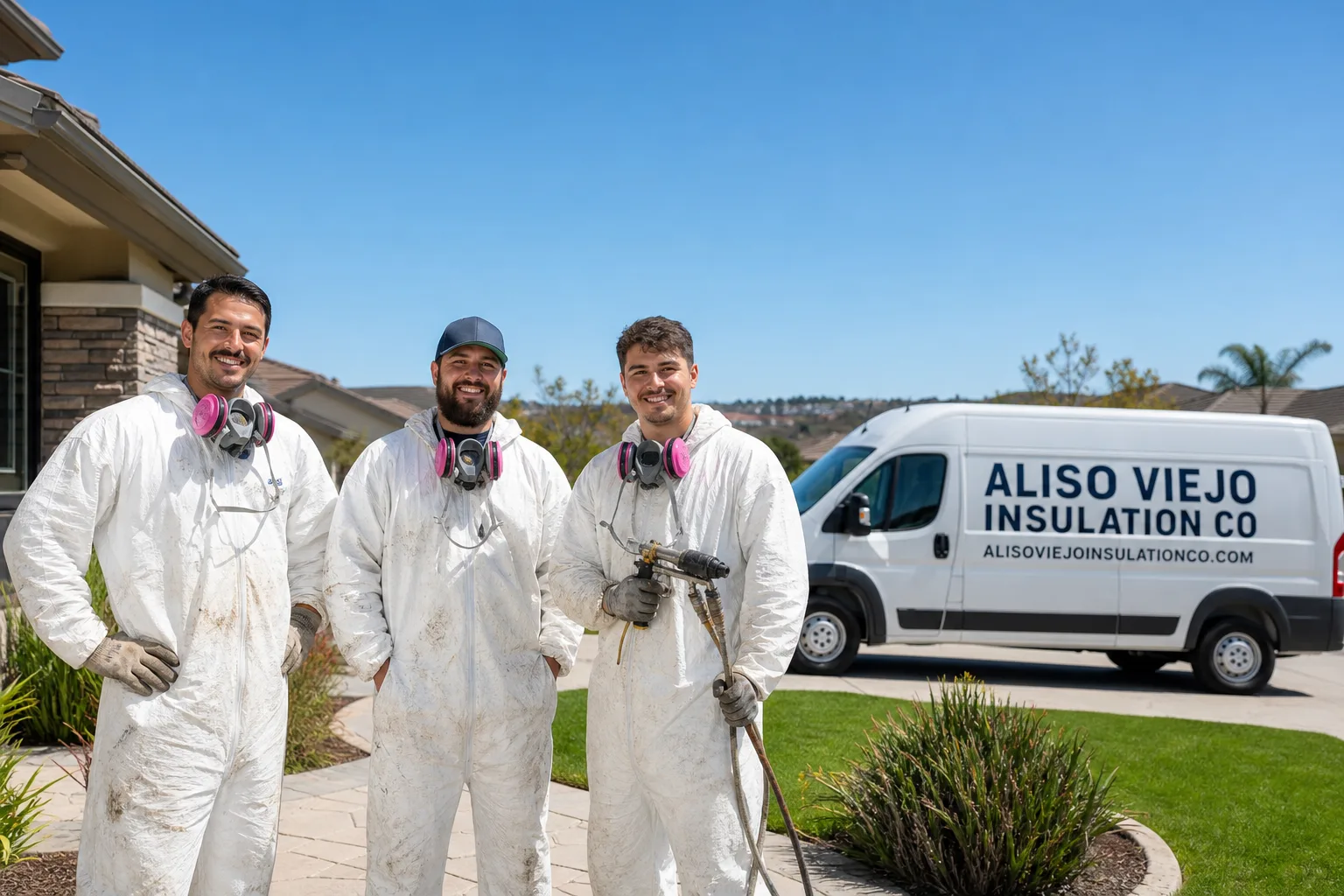
Fast, Reliable Spray Foam Insulation Across Monrovia
Spray foam insulation in Monrovia typically costs $1.50 to $3.50 per board foot for open-cell and $2.50 to $5.00 per board foot for closed-cell, with most whole-home projects landing between $4,500 and $12,000 depending on scope. We serve every Monrovia zip code, 91016 and 91017, usually arriving within two business days for an assessment. If your attic bakes past 140°F in July or your crawl space pulls moisture up into the living areas, call (877) 352-4780 and we’ll walk you through what’s actually happening before you spend a dollar.
Monrovia homes are different from what you’ll find in Arcadia or Duarte. The housing stock north of Foothill Boulevard sits against the San Gabriels, on sloped lots with shallow attics and old framing that traps heat in ways tract housing never does. We know those houses. We’ve worked in them. The right foam, the right prep, and the right application sequence matter more here than almost anywhere else in the San Gabriel Valley.
Why Aliso Viejo Insulation Co Is Monrovia’s Preferred Spray Foam Insulation Company
We’re honest about what we are: an insulation specialist. Not a general contractor who also does insulation. Not a single-brand dealer. We carry eight manufacturer lines, including Owens Corning, Johns Manville, Knauf, Rockwool, CertainTeed, Icynene, Demilec, and GreenFiber. That means when you call us about your Monrovia attic, we’re not trying to fit your house into whatever product happens to be on the truck this week. We’re matching material to conditions.
Nate Calloway leads our crews. He’s the one who walks the property first, asking about temperature swings, energy bills, and any rooms that never quite hold comfort. Monrovia customers tell us the same thing after the job: they expected to hear a sales pitch and instead got a straight answer about what their house needed, even when that meant less square footage of foam than they assumed.
Our response time to Monrovia consistently runs within 48 hours for evaluations, and we’ve handled everything from rim joist sealing on 1920s bungalows to full attic encapsulation in mid-century ranches. Free estimates. Straightforward recommendations. One call at (877) 352-4780 and you’ll know where you stand.
Rim Joist Spray Foam in Monrovia
Rim joist spray foam in Monrovia seals the band board area where your floor framing meets the foundation wall, a spot that leaks conditioned air in nearly every older home in the 91016 ZIP code. The job involves cleaning the rim joist cavities, applying a two-component foam that expands into every gap, and leaving an air seal that also blocks pests and moisture. Homeowners with cold floors in winter or musty basement odors in summer usually need this fix, and most rim joist projects in Monrovia run $1,800 to $4,200 for a typical perimeter, depending on access and linear footage.
Open-Cell vs. Closed-Cell at the Rim
For rim joists, we generally recommend closed-cell foam. It adds structural rigidity and acts as a vapor barrier, which matters in Monrovia’s older homes where the band board sits near soil moisture. Open-cell costs less and insulates well, but it absorbs water if drainage is poor, so condition dictates choice.
What Foam on the Rim Actually Fixes
Beyond air sealing, a proper rim joist application cuts the stack effect that pulls hot attic air down through walls in summer and cold air up through floors in winter. In foothill homes with crawl spaces, that single area often accounts for a 10 to 20 percent comfort gain on its own.
Crawl Space Spray Foam Insulation in Monrovia
Crawl space spray foam insulation in Monrovia addresses the sloped-lot reality of homes in the 91016 and 91017 areas: crawl spaces that sit against soil, trap moisture, and radiate temperature into the living space above. We apply open-cell or closed-cell foam directly to subfloor or crawl space walls after confirming drainage is adequate, because foam against a wet wall is wasted money. Typical crawl space spray foam in Monrovia runs $2,800 to $6,500 depending on access, square footage, and whether we’re also sealing the rim joist.
Drainage First, Foam Second
On sloped lots north of Foothill Boulevard, we’ve seen crawl spaces where water moves against foundation walls during winter rains. Foam doesn’t fix that. We inspect drainage, recommend corrections where needed, then apply foam that will actually stay adhered and perform. Skipping this step is why some Monrovia homeowners have had to redo work done by other contractors.
Closed-Cell for Moisture-Prone Crawls
Closed-cell foam at two inches creates both an air seal and a vapor retarder. For Monrovia homes with damp crawl spaces or those close to the wildland-urban interface where drain patterns shift after fire-scarred hillsides shed water faster, it’s the right call more often than not.
Trusted Brands We Service in Monrovia
We stock and service materials from Owens Corning, Johns Manville, Knauf, Rockwool, CertainTeed, Icynene, Demilec, and GreenFiber, so when a Monrovia customer calls at (877) 352-4780, we’re not waiting on a regional distributor to ship product. That matters when you’re halfway through a retrofit and discover the original plan needs adjusting. Icynene open-cell handles most attic applications. Demilec closed-cell covers rim joists and crawl spaces. Rockwool mineral wool covers fire-resistance upgrades on the wildland-urban edge. We carry the full spectrum because Monrovia’s housing stock doesn’t present a single problem to solve.
Common Spray Foam Insulation Problems We See in Monrovia Homes
- Foam sprayed over original knob-and-tube wiring. Many 1920s Craftsman bungalows in Monrovia still have active knob-and-tube circuits in walls and attics. Encapsulating live wiring in foam without proper isolation creates a serious fire hazard. We inspect circuits before any application and won’t spray over unsafe conditions.
- Thin or poorly mixed foam in 140°F+ attics. Foothill attics north of Foothill Boulevard get hot enough to degrade improperly applied foam. Off-gassing, loss of adhesion, and thermal drift follow. We control mixing temperatures and apply in lifts that cure correctly under Monrovia’s August sun.
- Crawl space foam delamination on sloped lots. When drainage is ignored, foam pulls away from foundation walls within two seasons. Moisture from uphill soil movement is the usual culprit. We verify drainage before spraying any crawl space in Monrovia’s hillside neighborhoods.
- Open-cell foam used where a vapor barrier is required. Open-cell absorbs moisture, which is fine in a ventilated attic but wrong against a damp crawl space wall. We see this mistake often enough from previous installs that it’s the first thing we check in Monrovia homes built before 1960.
Pricing for Spray Foam Insulation in Monrovia, CA
Spray foam pricing in Monrovia breaks down roughly like this: rim joist sealing runs $1,800 to $4,200, crawl space encapsulation lands between $2,800 and $6,500, attic roof deck spray foam averages $5,000 to $10,000, and full whole-home coverage runs $8,500 to $14,500. Open-cell costs $1.50 to $3.50 per board foot, closed-cell $2.50 to $5.00. Monrovia’s older homes often need more prep, from knob-and-tube inspection to drainage correction, which adds cost but prevents the failures that come from cutting corners. Call (877) 352-4780 for a free, itemized estimate. Nate will walk the property and give you real numbers based on your actual house, not a square-footage formula.
We Also Serve Cities Near Monrovia
While this page covers Spray Foam Insulation in Monrovia, our crews regularly work in Mayflower Village, Duarte, Bradbury, and Arcadia. Each area has its own housing quirks, from Arcadia’s 1950s ranch expansions to Bradbury’s steep hillside builds. If you’re in a neighboring city, call (877) 352-4780 and we’ll talk through your property’s specific conditions.
Serving Monrovia, CA — Our Local Coverage Area
We’re based in the Monrovia area and know this community well. Use the map below to see our service coverage — if you’re nearby, we can almost certainly help.
FAQs About Spray Foam Insulation in Monrovia
Spray foam works better in Monrovia’s foothill attics because fiberglass batts and blown-in fiberglass degrade and settle under sustained 140°F+ heat, while properly applied spray foam maintains its form and air-sealing properties regardless of attic temperature. In the foothill neighborhood north of Foothill Boulevard, our crew tackled a 1920s Craftsman bungalow with an uninsulated rim joist and a low-pitch attic that had baked its original fiberglass into uneven clumps. We removed the degraded material, applied Icynene spray foam to the rim joist and crawl space, and sealed the attic with a radiant barrier to block the intense afternoon sun. The homeowner reported a 15°F drop in attic temperature and a noticeable reduction in summer cooling costs. Call (877) 352-4780 to have your attic evaluated.
No, spray foam should never be applied directly over active knob-and-tube wiring unless the circuits have been properly decommissioned or isolated, because the foam traps heat and can overheat the old conductors. Many Monrovia Craftsman homes built before 1930 still carry this wiring in attic and wall cavities. We inspect every circuit before spraying and will recommend an electrician where needed.
Monrovia’s wildland-urban interface position means insulation choices should favor fire-resistant assemblies, which is why we often recommend closed-cell foam or mineral wool near vulnerable areas like rim joists, eave vents, and crawl space openings. Closed-cell foam chars rather than spreads flame, and Rockwool mineral wool offers non-combustible performance for extreme exposure zones. The goal is thermal performance that doesn’t compromise your home’s ember resistance.
Yes, crawl spaces in Monrovia’s sloped-lot homes need drainage verification and often regrading or vapor barrier work before spray foam goes on, because uphill soil movement and poor drainage cause foam delamination within seasons. We’ve seen failed installations where foam was applied directly against a seeping foundation wall. We won’t do that. The prep adds cost but ensures the foam lasts as manufacturer specs intend.
For Monrovia’s hot summers and cold nights, open-cell foam at 5.5 to 6 inches in attics handles heat gain well, while closed-cell foam at 2 to 3 inches performs better in crawl spaces and rim joists where moisture is present. The right answer depends on your specific house, which is why we inspect before recommending. Call (877) 352-4780 for a free evaluation. Estimates don’t cost you anything, and you’ll have a clear picture of what your home actually needs.
Written by Nate Calloway, Owner at Aliso Viejo Insulation Co, serving Monrovia and the San Gabriel Valley with material-agnostic insulation solutions.