
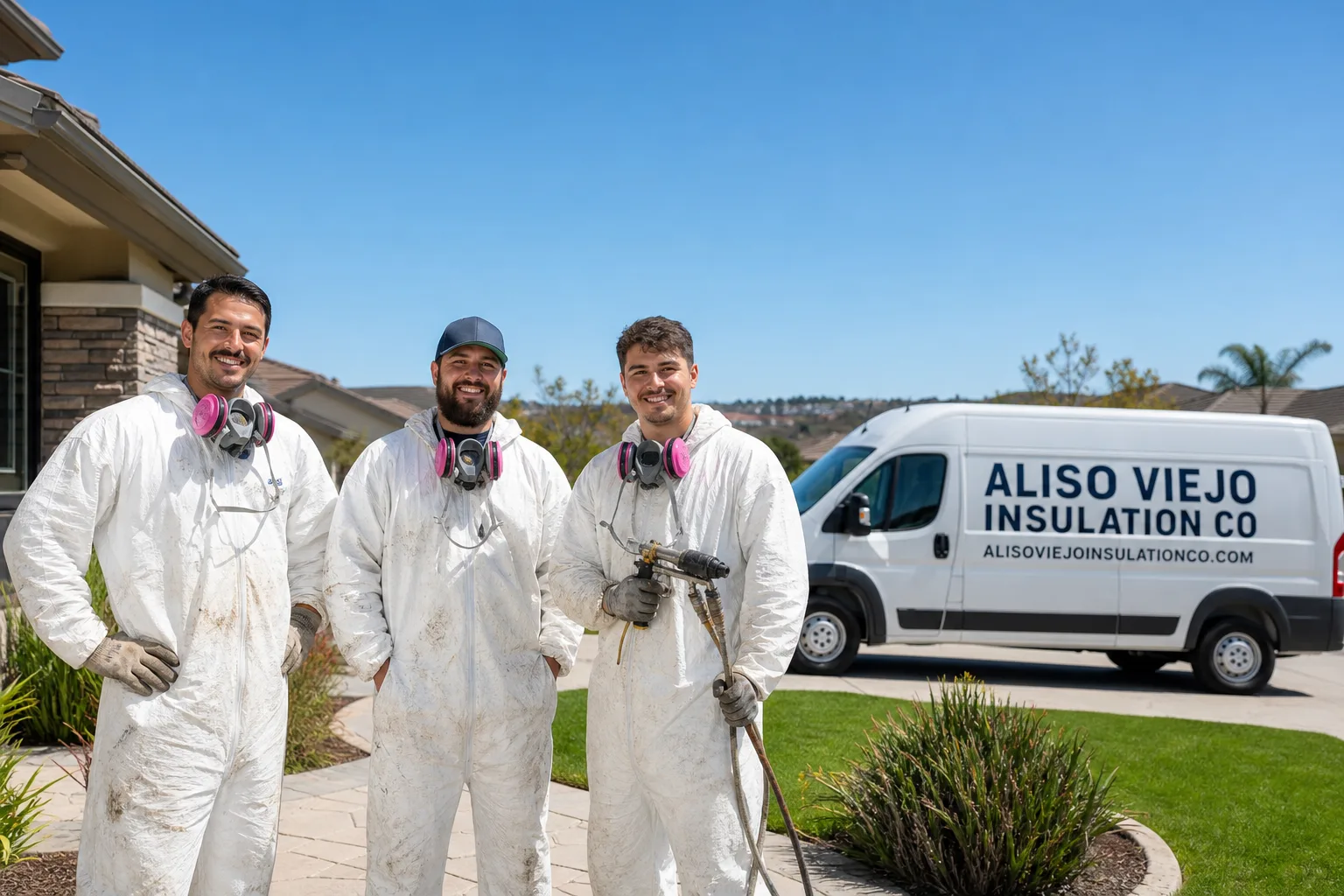
Fast, Reliable Attic Insulation Across Canyon Lake
Attic insulation in Canyon Lake, CA means retrofitting 1970s-1990s homes built for an era when energy was cheap and nobody thought much about an attic pushing 140°F by mid-morning. We know these houses. We know the tile roofs, the stucco walls, the fairway lots, and the gate procedures. If your upstairs rooms cook in July or your AC never cycles off, your attic insulation has probably settled, compressed, or was never enough to begin with. Call Aliso Viejo Insulation Co at (877) 352-4780 for a free estimate, and we’ll get a crew cleared through the guard gate on your schedule.
Why Aliso Viejo Insulation Co Is Canyon Lake’s Preferred Attic Insulation Company
We’re familiar with every wrinkle of working inside Canyon Lake’s guarded boundaries. Crews have to be pre-cleared on a vendor list, arrivals have to land in a scheduled window, and the gate staff won’t wave in a truck that isn’t expected. That’s not a hassle; it’s just how Canyon Lake works, and we plan every job around it from the first phone call.
Homeowners in 92532 call us because we’re authorized installers for eight nationally recognized manufacturers: Owens Corning, Johns Manville, Knauf, Rockwool, CertainTeed, Icynene, Demilec, and GreenFiber. That breadth matters when you’re trying to fix a 30-year-old attic. The right material for a lakefront custom two-story isn’t necessarily the right one for a single-story tract home off the perimeter streets. We’re not pushing whatever’s on the truck; we’re matching a product to your specific roofline, ventilation, and heat load.
We answer calls directly, scope the job on the first visit, and schedule attic work early morning when Canyon Lake roof decks are still workable. That’s a local-logistics habit we learned from doing this here, not something a generic insulation franchise would think about until the crew was already baking at noon.
Radiant Barrier in Canyon Lake
Radiant Barrier in Canyon Lake is one of the highest-return attic upgrades we install, because the issue here isn’t just insulation R-value. It’s radiant heat from tile roofs that turns attic air into an oven by 10 a.m. A radiant barrier reflects that heat before it loads into your insulation and ceiling. When you add a radiant barrier under a tile roof in an Elsinore Valley summer, the attic temperature drop is immediate and measurable. A typical radiant barrier install in Canyon Lake runs $800 to $1,700, depending on roof geometry and access.
Under the region’s tile roofs, attic spaces routinely hit extreme temperatures by midday in July and August. The radiant barrier gives the insulation below it a fighting chance. Instead of batts soaking heat all day, they stay cooler, and heat gain into the living space drops. We install these before 10 a.m. on most Canyon Lake jobs, because the roof deck becomes a serious burn risk by noon.
Tile Roof Heat Gain
Canyon Lake’s ubiquitous tile roofs hold heat longer than composite shingles ever would. The tile itself radiates downward into the attic well after the outside air peaks. A radiant barrier changes that dynamic entirely. Reflective foil facing the roof deck stops the infrared transfer before it reaches your ceiling joists or insulation.
In our experience the homes around the fairway lots and the lake shore catch the worst afternoon exposure. The two-story slope of many of those lots means a large attic volume, and a radiant barrier effectively lowers the ceiling surface temperature in every room below.
Combining Radiant Barrier With Insulation
The cleanest results come when we pair a radiant barrier with a proper insulation top-up. One without the other leaves performance on the table. Insulation slows conductive heat; the radiant barrier stops radiant heat. A Canyon Lake attic needs both because both heat transfer mechanisms are fighting you from June through September.
Attic Cleaning Services in Canyon Lake
Attic Cleaning Services in Canyon Lake get requested more than most people expect, and for good reason: thirty-plus years of dust, rodent activity, and degraded blow-in material don’t just smell bad, they compromise performance. When old insulation has broken down into a settled mat, burying it under new material locks in the problem. Cleaning the attic first lets us inspect the top plates, air-seal penetrations, and spot wiring or venting issues before they’re hidden under fresh product. Typical attic cleaning in Canyon Lake runs $600 to $1,200 depending on attic size, accessibility, and what’s actually up there.
We recommend cleaning whenever the existing material has been distured by pests, water, or simply decades of settling. The older Canyon Lake homes, built mostly in the 1970s through the 1990s, have attics that were rarely touched after construction. That’s not a criticism of the builders; it’s just what happens when nobody looks up for a generation.
Rodent and Pest Debris Removal
Gated communities near wild open space, the kind Canyon Lake backs up against, tend to see more rodents than a dense city block. The perimeter streets in particular get field mice and roof rats looking for warm nesting material. We’ve cleaned attics where droppings ran wall to wall. Removal, sanitizing, and air-sealing the entry points is the sequence that makes the problem stay gone.
We don’t offer pest control as a trade, but we do remove the contaminated insulation and debris so pest-control remediation can be effective. Then we air-seal, prep baffles and ventilation, and install fresh insulation.
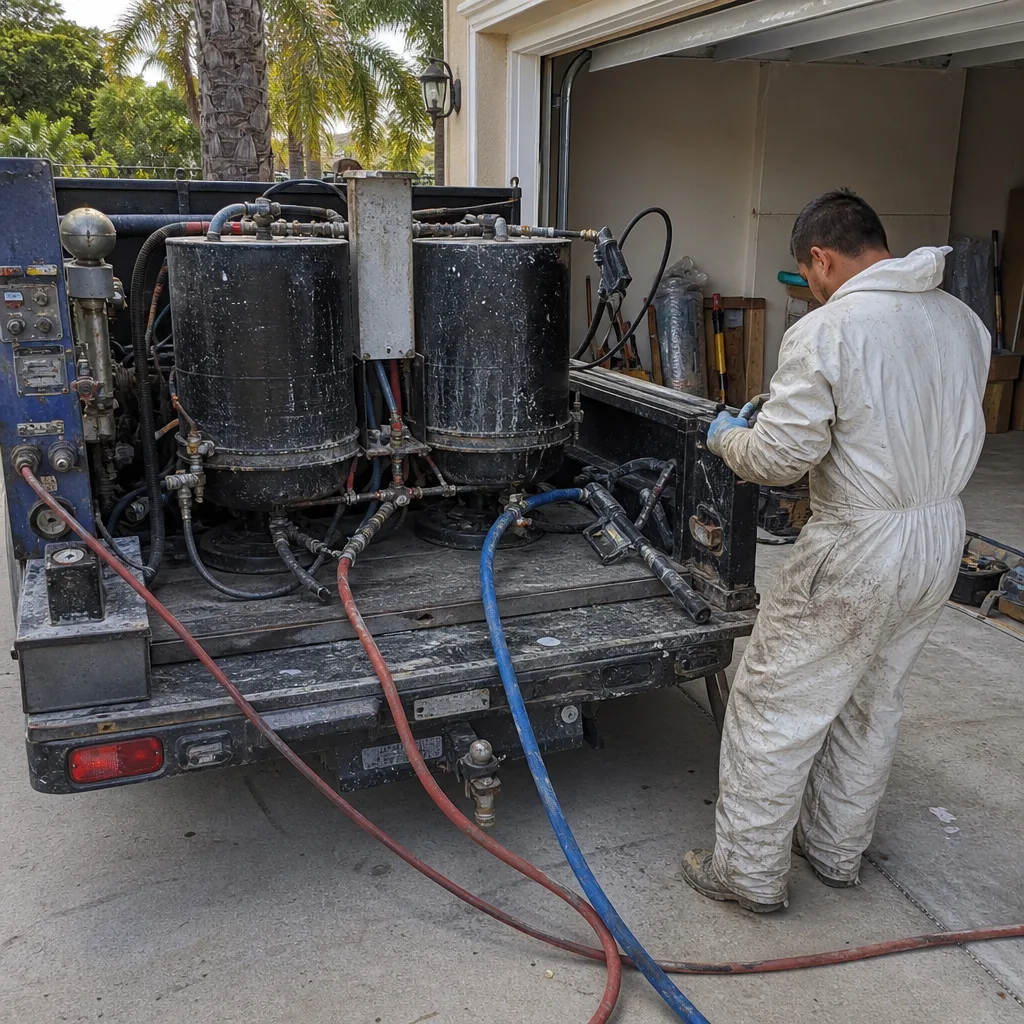
Air Sealing Before New Insulation
Cleaning exposes the top plates, can lights, plumbing chases, and vent penetrations. That’s where the conditioned air inside your home leaks into the attic. In Canyon Lake heat, every leak path is a slow drip of wasted cooling in summer and heat in winter. Air-sealing before new blown-in insulation is the difference between a job that meets spec and one that actually changes your comfort level.
What happens when you call
- 1
A real person answersNo phone trees — you reach a local pro.
- 2
You get an upfront price rangeHonest numbers before anyone is dispatched.
- 3
A background-checked tech heads outLicensed & insured, dispatched right away.
- 4
You approve before work beginsNothing starts until you say go.
Trusted Brands We Service in Canyon Lake
We install and service product from Owens Corning, Johns Manville, Knauf, and Rockwool, among the eight manufacturers we’re authorized for. That means we can bring Rockwool mineral wool when fire resistance matters on a canyon-adjacent lot, or Owens Corning fiberglass batts for a standard attic top-up. For Canyon Lake homes we stock blended fiberglass and cellulose locally, and we can have Knauf or CertainTeed product staged within a day. No chasing product from three states away. Your job gets the right material, not whatever’s in the warehouse. Attic Insulation work in Canyon Lake starts with the product matched to your attic, not the other way around.
Common Attic Insulation Problems We See in Canyon Lake Homes
- Settled and compressed builder-grade batts. The original R-30 or R-38 batts in these 1970s-1990s attics are rarely that anymore. Compression and settling down to half the labeled thickness is common, which means the real-world R-value is closer to R-11 or R-13 when the Elsinore Valley heat peaks. That’s a massive comfort loss.
- Tile roofs pushing attic temperatures past 140°F. We’ve measured it on fairway-lot tract homes. The combination of high solar exposure and tile mass means late-morning attic temps that are unsafe for crews and brutal for energy bills.
- Guarded-gate scheduling failures. If a contractor isn’t pre-cleared with the Canyon Lake gate staff, the crew gets turned away. We had a homeowner wait weeks for another company that never made it past the main gate on the first attempt. We pre-clear every truck the day before and arrive in a tight window.
- No ventilation prep before new insulation. Older homes here often have undersized soffit or ridge vents. Throwing new insulation over blocked baffles creates a hot, damp attic that degrades the new product and can lead to mold. We inspect and prep baffles before blowing anything in.
Pricing for Attic Insulation in Canyon Lake, CA
Attic insulation in Canyon Lake runs on real ranges, not vague estimates. Blown-in cellulose or fiberglass for a standard single-story track home typically falls between $1,800 and $3,400. Attic batt insulation for a two-story lakefront runs $2,100 to $4,200. An attic top-up over existing but settled material runs $1,100 to $2,400. Attic insulation replacement, when we’re removing the old and starting clean, runs $2,500 to $5,000 depending on square footage and contamination. Baffles and ventilation prep add $350 to $750. Factors that move the number: attic size, access difficulty, depth of existing material, whether there’s any pest damage to remediate. Free estimates are standard. We write the quote clear, and the price you see is the price you pay.
We Also Serve Cities Near Canyon Lake
Aliso Viejo Insulation Co handles attic work across the surrounding Inland Empire communities. We serve Canyon Lake as our focal point, plus Meadowbrook, Sedco Hills, Lakeland Village, and Quail Valley. If you’re in any of those nearby areas, same scheduling and gate-clearing discipline applies. Call (877) 352-4780 and we’ll get a time that works.
Serving Canyon Lake, CA — Our Local Coverage Area
We’re based in the Canyon Lake area and know this community well. Use the map below to see our service coverage — if you’re nearby, we can almost certainly help.
FAQs About Attic Insulation in Canyon Lake
Probably not much. Builder-grade batts in a 1980s Canyon Lake attic have typically compressed and settled to half their labeled thickness, which means the real R-value is far below what the bag said. The material may look present, but the performance is long gone, and August heat will find every gap. We can confirm with an attic inspection and give you a straight answer on what’s worth adding or replacing. Call (877) 352-4780 for a free look.
Yes, significantly. Tile roofs hold heat and radiate it downward long after the outside air peaks, and a radiant barrier interrupts that infrared transfer before it loads into your insulation. Most Canyon Lake homes see the biggest attic temperature drop from a radiant barrier installed under the roof deck. It’s one of the most direct fixes for the specific roof profile we see around the lake and fairway lots.
We pre-clear every vehicle and crew member with Canyon Lake’s gate system the day before a job. The gate staff needs our vendor info, expected arrival time, and your address. We schedule a tight arrival window and we hit it. Unvetted crews get turned away, which has cost homeowners days of delays with other contractors. We’ve never missed a gate slot on a Canyon Lake job.
Because by 10 a.m. in July, a Canyon Lake attic under a tile roof can be pushing 140°F and climbing. Working in that heat isn’t just miserable, it’s unsafe, and it makes installations sloppier. We start at 7 a.m. on attic jobs here and pull crews before the thermal load gets dangerous. It’s a scheduling habit born from working in the Elsinore Valley specifically.
Yes, if the existing material has been disturbed by pests, water, or decades of settling. Removing the old layer lets us inspect top plates, air-seal leaks, and fix ventilation baffles before new insulation goes in. Blowing new material over compromised old insulation just buries the problem. We’ll tell you honestly whether cleaning is worth the cost on your particular attic.
Call Nate and the crew at Aliso Viejo Insulation Co at (877) 352-4780. We’ll get your Canyon Lake attic sorted, gate cleared, early start included.
Written by Nate Calloway, Owner at Aliso Viejo Insulation Co, serving Canyon Lake and the surrounding Elsinore Valley communities.