
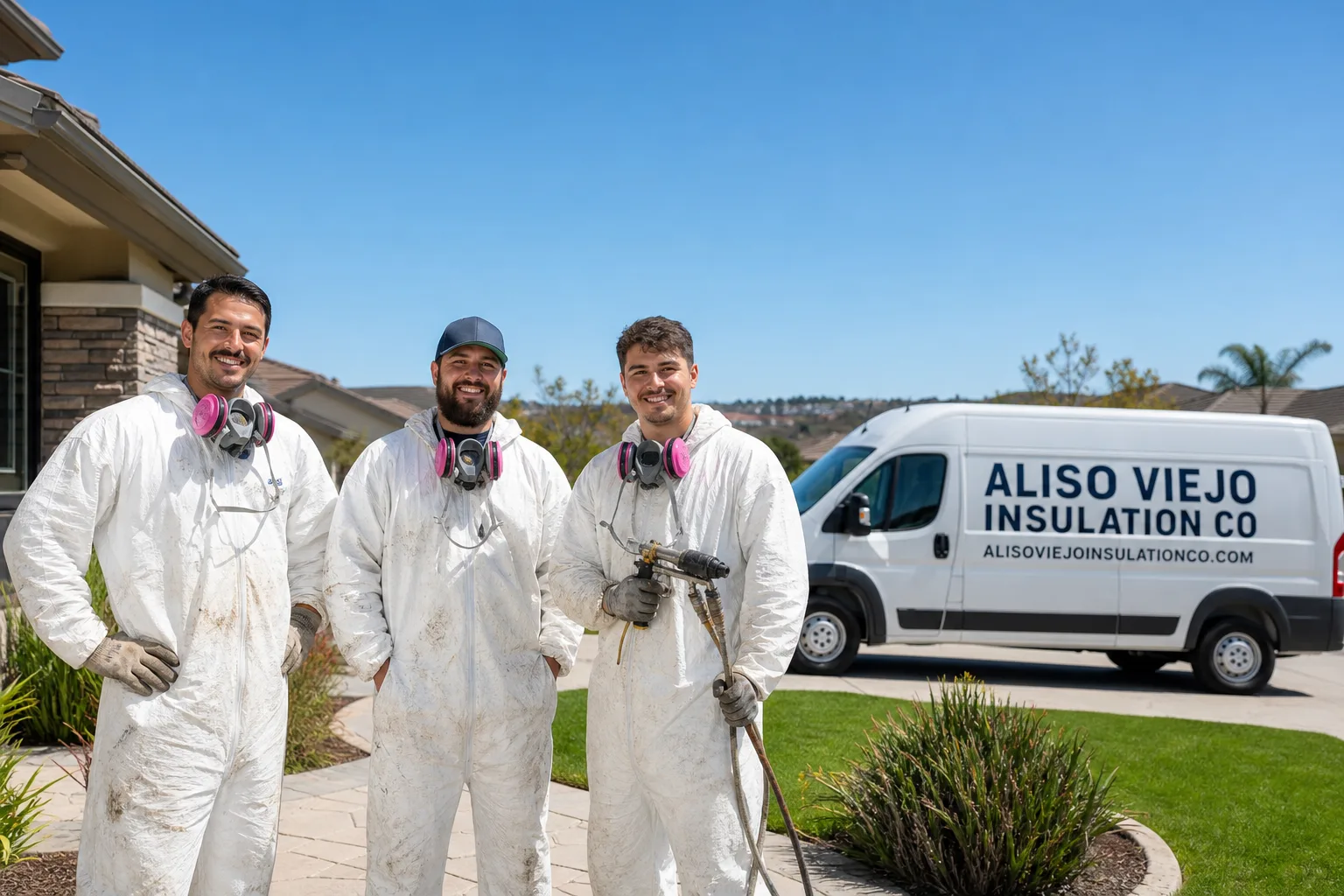
Fast, Reliable Spray Foam Insulation Across Manhattan Beach
Spray foam insulation in Manhattan Beach usually means one of two jobs: retrofitting a 1950s-70s bungalow that was never built for modern air sealing, or finishing the envelope on a three-story walk-street rebuild where the stucco went up before anyone thought about thermal performance. Either way, we’re familiar with the specific wall assemblies, party-wall conditions, and marine-layer moisture patterns that make this city different from the beach towns to the north and south. Our crews reach Manhattan Beach from Aliso Viejo in about 45 minutes, and we stock the open-cell and closed-cell systems these homes actually need. Call (877) 352-4780 and we’ll schedule a walkthrough.
Why Aliso Viejo Insulation Co Is Manhattan Beach’s Preferred Spray Foam Insulation Company
Manhattan Beach homeowners ask sharper questions than most, because so many of them have already been through a teardown or a gut remodel and they know what a wall cavity looks like. We’ve worked on enough Gaslamp walk streets, Strand-adjacent lots, and Hill Section rebuilds to know that the insulation spec for a 1962 bungalow with stucco over tar paper is completely different from a 2021 contemporary with Zip sheathing and a rain screen. That’s why we run two premium spray foam systems, Icynene and Demilec, instead of pushing one brand onto every job. Nate Calloway, who leads our crew, has spent years matching open-cell versus closed-cell chemistry to coastal moisture loads, party-wall sound isolation, and the ventilation realities of tightly packed Manhattan Beach parcels. When a homeowner says their upstairs bedroom never cools down or they can hear their neighbor’s kitchen conversation, we know exactly where to look first.
Open Cell Spray Foam in Manhattan Beach
Open Cell Spray Foam in Manhattan Beach is the workhorse for interior party walls, attic undersides, and rim joist cavities where sound isolation and air sealing matter more than hitting a maximum R-value. In a city where homes sit inches from the neighbor’s wall, open-cell’s density and expansion characteristics make it the better choice for filling irregular stud bays and stopping flanking noise. A typical Manhattan Beach open-cell wall cavity or rim joist retrofit runs $2.10 – $3.80 per board foot, with most whole-attic or full party-wall jobs landing between $4,800 and $11,500 depending on square footage and prep work. The prep work is where Manhattan Beach jobs differ from anywhere else.
Party Walls With No Sheathing
Walk-street bungalows from the 1950s and 60s often have exterior walls that are just stucco over tar paper, with no OSB or plywood sheathing behind them. Open-cell foam can’t bond properly to that surface, and it will delaminate or cure unevenly. On a recent Gaslamp walk street job, we opened a party wall between a 1950s bungalow and its new three-story neighbor and found exactly that, no sheathing to bond to. We installed Icynene open-cell foam against a new OSB substrate to get both sound isolation and a continuous air seal, then sealed the rim joist where the marine-layer fog had been condensing. The homeowner reported the neighbor’s TV was no longer audible and the back bedroom felt noticeably drier.
Attic Upgrades for Older Bungalows
Original Manhattan Beach bungalows were built with minimal attic insulation and leaky can lights, gable vents, and unsealed top plates. Open-cell foam sprayed directly to the roofline turns that attic into conditioned space, which matters when the fog rolls in and every leak becomes a condensation point. The cost is the same per board foot as wall work, but attic jobs move faster and typically run $5,200 – $9,800 for a 1,400 – 2,200 square foot home.
Spray Foam Insulation Contractors in Manhattan Beach
Spray Foam Insulation Contractors in Manhattan Beach aren’t all set up for the prep work this city’s older housing stock demands. A 1968 bungalow being opened to the studs, a new three-story contemporary on a 30-foot walk-street lot, a detached garage conversion off a shared alley, each one has a different wall assembly and a different answer for open-cell versus closed-cell. Our team handles the full scope: substrate installation where sheathing is missing, rim joist sealing against marine-layer condensation, and the foam application itself. Closed-cell spray foam for exterior walls and roof decks in Manhattan Beach typically runs $3.40 – $5.60 per board foot, with whole-envelope jobs on a rebuilt home landing between $18,000 and $38,000.
Full-Envelope Work on Rebuilds
Manhattan Beach permits now require the kind of air sealing and insulation that original bungalows never had. When the house is down to the studs and the stucco is off, we walk the framing with the contractor and spec the vapor profile before anyone sprays. On homes within a few blocks of the Strand, the salt air and humidity make closed-cell the safer call for band joists and sill plates. Farther up in the Hill Section, open-cell in interior walls with closed-cell at the roofline is usually the right mix.
Rim Joist and Garage Ceiling Work
Rim joist spray foam is the most overlooked piece of a Manhattan Beach retrofit, and it’s where the marine layer does the most damage. The fog pushes moist air into the joist bays, condenses on the rim board, and slowly rots the framing or shrinks the foam if it was installed without proper vapor consideration. Detached garages, which are common on walk-street parcels, often get closed-cell on the ceiling to turn the garage into a usable workshop or ADU shell without creating a moisture trap. Garage ceiling jobs run $2,800 – $6,500 on average.
Trusted Brands We Service in Manhattan Beach
We’re authorized installers for Icynene and Demilec spray foam, and our shop carries the full range of both open-cell and closed-cell chemistry so we’re never forcing a Manhattan Beach job into the wrong product. For homes where fiberglass batts, mineral wool, or blown cellulose make more sense in a hybrid assembly, we also work with Owens Corning, Johns Manville, Knauf, and Rockwool products. The point is this: we’re not tied to moving one manufacturer’s inventory, so the recommendation comes from the wall assembly, the moisture exposure, and the sound isolation needs, not from what’s on the truck. Manhattan Beach homeowners tend to appreciate that, because they’ve usually done the research before they call.
Common Spray Foam Insulation Problems We See in Manhattan Beach Homes
- Foam applied directly to tar paper over stucco. Original 1950s-70s bungalows on the walk streets often have no structural sheathing, and foam sprayed straight onto tar paper delaminates or leaves voids. We add a rigid substrate first, which most bids miss until the wall is open.
- Party-wall noise transfer. When the original bungalow wall cavity is just a 2×4 stud bay with stucco on one side and drywall on the other, there’s almost nothing blocking sound. Open-cell foam against a new OSB substrate closes the air path and cuts the flanking noise from neighbors who are sometimes only 18 inches away.
- Marine-layer condensation at rim joists and penetrations. The fog isn’t just a visibility issue; it’s a moisture load. Unsealed rim joists wick that salt-laden air into the framing, and if vapor management was skipped in favor of raw R-value, the foam shrinks or traps moisture at the wall base.
- Open-cell in the wrong assembly. On Strand-adjacent homes with high humidity exposure, open-cell foam in exterior walls can absorb enough moisture to lose performance. Closed-cell is the better call there, and knowing which side of Highland Avenue the house sits on changes the answer.
Pricing for Spray Foam Insulation in Manhattan Beach, CA
Spray foam pricing in Manhattan Beach runs above the regional average because of prep work and access. Open-cell wall and joist work lands between $2.10 and $3.80 per board foot, while closed-cell runs $3.40 to $5.60 per board foot. Whole-attic open-cell jobs typically cost $5,200 to $9,800. Full-envelope closed-cell work on a rebuilt three-story home spans $18,000 to $38,000. Walk-street homes and party-wall work cost more than a standard attic because the sheathing step, scaffolding in tight setbacks, and sound-isolation detailing add real labor hours. Call (877) 352-4780 for a free estimate.
We Also Serve Cities Near Manhattan Beach
If you’re in Redondo Beach, Rolling Hills Estates, Palos Verdes Estates, or Torrance, our crews cover those markets on the same schedule. The wall assemblies and moisture patterns change from block to block, but the prep-first approach stays the same. See our full service area or call the shop for the nearest available crew. We also handle Spray Foam Insulation work throughout Los Angeles County, and Manhattan Beach is one of our most frequent stops.
Serving Manhattan Beach, CA — Our Local Coverage Area
We’re based in the Manhattan Beach area and know this community well. Use the map below to see our service coverage — if you’re nearby, we can almost certainly help.
FAQs About Spray Foam Insulation in Manhattan Beach
Because the sheathing step and the access requirement add labor that a standard attic never needs. Walk-street homes from the 1950s and 60s often have exterior walls that are just stucco over tar paper, with no structural sheathing. Spray foam can’t bond to that surface, so we install a rigid substrate first, then spray the foam against it. Add in zero side setbacks, scaffolding, and party-wall sound detailing, and the job is two to three times the labor of a simple attic lid. Call (877) 352-4780 for a line-item quote on your specific wall assembly.
Yes, and this is one of the most common reasons we’re called to walk-street blocks in the Gaslamp and near the Strand. Open-cell spray foam, when installed against a continuous substrate inside the party wall cavity, closes the air path and absorbs sound transmission that’s currently flanking through the stud bays. The key is the substrate; without it, the original bungalow wall cavity has no sheathing to block anything, and the foam can’t do its job.
It depends on the wall assembly and how close you are to the water. Within a few blocks of the Strand, the persistent onshore humidity and salt air make closed-cell the safer choice for rim joists, sill plates, and exterior wall cavities. Farther inland in the Tree Section or Hill Section, open-cell is often the right answer for interior walls and attics where moisture exposure is lower and sound isolation matters more.
Expect the insulation scope to start with prep, not with spraying. If the original stucco is coming off, the wall assembly will include proper sheathing, which is the right time to spec the foam chemistry and vapor profile. If the stucco is staying, we’re working from the inside and adding the substrate ourselves. Either way, the rim joist and the top plate need attention before the drywall goes back, because that’s where the marine-layer moisture comes in.
We stage the compressor and the hoses on the street or in the alley, run lines through the side yard or over the fence, and work floor by floor. The wall assemblies are usually modern, but the access is tight and the setbacks are zero, so every minute of setup is planned in advance. The foam spec follows the assembly: closed-cell at the roof deck and rim joists, open-cell in interior party walls if sound is a concern. Call (877) 352-4780 and we’ll walk the lot with you before we quote.
Written by Nate Calloway, Owner at Aliso Viejo Insulation Co, serving Manhattan Beach since our first walk-street retrofit years ago.