
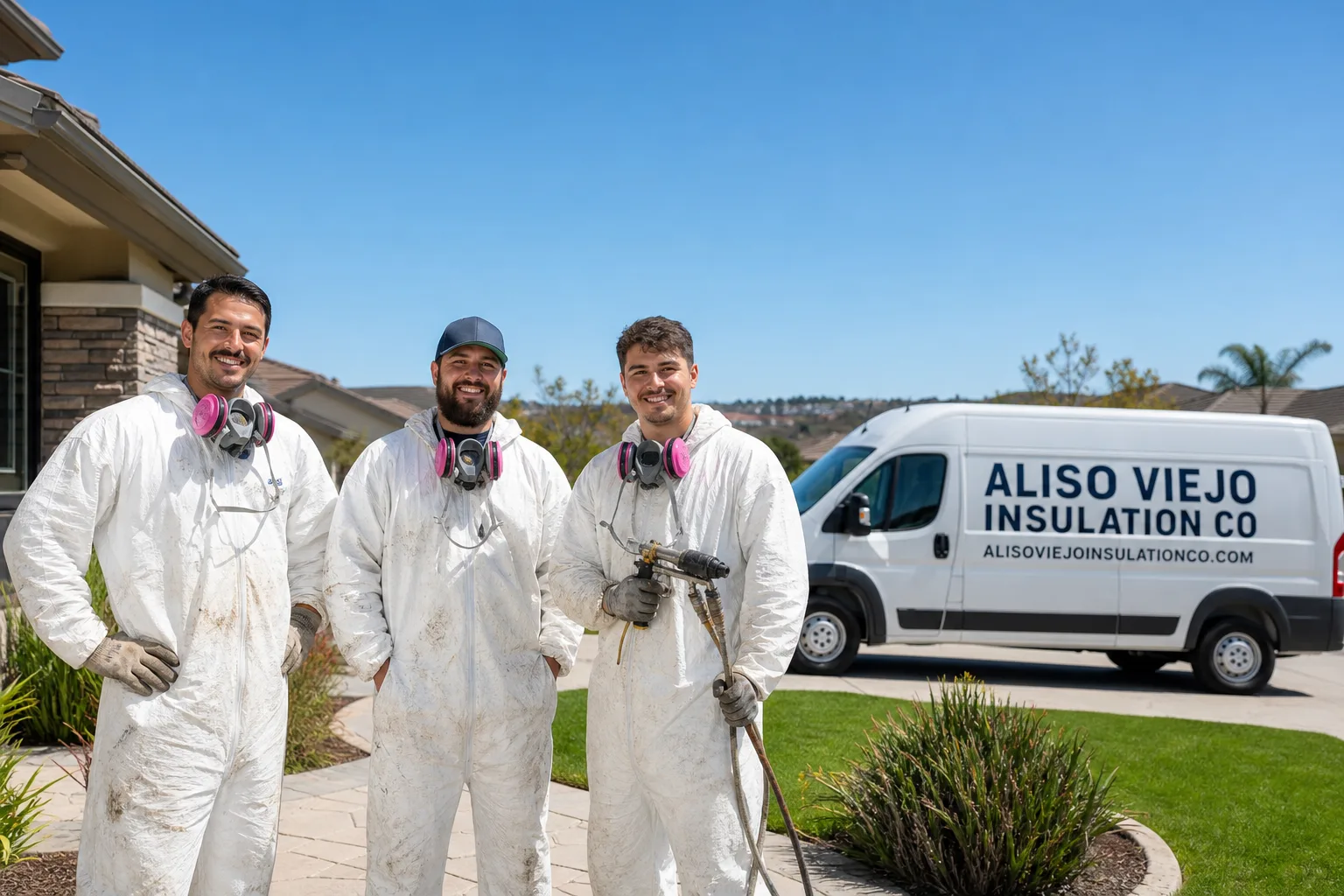
Fast, Reliable Spray Foam Insulation Across Redondo Beach
Spray foam insulation in Redondo Beach costs between $2,400 and $6,800 for a typical attic or wall project, with open-cell running $1.10 – $1.80 per board foot and closed-cell at $2.10 – $3.20 per board foot installed. The marine layer changes the math here: it’s not just about R-value, it’s about where moisture condenses and what you seal it in with. Our crews work the 90277 and 90278 ZIP codes weekly, and Nate Calloway has spent years matching foam chemistry to the single-wall bungalows and stucco tract homes that define this coastline. If you’re tired of fog-morning condensation or rooms that never hold temperature, call (877) 352-4780 for a straight answer.
Why Aliso Viejo Insulation Co Is Redondo Beach’s Preferred Spray Foam Insulation Company
Most spray foam contractors in the South Bay push one product because that’s what’s on the truck. We don’t work that way. Our Spray Foam Insulation team installs both Icynene and Demilec systems, open-cell and closed-cell, and we recommend based on what the wall cavity and coastal air actually demand. That distinction matters in Redondo Beach more than almost anywhere in Los Angeles County.
Homeowners here have called us after other contractors gave blanket quotes without looking at what’s behind the stucco. We show up, check the framing, check the cavity depth, check for existing moisture, then recommend. Reviews from Redondo Beach customers consistently mention the same thing: the recommendation felt like building science, not a sales script. We quote same-day on most inspections, and our typical response time to the 90277 and 90278 area is under 48 hours for a site visit.
Nate Calloway built this company around material access, not brand loyalty. That’s why we can offer eight manufacturers, including Owens Corning, Johns Manville, and Rockwool, alongside the Icynene and Demilec foam lines. When a Redondo Beach project needs something other than spray foam, we’ll say so. When foam is right, we’ll install it correctly for this specific coastal environment.
Closed Cell Spray Foam Insulation in Redondo Beach
Closed Cell Spray Foam Insulation is the workhorse for Redondo Beach’s moisture-heavy coastal air. It cures rigid, with an R-value around R-6.5 to R-7 per inch, and acts as both an air barrier and a Class II vapor retarder at roughly 2 inches of depth. For a typical Redondo Beach attic or basement rim joist project, expect to pay $2.10 – $3.20 per board foot installed, with whole-attic jobs running $4,200 – $6,800 depending on square footage and prep work. The salt air here isn’t a problem for closed-cell once it’s cured; it’s the installation window that demands a dry substrate and correct ambient temperature.
Single-Wall Bungalow Applications
In Redondo Beach’s single-wall construction, closed-cell foam often gets sprayed directly against the back of the stucco or lath because there’s no sheathing to anchor to. Done right, that pass seals the wall and stops marine-layer air from finding the framing. Done wrong, it traps moisture that was already there and dry rot gets sealed in behind the foam. We check framing moisture content before a single pass goes on.
Stucco-Clad Tract Homes
The 1950s – 1970s stucco homes across north Redondo and the Avenues often have irregular cavity depths and old, brittle stucco. Closed-cell foam fills those voids and reinforces the wall, but thin passes leave air channels where fog still condenses. We specify full-depth, even coverage on these jobs, not a cost-cutting skim coat.
Open Cell Spray Foam in Redondo Beach
Open Cell Spray Foam runs $1.10 – $1.80 per board foot in Redondo Beach and delivers R-3.5 to R-3.8 per inch. It’s softer, spongier, and air-permeable, which means it insulates well but doesn’t block vapor. That’s exactly why we use it selectively here. A typical attic underside application in the 90277 ZIP code costs $2,400 – $4,600. Open-cell is the right call when the assembly needs to dry in one direction, especially attic rooflines where moist air needs an escape path.
Where Open-Cell Fits in Coastal Homes
The marine layer pushes damp air into attics through every vent and gap. Open-cell foam at the roofline slows that air movement and insulates without sealing moisture against the roof deck. In Redondo Beach’s mild climate, the emphasis falls on stopping condensation, not fighting extreme heat, and open-cell’s air-slowing structure does that job without trapping water in the decking.
Why We Avoid It in Single-Wall Cavities
Spraying open-cell into the wall cavities of a single-wall bungalow near the pier is a recipe for dry rot. There’s no sheathing to shed moisture, so the marine layer wicks through the stucco and the open-cell holds that water against the framing. We’ve seen the damage this causes. In those walls, we use closed-cell or we recommend a different approach entirely.
Trusted Brands We Service in Redondo Beach
We install Icynene and Demilec spray foam systems because they represent the two most reliable chemistries for open- and closed-cell work in coastal conditions. Beyond foam, our access to Rockwool mineral wool and Owens Corning fiberglass gives Redondo Beach homeowners options when a wall assembly calls for vapor-open materials instead of a sealed foam barrier. That breadth matters here. The right answer for a 1920s beach bungalow on Catalina Avenue is often not the right answer for a 1960s stucco tract home off Prospect. We stock materials for fast turnaround on Redondo Beach projects, which means less waiting between inspection and installation day.
Common Spray Foam Insulation Problems We See in Redondo Beach Homes
- Open-cell foam in unsheathed single-wall cavities near the pier. The marine layer drives moisture through the stucco, the foam wicks it, and framing rots behind the new installation. We see this on remodels where a previous contractor sprayed open-cell everywhere without checking what the wall could handle.
- Foam applied over already-damp 1950s – 1970s framing. A moisture check before spraying takes ten minutes. Skipping it seals condensation in and feeds mold that grows unseen for years. Homes along the Avenues and the Golden Hills with poor attic ventilation are prime candidates for this failure.
- Uneven closed-cell passes in stucco-clad walls. A thin or gapped pass leaves air channels, and Redondo Beach’s salt-air fog still finds a condensing surface behind the foam. The wall reads as insulated on paper but performs like it never got touched.
- Salt corrosion on flash-and-batt details. Where foam meets existing framing or fasteners without proper sealing, the marine air concentrates at the transition and attacks metal. We see corroded fasteners and nails in attics within five years of installation when the foam edge wasn’t properly closed.
Pricing for Spray Foam Insulation in Redondo Beach, CA
A full attic spray foam job in Redondo Beach typically runs $2,900 – $5,600 for open-cell and $4,200 – $6,800 for closed-cell. Rim joist work in a crawlspace or basement runs $900 – $1,800 depending on linear footage. Single-wall bungalow walls near the pier are the most variable: $2,500 – $5,000 for a full exterior wall set, because access and prep work dominate the labor. The marine layer doesn’t change material costs much, but it changes prep time. Moisture checks, flash-and-seal details, and working around stucco all add labor that inland homes don’t require. We give you a line-item quote before any work starts, and estimates in Redondo Beach are free. Call (877) 352-4780 to schedule an inspection.
We Also Serve Cities Near Redondo Beach
Our crews work the full South Bay coastline. In addition to Redondo Beach, we regularly install spray foam in Hermosa Beach, Palos Verdes Estates, Manhattan Beach, and Marina del Rey. Each city has its own coastal quirks, and we account for them the same way: house by house, condition by condition.
Serving Redondo Beach, CA — Our Local Coverage Area
We’re based in the Redondo Beach area and know this community well. Use the map below to see our service coverage — if you’re nearby, we can almost certainly help.
FAQs About Spray Foam Insulation in Redondo Beach
Open-cell foam is air-permeable and vapor-permeable, meaning it lets water vapor pass through and holds moisture against the framing. In a single-wall bungalow near the pier, there’s no sheathing between the stucco and the studs, so marine-layer moisture moves straight from the exterior into the wall. Open-cell foam then traps that moisture against the wood. Closed-cell foam acts as both an air and vapor barrier, which is why we specify it for those walls, or recommend a completely different assembly. Want us to look at your specific bungalow? Call (877) 352-4780 and Nate Calloway will walk you through the options.
Morning fog means persistent high humidity and airborne salt, which pushes moisture into any wall or attic gap. Closed-cell foam resists that moisture because it doesn’t absorb water and stops vapor movement. Open-cell foam doesn’t stop vapor, so it works better in ventilated attics where the assembly is designed to dry. The fog doesn’t make one foam universally right or wrong; it changes where each one belongs. We’ll explain the choice for your specific roofline and wall type when we walk the house.
Yes, every time. We use a moisture meter on framing, sheathing, and existing insulation before any foam touches the structure. If framing reads above acceptable moisture levels, we stop and tell you. Spraying over damp framing in a Redondo Beach tract home seals condensation in and feeds mold behind the new barrier. A ten-minute check prevents a multi-thousand-dollar problem.
Yes, in most cases closed-cell spray foam stops the condensation cycle by sealing the wall and preventing warm interior air from meeting the cold back of the stucco. In single-wall bungalows, this is the most effective fix when applied as a continuous air and vapor barrier against the stucco’s interior face. The key is installing it correctly the first time. Call us for a condensation assessment and we’ll tell you if foam is the right solution or if ventilation needs attention first.
Yes, closed-cell foam bonds directly to the back of stucco and reinforces the wall while sealing it. For 1950s – 1970s stucco homes, this approach can significantly reduce air leakage and stop marine-layer condensation. The work requires careful prep: we check stucco condition, framing moisture, and cavity depth before spraying. Budget $2,500 – $5,000 for a full wall set in this housing type. Estimates are free, so call (877) 352-4780 for exact pricing on your home.
If your Redondo Beach home fights the marine layer every morning, or your attic never holds temperature, the problem is almost always insulation that wasn’t chosen for this specific coastline. Call Aliso Viejo Insulation Co at (877) 352-4780 and Nate Calloway will inspect the house and tell you exactly what it needs. Free estimates, straight answers, no brand pushing.
Written by Nate Calloway, Owner at Aliso Viejo Insulation Co, serving Redondo Beach and the South Bay coastal communities.