
Insulation Company in March Air Force Base, CA
Most homes in March Air Force Base (ZIP 92551) were built for base personnel, and many of them carry thin or settled attic insulation that was adequate when energy was cheap and summers were an afterthought. That math no longer works. Blown in insulation is the most common fix we install here because it fills the irregular cavities and aging attic floors of mid-century military-family housing faster and more completely than batt replacement. If your home near the base struggles to hold temperature on 100°F afternoons, call Aliso Viejo Insulation Co at (877) 352-4780 for a straight answer on what’s actually in your attic right now.
Why March Air Force Base Homes Are Different
March ARB housing and the surrounding tract developments were built quickly, in waves, to house personnel. That means construction is consistent but rarely overbuilt: 2×4 walls, shallow attic depth, and original batt insulation that has compressed over decades of Perris Valley heat. On the valley floor where March Air Force Base sits, the day-night temperature swing is punishing. A home that reaches 95°F inside by 4 p.m. can drop 30 degrees by midnight. That swing forces insulation to work in both directions, and settled fiberglass with gaps at the top plate simply can’t keep up.
The wind is the other factor homeowners don’t expect. Afternoon winds sweeping across the Perris Valley floor push dust and hot air into any unsealed attic penetration. We routinely open attics near the base and find heat streaming through gaps around electrical boxes, plumbing vents, and interior wall top plates. Those gaps aren’t visible from the living room, but they show up on the energy bill and in rooms that feel 10 degrees hotter than the hallway. Insulation work in March Air Force Base usually isn’t just about adding material. It’s about closing the bypasses that let conditioned air escape and outside heat pour in.
Our Main March Air Force Base Services
Most calls we get from March Air Force Base homeowners involve two jobs: restoring attic insulation that’s settled or missing, and sealing the building envelope with spray foam where air leaks are the real problem. Here’s what each one looks like here.
Attic Insulation in March Air Force Base
Attic work in March Air Force Base usually means removing compressed, dust-saturated batts from older base housing and starting fresh. The heat that builds in an under-vented attic here can hit 140°F by mid-afternoon, which cooks old fiberglass and bakes the paper backing until it crumbles. We check attic depth, ventilation, and top-plate gaps before recommending a material, because adding R-value over an air leak just creates a warmer air leak. This is the job that fixes the upstairs bedrooms that never cool down. For the full scope of what’s involved, see Attic Insulation in March Air Force Base.
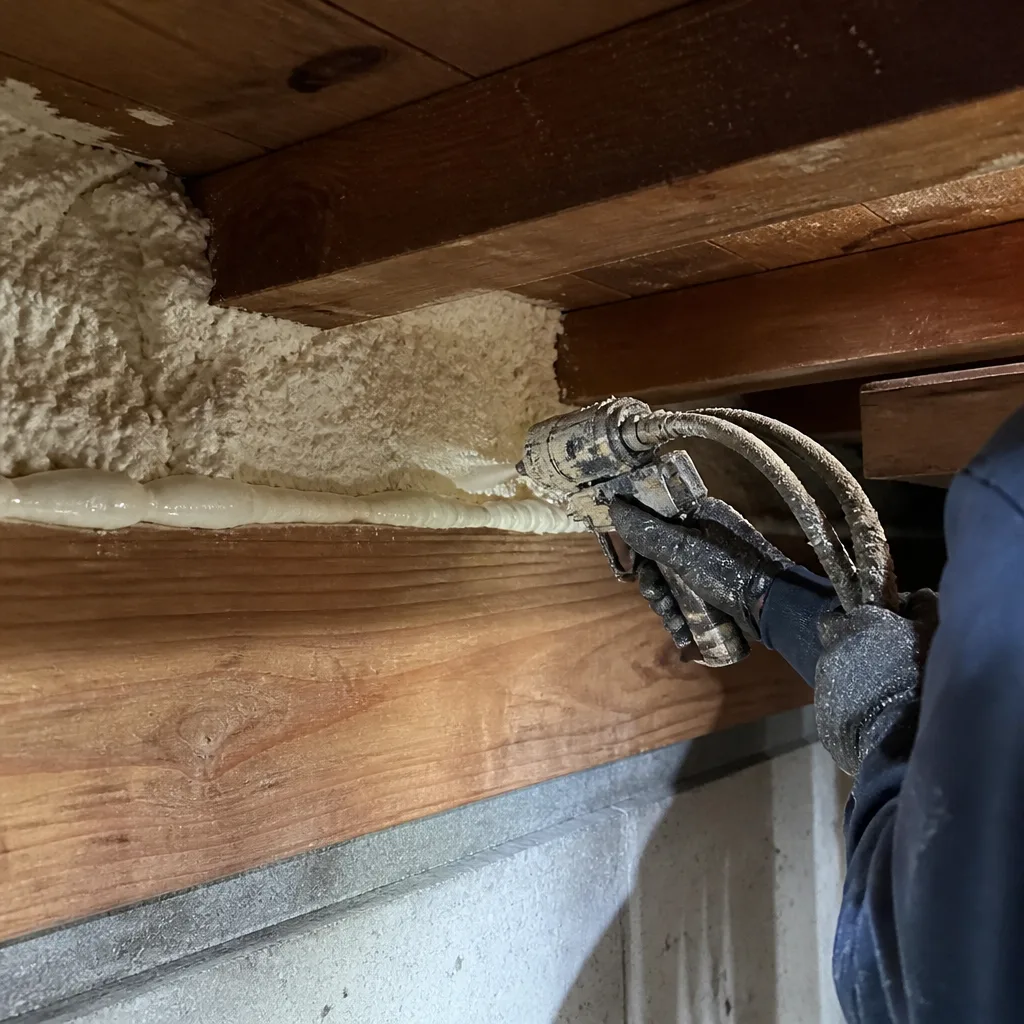
Spray Foam Insulation in March Air Force Base
Spray foam earns its keep in March Air Force Base because of the wind-driven dust and the temperature swing. Open-cell foam air-seals the attic floor or roofline and slows the heat transfer that makes late afternoon rooms unbearable. Closed-cell foam adds structural strength and a vapor barrier, which matters in older base housing where the original kraft-paper vapor barriers have torn or delaminated. We install both Icynene and Demilec systems, matched to whether the job needs moisture control, air sealing, or maximum R-value per inch. Details are on the Spray Foam Insulation in March Air Force Base page.
What happens when you call
- 1
A real person answersNo phone trees — you reach a local pro.
- 2
You get an upfront price rangeHonest numbers before anyone is dispatched.
- 3
A background-checked tech heads outLicensed & insured, dispatched right away.
- 4
You approve before work beginsNothing starts until you say go.
Blown In Insulation in March Air Force Base
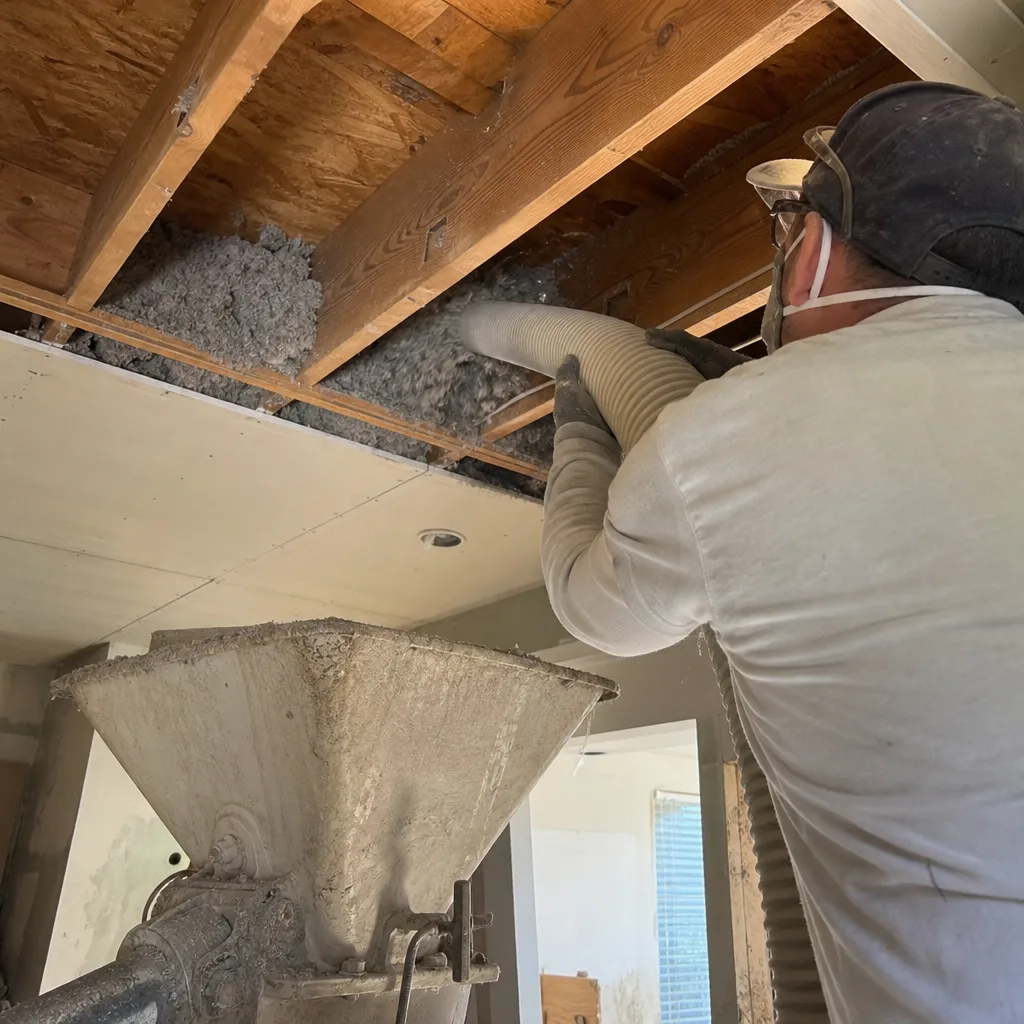
Blown in insulation is the workhorse solution for March Air Force Base attics because it conforms to whatever the original builders left behind. Older base housing often has shallow rafter bays, odd framing around scuttle holes, and existing batt insulation that has settled to half its rated R-value. Blowing in cellulose or fiberglass on top fills the gaps, buries the thermal bypasses, and brings the attic to current code depth without tearing out the ceiling below. On a July afternoon, that difference is measurable: rooms under a properly blown attic in March Air Force Base stay noticeably cooler well into the evening.
We source blown-in materials from GreenFiber and Owens Corning, and the choice between cellulose and fiberglass usually comes down to attic depth, existing material, and whether you want the recycled-paper density of cellulose or the lighter, non-settling nature of blown fiberglass. Visit Blown In Insulation for the full method overview.
Cellulose Insulation
Signs you need it
Your attic has old batts that look gray and compressed, and your upstairs rooms heat up faster than the rest of the house.
What it costs in March Air Force Base
Blown cellulose in March Air Force Base typically runs $0.90 to $1.50 per square foot installed, including prep and cleanup.
How we do it
We air-seal the attic floor penetrations, install baffles at the eaves, then blow GreenFiber recycled cellulose to the target depth with calibrated hoses for even coverage.
Blown In Attic Insulation
Signs you need it
You can see the tops of your ceiling joists from a foot away, meaning the insulation has settled well below its original depth.
What it costs in March Air Force Base
Blown in attic insulation here generally falls between $1,200 and $2,800 for a standard single-family attic, depending on square footage and target R-value.
How we do it
We remove or level the existing material, identify and seal air leaks at the top plates and penetrations, then blow new material to an even, code-compliant depth across the entire attic floor.
Loose Fill Insulation
Signs you need it
Your attic has uneven coverage with bare spots and drifted piles, a common sight in base housing where blow jobs were done in a single afternoon decades ago.
What it costs in March Air Force Base
Loose fill insulation in March Air Force Base typically costs $0.95 to $1.65 per square foot installed, with the higher end reflecting deeper fills for older homes.
How we do it
We level the existing loose fill, verify the ventilation channels are clear, then add new material in lifts to reach the specified R-value without compressing what’s already there.
What Blown In Insulation Costs in March Air Force Base
| Item | Typical range in March Air Force Base |
|---|---|
| Blown cellulose per sq ft installed | $0.90 – $1.50 |
| Blown fiberglass per sq ft installed | $0.80 – $1.35 |
| Standard attic blow-in (full job) | $1,200 – $2,800 |
These ranges reflect typical March Air Force Base attics from the mid-century and later base-tract eras. Access issues, very deep attics, and any need to remove old material first will push toward the upper end.
Is blown in insulation worth it in March Air Force Base?
Yes, especially for base-era homes where the original attic insulation is now half its rated depth. Blowing in new material is the fastest way to close the gap between what the builder installed and what this valley’s summer heat actually requires. The payoff shows up in more stable indoor temperatures and lower cooling strain from June through September.
How long does blown in insulation last in this climate?
Blown cellulose and fiberglass both hold their R-value for decades when kept dry, but March Air Force Base’s wind-driven dust can settle loose fill slightly over time. We install to the manufacturer’s specified settled depth so the rated R-value is still there years later, and we verify coverage before we pack up. Call (877) 352-4780 to schedule an attic check.
Brands We Service in March Air Force Base
We are authorized installers for GreenFiber recycled cellulose, Owens Corning fiberglass, Johns Manville batts, and Knauf blown products, among our eight manufacturer partnerships. March Air Force Base jobs usually require a mix, and we keep the most common densities and batt widths in local stock so we don’t lose a workday to supply runs. See our brands for the full list.
Pricing for Insulation Company in March Air Force Base, CA
| Service | Typical range in March Air Force Base |
|---|---|
| Blown cellulose per sq ft | $0.90 – $1.50 |
| Blown fiberglass per sq ft | $0.80 – $1.35 |
| Standard attic blow-in | $1,200 – $2,800 |
| Attic batt removal and replacement | $1,800 – $3,500 |
| Attic air sealing + blow-in | $2,200 – $4,500 |
| Open-cell spray foam (attic floor) | $1.50 – $2.50 per board foot |
| Closed-cell spray foam | $2.50 – $4.00 per board foot |
| Rim joist sealing with foam | $900 – $2,200 |
What pushes price up in March Air Force Base is usually attic depth per square foot and the condition of what’s already up there. Homes with original 1960s and 1970s batts often need removal before new material goes in, and that labor is part of the honest number you get before work starts. Our quotes are upfront and itemized, so the price you approve is the price on the final invoice.
Neighborhoods We Serve in March Air Force Base
We work across ZIP 92551 and the base-adjacent residential streets where military families and civilian staff have lived for generations. The housing stock is consistent enough that we know what to expect before we open the attic hatch, but every street has its own quirks depending on which builder ran which phase.
- Base housing areas near March ARB
- Streets off Riverside Drive and Van Buren Boulevard
- Neighborhoods bordering Alessandro Boulevard and the base perimeter
- Single-family tracts north of the runway and south of Nandina Avenue
We typically schedule attic and blown-in jobs in March Air Force Base within a few business days of the estimate, and we can often start sooner when a heat wave is coming and the attic is the obvious culprit.
Service Area – Cities Near March Air Force Base
Aliso Viejo Insulation Co serves March Air Force Base and the surrounding Inland Empire communities with the same material-agnostic approach. We regularly work in Moreno Valley, CA, Woodcrest, CA, Perris, CA, and Good Hope, CA, so if your home sits just outside the base boundary, we’re already familiar with your street’s construction era.
Serving March Air Force Base, CA — Our Local Coverage Area
We’re based in the March Air Force Base area and know this community well. Use the map below to see our service coverage — if you’re nearby, we can almost certainly help.
FAQs About Insulation Company in March Air Force Base
In most cases, re-insulating an existing attic does not require a permit in the March Air Force Base area. The exception is when spray foam is applied to new construction or when structural changes are part of the job. We’ll tell you during the estimate if your project triggers anything beyond a standard installation.
Yes. We take on small attics, scuttle-hole retrofits, and single-room comfort fixes, not just whole-house jobs. If your attic is small but the heat is real, call (877) 352-4780 and we’ll give you a straight answer on scope and schedule.
Most blown-in and attic jobs in March Air Force Base can start within three to five business days after the estimate. During the summer months we prioritize homes where the attic heat is making rooms unusable, and we can often move faster when the forecast is brutal. Call us at (877) 352-4780 for current availability.
What happens when you call
- 1A real person answersNo phone trees — talk to a local insulation pro.
- 2You get an upfront price rangeHonest numbers before anyone is dispatched. No surprises.
- 3A background-checked tech heads outLicensed & insured, typically within 1-hour.
- 4You approve before work beginsNothing starts until you say go.
What March Air Force Base Customers Say
"Told me the crawlspace didn't need doing and only the attic did. Half the job, half the money."
— Marcy Anderson"Found and sealed a gap around the chimney chase that was basically an open chimney to the attic."
— Sanjay Patel"Installed baffles at the soffits so the new insulation didn't block the ventilation, which the previous contractor apparently never considered."
— Luis Salazar